
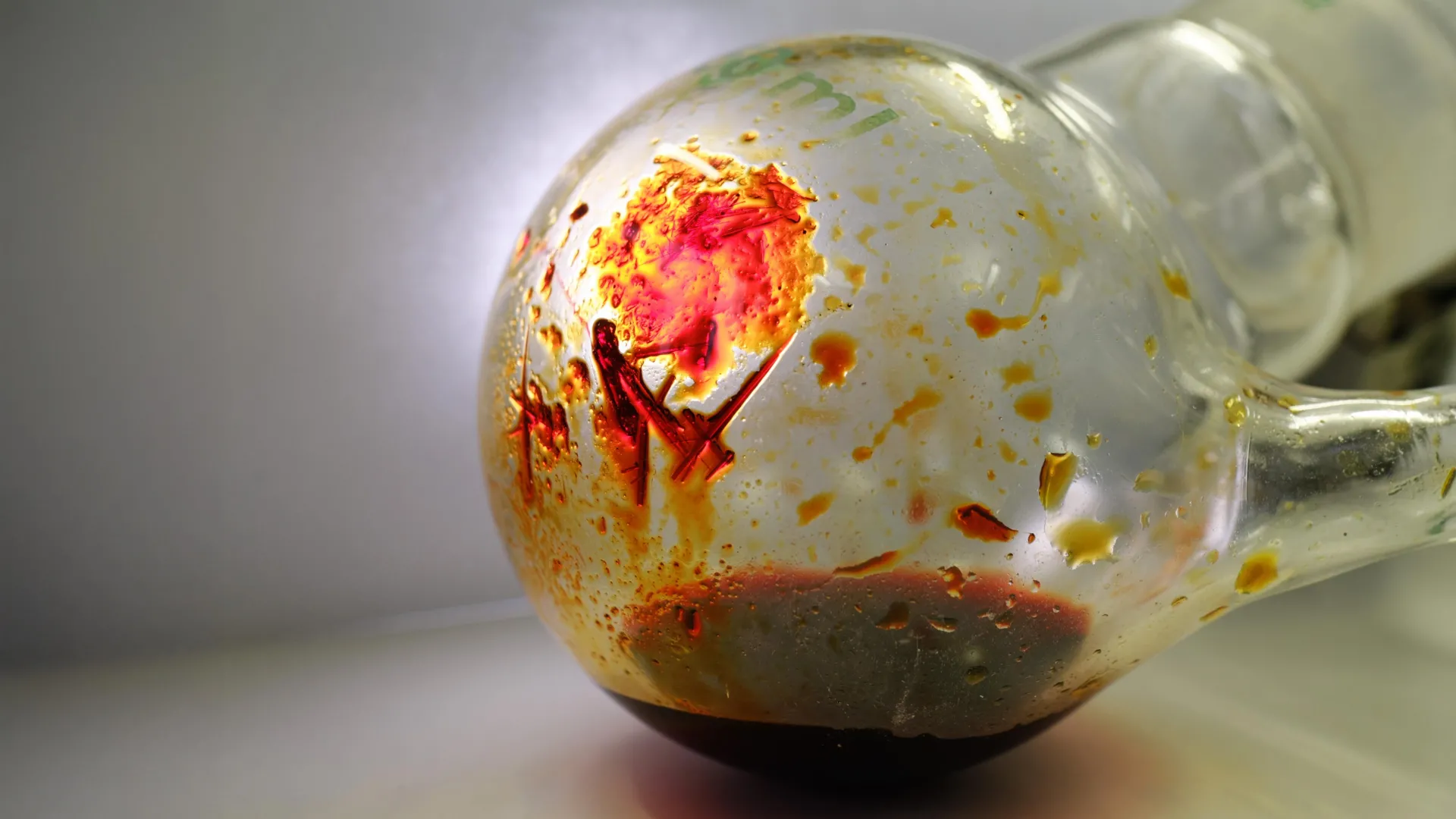
Major scientific advances often require patience, and this discovery is a prime example. After nearly 50 years of theory and repeated failed attempts by research groups around the world, David Scheschkewitz, Professor of General and Inorganic Chemistry at Saarland University, and his doctoral student Ankur — collaborating with Bernd Morgenstern from Saarland University’s X-Ray Diffraction Service Centre — have achieved a long sought breakthrough. Their findings have been published in the prestigious journal Science.
So what exactly did the team accomplish? They successfully synthesized pentasilacyclopentadienide, a compound that chemists have tried to create for decades. While the name may sound obscure, the achievement is significant. The researchers replaced the carbon atoms in an aromatic compound — a class of exceptionally stable molecules in organic chemistry — with silicon atoms.
Aromatic molecules are essential in modern industry, particularly in plastics manufacturing. “In polyethylene and polypropylene production, for example, aromatic compounds help make the catalysts that control these industrial chemical processes more durable and more effective,” explains David Scheschkewitz. Silicon differs fundamentally from carbon because it is more metallic and does not hold onto its electrons as tightly. Substituting silicon for carbon in pentasilacyclopentadienide could therefore lead to entirely new types of compounds and catalysts with distinct properties. That shift opens possibilities for innovative materials and industrial processes.
Why Aromatic Stability Is So Special
The challenge of creating this molecule lies in the unusual stability of aromatic systems. Cyclopentadienide — the carbon-containing model for the silicon analogue pentasilacyclopentadienide — is an aromatic hydrocarbon made up of five carbon atoms arranged in a flat (‘planar’) ring structure — a shape that contributes to its remarkable stability. (Historical side note: Aromatics were given this name because the first such compounds to be discovered in the second half of the 19th century were found to have particularly distinctive and often pleasant aromas.)
“To be classified as aromatic, a compound needs to have a particular number of shared electrons that are evenly distributed around the planar ring structure, and this number is expressed by Hückel’s rule — a simple mathematical expression named after the German physicist Erich Hückel,” explains David Scheschkewitz. Because these electrons are spread evenly around the ring rather than tied to individual atoms, the molecule gains extra stability.
Decades of Failed Attempts Finally Succeed
For many years, chemists knew of only one silicon based aromatic compound. In 1981, researchers created the silicon analogue of cyclopropenium — an aromatic molecule in which a three membered carbon ring was replaced by a three membered silicon ring. Beyond that, efforts to produce larger silicon based aromatic systems repeatedly failed.
That has now changed. Ankur, Bernd Morgenstern and David Scheschkewitz have synthesized a five atom silicon ring that displays the defining characteristics of aromaticity. Almost simultaneously, Takeaki Iwamoto’s group at Tohoku University in Sendai, Japan, independently produced the same compound. The two teams agreed to publish their results side by side in the same issue of Science.
Opening the Door to New Materials and Catalysts
This breakthrough lays the foundation for developing new materials and chemical processes with potential industrial applications. After decades of pursuit, researchers have taken the crucial first step toward expanding the possibilities of silicon based chemistry.