
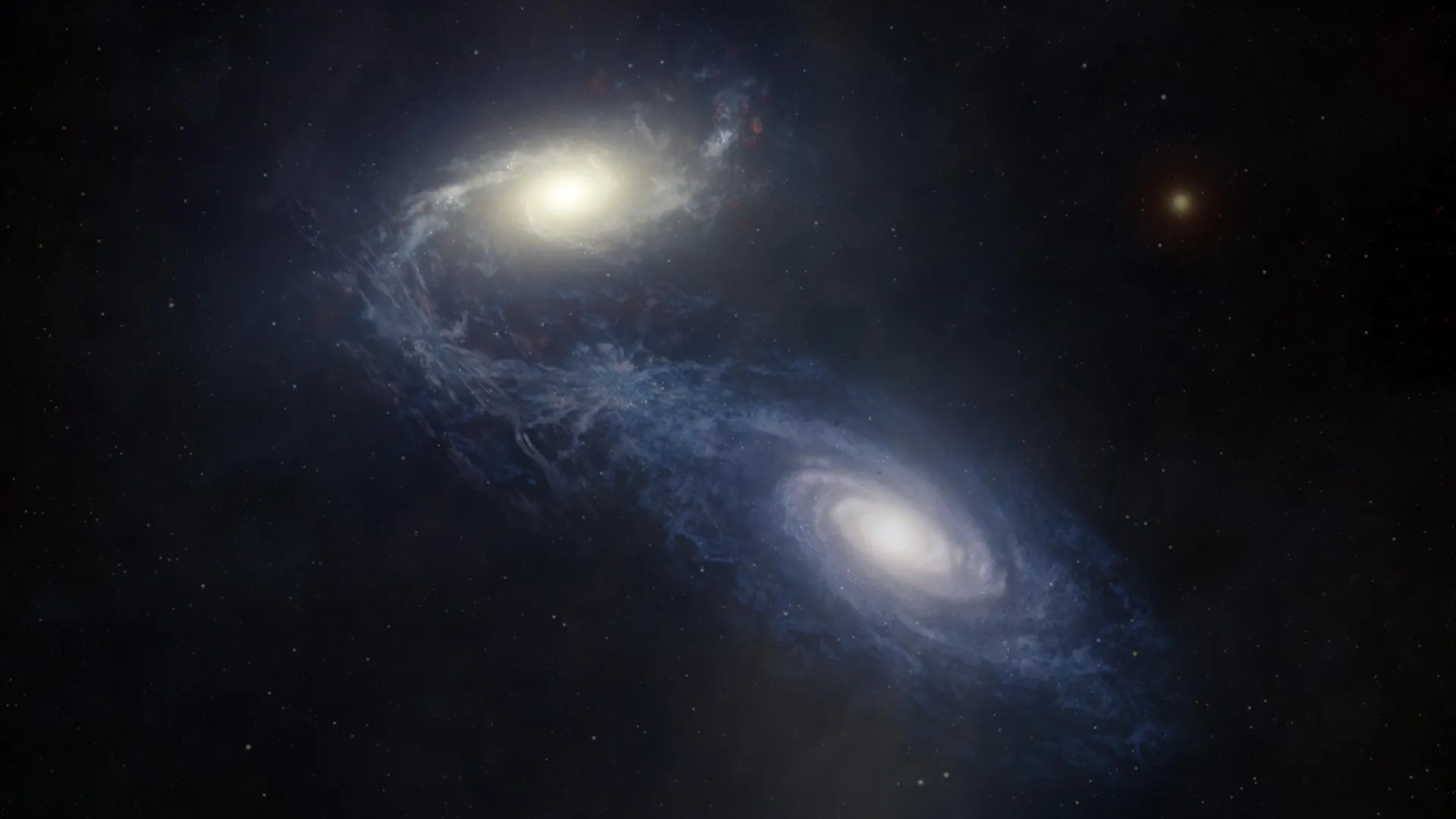
A team of astronomers led by the Center for Astrophysics | Harvard and Smithsonian has achieved a first by using galactic archaeology to uncover the past of a galaxy beyond the Milky Way. This method examines detailed chemical signatures in space to reveal how galaxies form and evolve over time.
The research, published today in Nature Astronomy, introduces a new way to study how distant galaxies develop and establishes an emerging field known as “extragalactic archaeology.”
“This is the first time that a chemical archaeology method has been used with such fine detail outside our own galaxy,” says Lisa Kewley, lead author, Harvard professor, and director of the Center for Astrophysics. “We want to understand how we got here. How did our own Milky Way form, and how did we end up breathing the oxygen that we’re breathing right now?”
Mapping NGC 1365 With Chemical Clues
To carry out the study, researchers used observations from the TYPHOON survey, gathered with the Irénée du Pont telescope at the Las Campanas Observatory. They focused on NGC 1365, a nearby spiral galaxy whose broad disk faces Earth, offering a clear view. This allowed scientists to zoom in on and analyze individual regions where stars are actively forming.
Young, hot stars emit intense ultraviolet radiation, which energizes nearby gas, Kewley explains. As this happens, elements such as oxygen produce distinct, narrow lines of light that can be measured.
Astronomers already know that galaxy centers tend to be richer in heavy elements like oxygen, while outer regions contain less. These patterns are shaped by several processes, including when and where stars formed and exploded as supernovae, how gas moved into or out of the galaxy, and interactions with other galaxies in the past.
Tracing 12 Billion Years of Galaxy Evolution
By mapping how oxygen levels vary across NGC 1365 and comparing those observations with advanced simulations from the Illustris Project, the team reconstructed how the galaxy developed over 12 billion years. These simulations track gas movement, star formation, black hole activity, and chemical changes from shortly after the Big Bang to today.
The researchers examined around 20,000 simulated galaxies and identified one that closely matched NGC 1365. This comparison allowed them to piece together the galaxy’s likely history of growth and mergers.
Their findings indicate that the central region formed early and quickly became enriched with oxygen. In contrast, the outer regions gradually built up over billions of years through repeated mergers with smaller dwarf galaxies. The outer spiral arms likely formed more recently and were fueled by gas and stars brought in during these interactions.
“It’s very exciting to see our simulations matched so closely by data from another galaxy,” said Lars Hernquist, Mallinckrodt Professor of Astrophysics at Harvard and a CfA astronomer. “This study shows that the astronomical processes we model on computers are shaping galaxies like NGC 1365 over billions of years.”
A New Tool for Understanding Galaxy Formation
Overall, the results suggest that NGC 1365 started out as a relatively small galaxy and gradually grew into a massive spiral through multiple mergers with smaller neighbors.
Kewley says the work highlights how chemical signatures in a galaxy’s gas can be used to uncover its past, establishing extragalactic archaeology as a powerful new approach.
“This study shows really well how you can produce observations to be directly aided by theory,” she said. “I think it’s also going to impact how we work together as theorists and observers, because this project was 50 percent theory and 50 percent observations, and you couldn’t do one without the other. You need both to come to these conclusions.”
What This Means for the Milky Way
Studying galaxies like NGC 1365, which shares similarities with the Milky Way, can help astronomers determine whether our own galaxy’s history is typical or unusual and better understand the different paths galaxies can take as they evolve.
“Do all spiral galaxies form in a similar way?” asked Kewley. “Are there differences between their formation? Where is their oxygen distributed now? Is our Milky Way different or unique in any way? Those are the questions we want to answer.”