
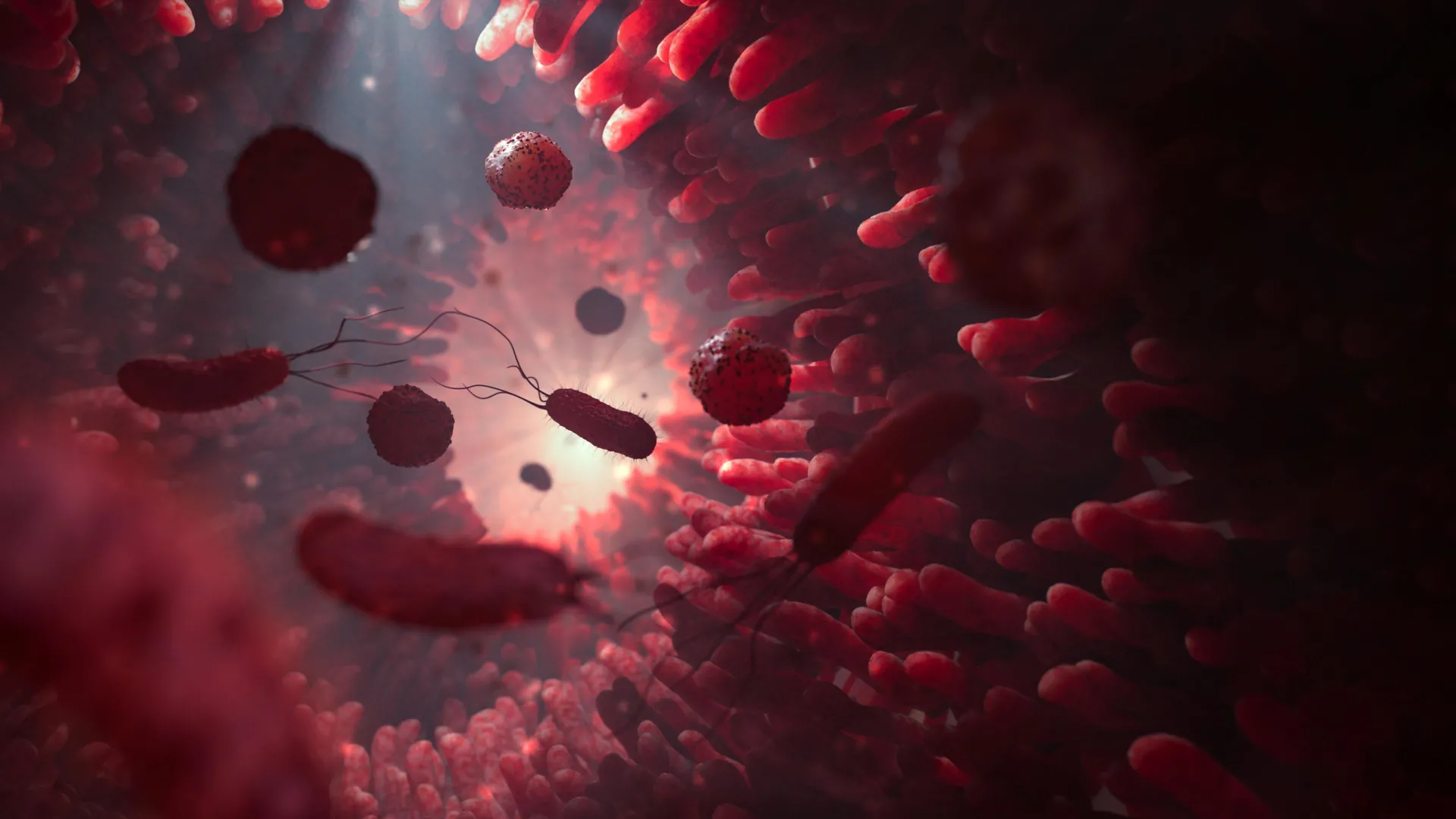
Scientists have uncovered a surprising way that gut bacteria interact with the human body. Certain microbes living in the digestive system can send proteins straight into human cells, actively influencing how the immune system behaves. The research, led by Helmholtz Munich with contributions from Ludwig Maximilians University (LMU), Aix Marseille University, Inserm, and other international collaborators, reveals a previously unknown form of communication between bacteria and human cells. This discovery offers new insight into how the gut microbiome affects health and may help explain its role in conditions such as Crohn’s disease.
For years, researchers have linked the gut microbiome to immune, metabolic, and inflammatory disorders. However, most of that evidence has been based on correlations, and the biological processes behind those links have remained unclear.
“Our goal was to better characterize some of the underlying processes of how gut bacteria affect human biology,” says Veronika Young, first author of the study together with Bushra Dohai. “By systematically mapping direct protein-protein interactions between bacterial and human cells, we can now suggest molecular mechanisms behind these associations.”
Hidden Injection Systems in “Friendly” Gut Bacteria
The team found that many common, non-harmful gut bacteria carry type III secretion systems. These are tiny, syringe-like structures that allow bacteria to inject their own proteins directly into human cells. Previously, scientists believed these systems were limited to disease-causing bacteria such as Salmonella.
“This fundamentally changes our view of commensal bacteria,” says Prof. Pascal Falter-Braun, Director of the Institute for Network Biology at Helmholtz Munich and corresponding author of the study. “It shows that these non-pathogenic bacteria are not just passive residents but can actively manipulate human cells by injecting their proteins into our cells.”
Mapping How Gut Bacteria Influence Human Cells
To explore what happens after these proteins enter human cells, the researchers mapped more than a thousand interactions between bacterial effector proteins and human proteins. This large network revealed that bacterial proteins tend to target pathways involved in immune regulation and metabolism.
Follow-up experiments confirmed that these proteins can influence key immune signaling systems, including NF-κB and cytokine responses. Cytokines are signaling molecules that help coordinate immune activity and prevent excessive reactions that could lead to autoimmune disease. For instance, blocking the cytokine Tumor Necrosis Factor (TNF) is a common treatment for Crohn’s disease, an autoimmune condition affecting the gut.
Potential Link to Crohn’s Disease
The researchers also discovered that genes responsible for these bacterial effector proteins are more common in the gut microbiomes of people with Crohn’s disease. This finding suggests that direct protein transfer from bacteria to human cells may contribute to long-term intestinal inflammation. It also provides a possible explanation for earlier observations connecting microbiome changes to disease.
Rethinking Microbiome and Immune System Interactions
By identifying this previously unknown layer of interaction between gut bacteria and the immune system, the study shifts the field beyond simple associations and toward understanding cause and effect. It also raises new questions about the origin of these injection systems, including whether they first evolved to support coexistence with the host or were later adapted by harmful bacteria.
Future research will focus on how specific bacterial proteins interact with human cells in different tissues and disease settings. These insights could eventually lead to more targeted approaches for preventing and treating disease.