
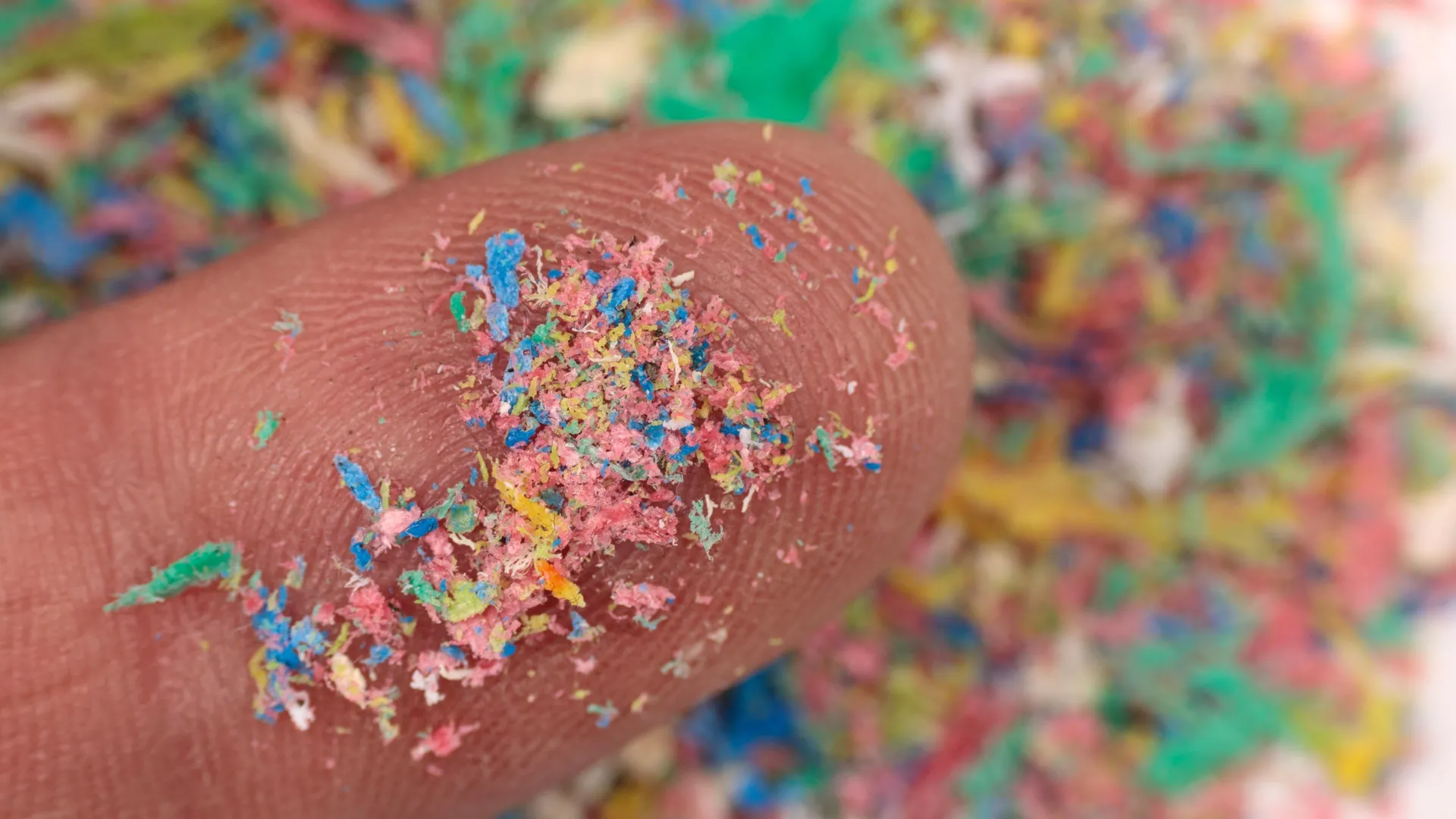
Scientists have uncovered something surprising in the Atlantic Ocean. The majority of plastic pollution may no longer be visible at all. Instead, it exists as nanoplastics, particles so small they are measured in billionths of a meter.
“This estimate shows that there is more plastic in the form of nanoparticles floating in this part of the ocean than there is in larger micro- or macroplastics floating in the Atlantic or even all the world’s oceans!” said Helge Niemann, researcher at NIOZ and professor of geochemistry at Utrecht University. In mid-June, he received a 3.5 million euro grant to further investigate nanoplastics and what ultimately happens to them.
Ocean Expedition Reveals Tiny Plastic Particles
To gather data, Utrecht master’s student Sophie ten Hietbrink spent four weeks aboard the research vessel RV Pelagia. The ship traveled from the Azores to the European continental shelf, where she collected water samples at 12 different locations.
Each sample was carefully filtered to remove anything larger than one micrometer. What remained contained the smallest particles. “By drying and heating the remaining material, we were able to measure the characteristic molecules of different types of plastics in the Utrecht laboratory, using mass spectrometry,” Ten Hietbrink explains.
First Real Estimate of Ocean Nanoplastics
Previous studies had confirmed that nanoplastics existed in ocean water, but no one had been able to calculate how much was actually there. This research marks the first time scientists have produced a meaningful estimate.
Niemann notes that this breakthrough was made possible by combining ocean research with expertise from atmospheric science, including contributions from Utrecht University scientist Dusân Materic.
27 Million Tons of Invisible Plastic
When the team scaled their measurements across the North Atlantic, the results were striking. They estimate that about 27 million tons of nanoplastics are floating in this region alone.
“A shocking amount,” Ten Hietbrink says. The finding may finally explain a long-standing mystery. Scientists have struggled to account for all the plastic ever produced. Much of it appeared to be missing. This study suggests that a large share has broken down into tiny particles that are now suspended throughout the ocean.
How Nanoplastics Enter the Ocean
These microscopic plastics come from multiple sources. Larger plastic debris can fragment over time due to sunlight. Rivers also carry plastic particles from land into the sea.
Another pathway comes from the atmosphere. Nanoplastics can travel through the air and fall into the ocean with rain or settle directly onto the water’s surface through a process known as dry deposition.
Potential Risks to Ecosystems and Human Health
The widespread presence of nanoplastics raises serious concerns. Niemann points out that these particles are small enough to enter living organisms.
“It is already known that nanoplastics can penetrate deep into our bodies. They are even found in brain tissue,” he says. Because they are now known to be present throughout the ocean, they likely move through entire food webs, from microorganisms to fish and ultimately to humans. The full impact on ecosystems and health is still unclear and requires further study.
What Scientists Still Don’t Know
There are still important gaps in knowledge. Researchers did not detect certain common plastics, such as polyethylene or polypropylene, in the smallest particle range.
“It may well be that those were masked by other molecules in the study,” Niemann says. The team also wants to determine whether similar levels of nanoplastics exist in other oceans. Early indications suggest this could be the case, but more research is needed.
Prevention May Be the Only Solution
While this discovery fills a critical gap in understanding ocean pollution, it also presents a difficult reality. These particles are too small and too widespread to remove.
“The nanoplastics that are there can never be cleaned up,” Niemann emphasizes. The findings highlight the urgency of preventing further plastic pollution before it breaks down into an even more persistent and invisible problem.