
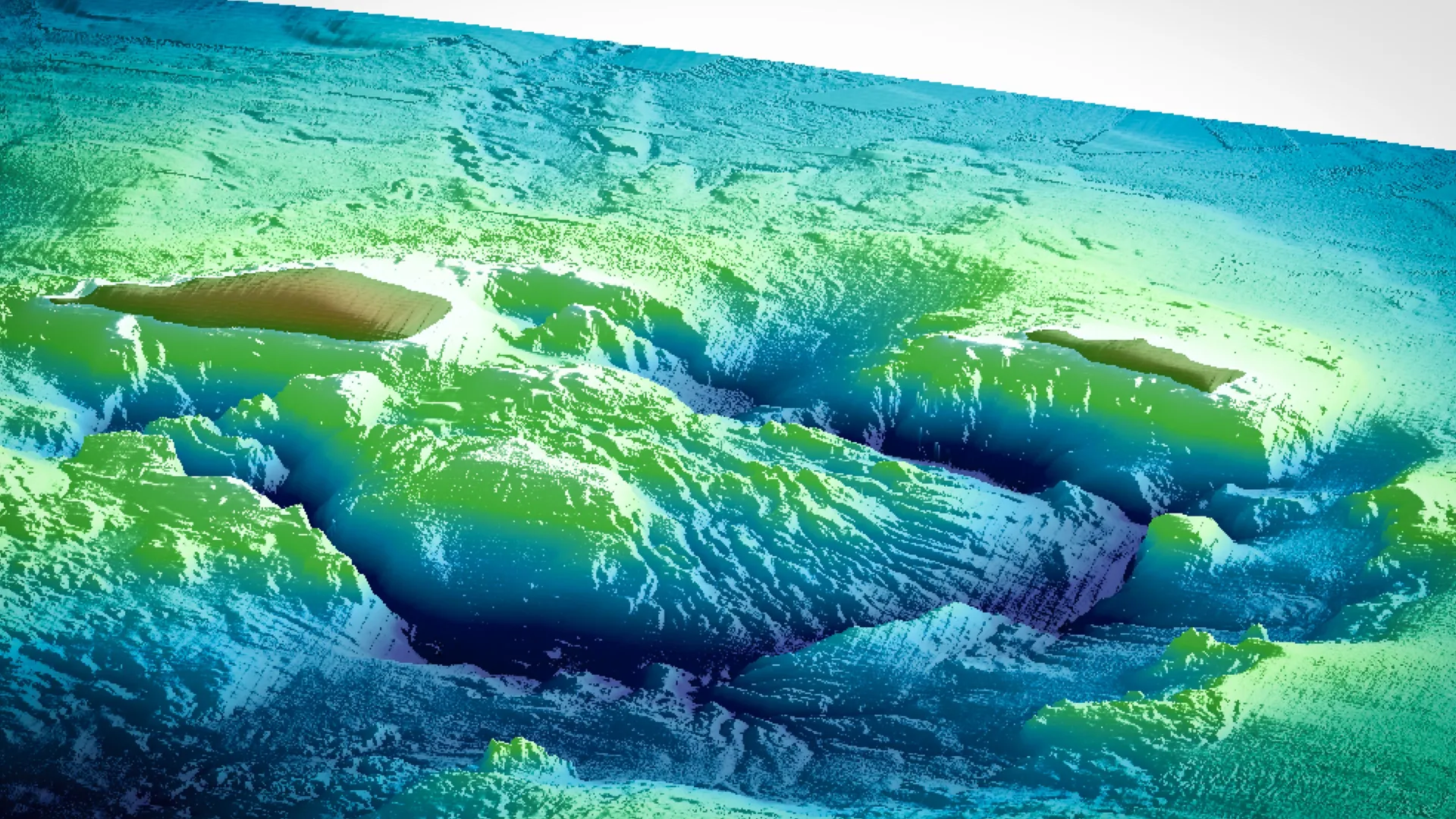
Scientists have discovered that the magma reservoir tied to the largest volcanic eruption of the Holocene is filling again. The finding, led by Kobe University researchers studying Japan’s Kikai caldera, offers new insight into how massive caldera systems such as Yellowstone and Toba evolve over time and may help improve future eruption forecasting.
Some volcanic eruptions are so extreme that they release enough magma to bury all of Central Park under 12 kilometers of material. After such an event, the landscape collapses into a broad, relatively shallow crater known as a caldera. Famous examples include Yellowstone in the United States, Toba in Indonesia, and the largely submerged Kikai caldera in Japan. Kikai last erupted 7,300 years ago in the most powerful eruption of the current geological epoch, the Holocene. While scientists know these systems can erupt again, the buildup to such events remains poorly understood. “We must understand how such large quantities of magma can accumulate to understand how giant caldera eruptions occur,” says Kobe University geophysicist SEAMA Nobukazu.
Underwater Seismic Imaging Reveals Magma System
Kikai’s underwater setting provides a unique research advantage. Seama explains, “The underwater location allows us to implement systematic, large-scale surveys.” Working with the Japan Agency for Marine-Earth Science and Technology (JAMSTEC), the team used airgun arrays to generate controlled seismic pulses and ocean bottom seismometers to track how those waves move through the Earth’s crust. This approach allowed them to build a detailed picture of the structures beneath the caldera.
The results, published in Communications Earth & Environment, confirm a large magma-rich zone directly beneath the site of the ancient eruption. The researchers were able to map the reservoir’s size and shape and determine its connection to past activity. Seama says, “Due to its extent and location it is clear that this is in fact the same magma reservoir as in the previous eruption.”
Fresh Magma Injection Drives Recharging Process
The magma currently present does not appear to be leftover from the earlier eruption. Scientists had already observed a lava dome forming at the center of the caldera over the past 3,900 years. Chemical analysis shows that this newer material differs from what was released during the previous eruption. “This means that the magma that is now present in the magma reservoir under the lava dome is likely newly injected magma,” summarizes Seama. These findings support a broader model explaining how magma reservoirs beneath caldera volcanoes refill over time.
Implications for Yellowstone and Future Eruptions
The proposed magma re-injection model aligns with observations of large, shallow magma systems beneath other major calderas such as Yellowstone and Toba. Seama suggests this work could help scientists better understand how magma supply cycles develop after massive eruptions. He concludes, saying: “We want to refine the methods that have proved to be so useful in this study to more deeply understand the re-injection processes. Our ultimate goal is to become better able to monitor the crucial indicators of future giant eruptions.”
This research was funded by the Ministry of Education, Culture, Sports, Science and Technology (MEXT) (The Third Earthquake and Volcano Hazards Observation and Research Program (Earthquake and Volcano Hazard Reduction Research)) and the Japan Society for the Promotion of Science (grant 20H00199). It was conducted in collaboration with researchers from the Japan Agency for Marine-Earth Science and Technology (JAMSTEC).