
The ice giants are among the most fascinating targets in our solar system, and Uranus has recently moved to the top of the list. The 2022 Decadal Survey from the National Academies identified it as the highest priority destination for future exploration. Yet despite that strong endorsement, there is still no fully developed mission ready for the launch opportunities expected in the 2030s.
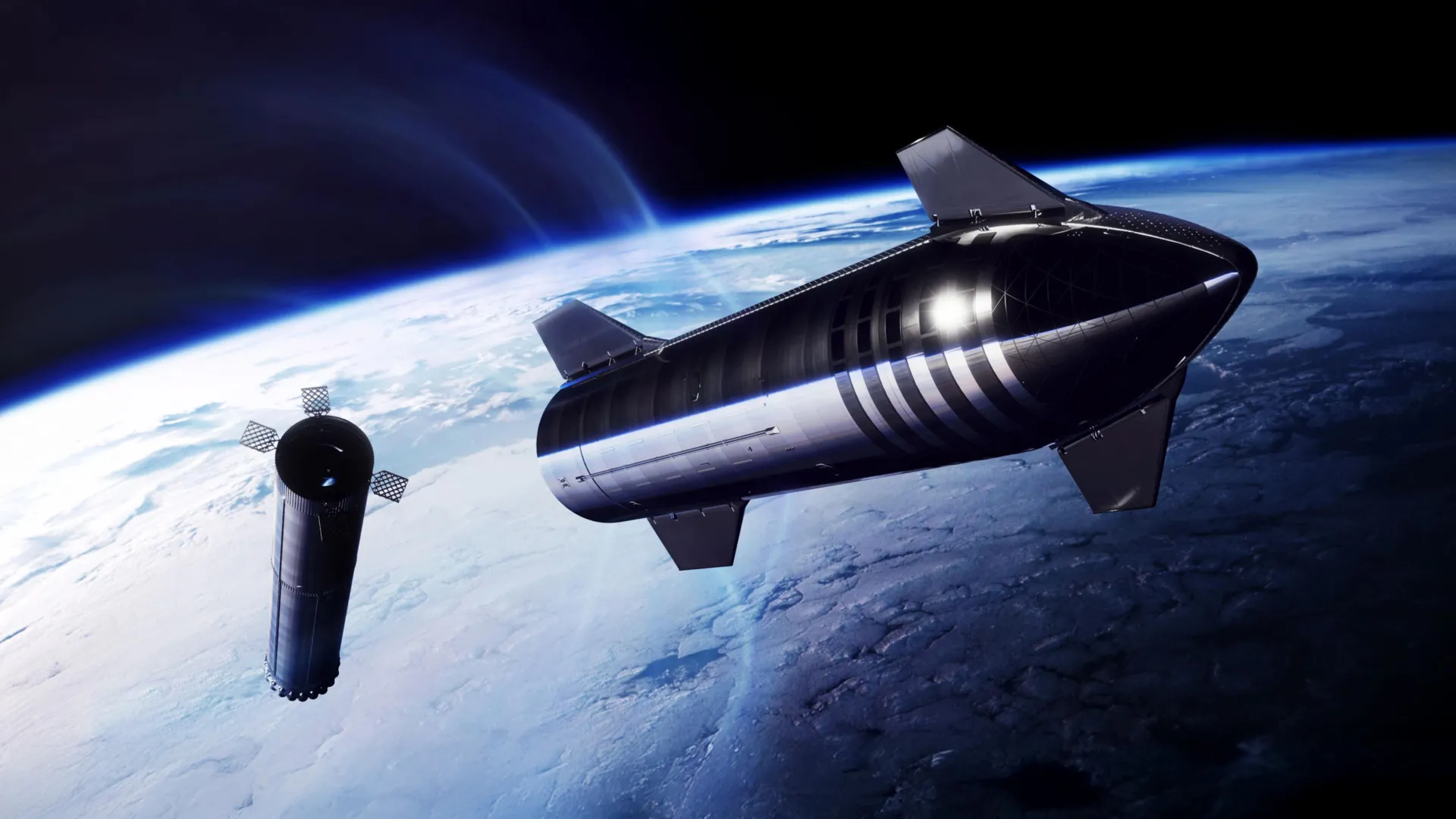
That delay may not be entirely negative. A powerful new launch system is emerging that could significantly reshape how such a mission is designed. SpaceX’s Starship has continued to show progress through recent successful tests. Researchers at MIT explored its potential impact in a paper presented at the IEEE Aerospace Conference, focusing on how it could support the proposed Uranus Orbiter and Probe (UOP).
Why Uranus Still Matters
Uranus remains one of the least studied planets. The only spacecraft to visit was Voyager 2, which flew past the planet about 40 years ago. Neither Uranus nor Neptune has ever hosted an orbiter or long-term mission, making them the only planets in the solar system that have not been closely examined over time.
Interest in Uranus is strong for good reason. The planet has several unusual features that scientists still struggle to explain. It rotates on its side, has an irregular magnetic field, and is surrounded by moons that may contain subsurface oceans beneath icy crusts. Studying Uranus could also help scientists better understand similar planets beyond our solar system, since ice giants appear to be common throughout the Milky Way.
The Challenge of Distance
Reaching Uranus is difficult primarily because of its extreme distance. It orbits about 19 times farther from the Sun than Earth does. Voyager 2 needed more than nine and a half years just to fly past the planet, without attempting to enter orbit.
More recent mission concepts have estimated even longer travel times. Plans based on Falcon Heavy and multiple gravitational assists would take over 13 years to arrive. Maintaining a mission for that long increases costs and introduces risks, including potential staffing changes or funding disruptions. Reducing travel time would make the mission more practical and more sustainable.
How Starship Could Change the Mission
Starship may offer a way to overcome these challenges. Despite earlier testing setbacks, the system has recently achieved a successful test flight and is steadily advancing. If development continues as expected, it could be operational by the end of the decade and serve as a strong candidate for launching a Uranus mission.
Its advantages go beyond sheer lifting power. One key feature is the ability to refuel in orbit. Starship is designed to store and transfer fuel while in space, which could allow spacecraft to travel faster than systems that must carry all their fuel from launch. Although this capability has not yet been demonstrated, future tests are expected to explore it, potentially opening new possibilities for deep space travel.
Using Starship as a Giant Heat Shield
Another idea examined in the MIT study involves using Starship itself as part of the mission during arrival. Instead of separating after launch, Starship could travel with the probe all the way to Uranus. Its heat-resistant design, originally intended for reentry on Earth and Mars, could be used to handle the intense heating from aerobraking in Uranus’ atmosphere.
In this scenario, Starship would act as a protective shield and slow the spacecraft down as it enters the planet’s atmosphere. This would allow the probe to reduce its speed enough to remain in orbit, rather than simply flying past.
Cutting Travel Time in Half
According to the study’s calculations, combining in-space refueling with this aerobraking approach could reduce travel time to Uranus to about six and a half years. This is roughly half the duration of previous mission plans. It would also eliminate the need for gravitational assists from other planets.
Even though carrying Starship along for the journey would add complexity and cost, the shorter mission timeline could significantly lower overall operational expenses. A faster trip also reduces long-term risks tied to funding and staffing.
Uncertain Future for the Uranus Mission
Despite its promise, the Uranus Orbiter and Probe is still far from becoming reality. Starship has not yet demonstrated aerobraking capabilities for missions like this, and the mission itself has not secured funding approval. Given current challenges facing NASA, the timeline remains uncertain.
If the opportunity to launch in the 2030s is missed, the next favorable window may not arrive until the mid-2040s. That would mean nearly 70 years between missions to Uranus. For scientists and space exploration advocates, the hope is that support will come together in time to make a return to this intriguing world possible, whether Starship plays a role or not.