
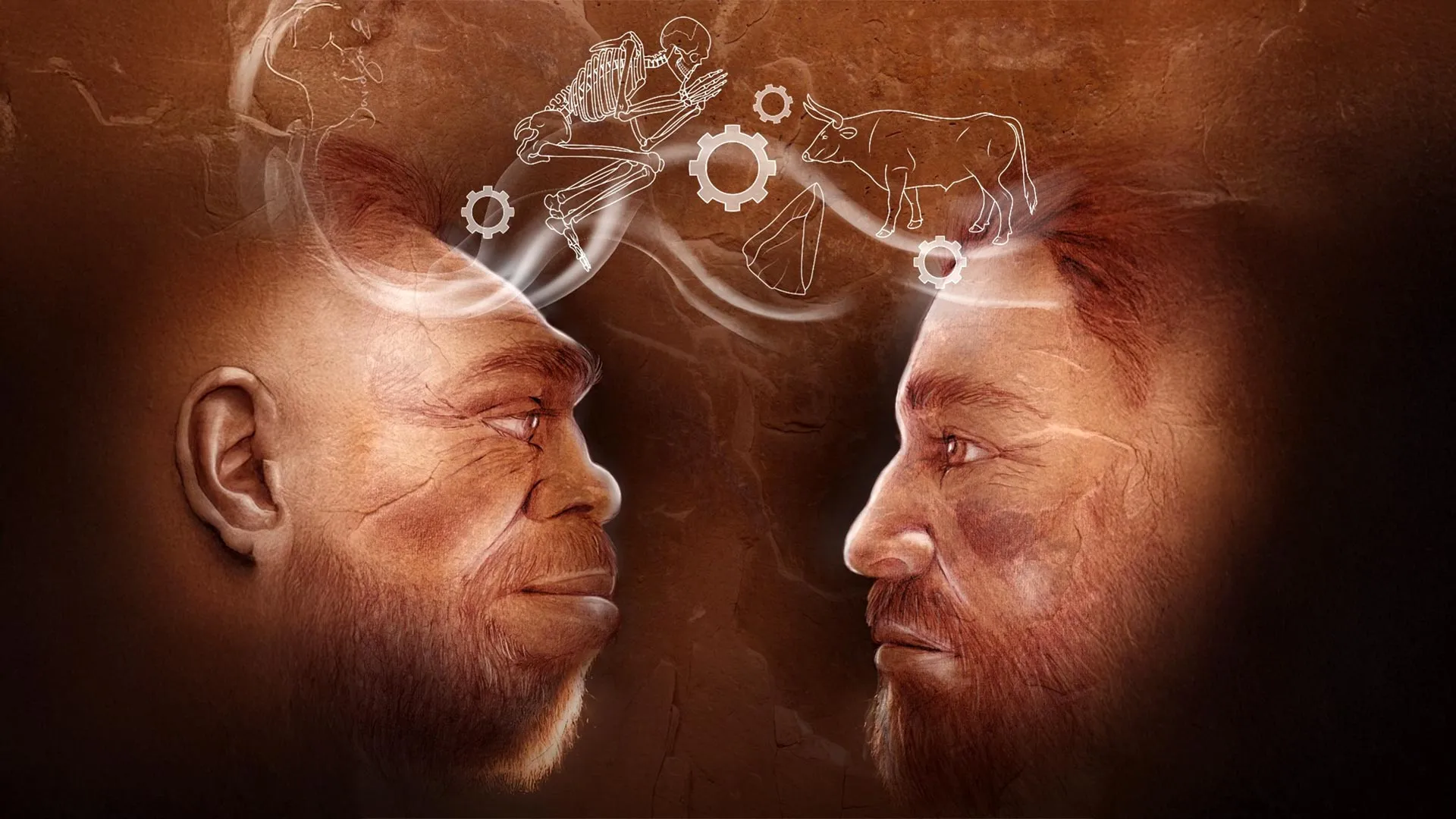
The first-ever published research on Tinshemet Cave is changing how scientists understand the relationship between Neanderthals and Homo sapiens. Evidence from the site shows that these groups did more than simply live at the same time in the mid-Middle Paleolithic Levant. They interacted directly, sharing tools, ways of life, and even burial practices. These exchanges appear to have encouraged cultural growth, more complex social behavior, and innovations such as formal burials and the symbolic use of ochre for decoration. The findings point to human interaction, rather than isolation, as a key force behind early technological and cultural progress, with the Levant acting as a major crossroads in human history.
Located in central Israel, Tinshemet Cave has produced an exceptional collection of archaeological and human remains. Among the most important discoveries are several human burials, the first mid-Middle Palaeolithic (MP) burials uncovered in more than fifty years. These finds are offering rare insight into how early human groups lived and treated their dead.
The study, published in Nature Human Behaviour, is the first to present results from the site. It provides strong evidence that Neanderthals and Homo sapiens not only shared the region but also influenced each other’s daily activities, technologies, and rituals. This challenges earlier ideas that viewed these groups as largely separate and instead suggests a much closer and more complex relationship.
Scientists Investigate Neanderthal and Human Relationships
Excavations at Tinshemet Cave began in 2017 and are led by Prof. Yossi Zaidner of the Hebrew University of Jerusalem, Prof. Israel Hershkovitz of Tel Aviv University, and Dr. Marion Prévost of the Hebrew University of Jerusalem. One of the central questions guiding the research is how Neanderthals and Homo sapiens interacted during the mid-Middle Palaeolithic in this region. Researchers are exploring whether these groups competed, coexisted peacefully, or worked together in meaningful ways.
To answer this, the team examined evidence across four main areas: stone tool production, hunting strategies, symbolic behavior, and social complexity. Their analysis suggests that multiple human groups, including Neanderthals, pre-Neanderthals, and Homo sapiens, maintained ongoing contact. These interactions allowed ideas and skills to spread, gradually making different groups more culturally similar over time.
Shared Rituals and Early Symbolism
The research also points to important behavioral developments driven by these connections. Around 110,000 years ago, formal burial practices began to appear in Israel for the first time anywhere in the world. This shift may reflect stronger social ties and shared traditions among groups.
One striking feature of the cave is the widespread use of mineral pigments, especially ochre. Researchers believe it may have been used to decorate bodies, possibly serving as a way to express identity or distinguish between groups. This kind of symbolic behavior suggests a deeper level of social meaning than previously recognized.
Was Tinshemet Cave an Ancient Cemetery
The arrangement of burials at the site raises the possibility that Tinshemet Cave served as a dedicated burial area or even an early cemetery. If that is the case, it would point to organized rituals and strong community bonds. Objects placed alongside the dead, including stone tools, animal bones, and pieces of ochre, may also hint at early beliefs about an afterlife.
A Crossroads of Human Evolution
Prof. Zaidner describes the region as a “melting pot” where different human populations came together and influenced one another. “Our data show that human connections and population interactions have been fundamental in driving cultural and technological innovations throughout history,” he explains.
Dr. Prévost emphasizes the importance of geography in shaping these interactions. “During the mid-MP, climatic improvements increased the region’s carrying capacity, leading to demographic expansion and intensified contact between different Homo taxa.”
Prof. Hershkovitz highlights how closely linked these groups may have been. “These findings paint a picture of dynamic interactions shaped by both cooperation and competition.”
New Insights Into Early Human Society
The discoveries at Tinshemet Cave provide a detailed look at the social lives, behaviors, and environments of early humans. They reveal a time of major population growth and cultural change, driven by contact between different human groups. As research at the site continues, scientists expect even more discoveries that could deepen our understanding of how human society first began to take shape.