
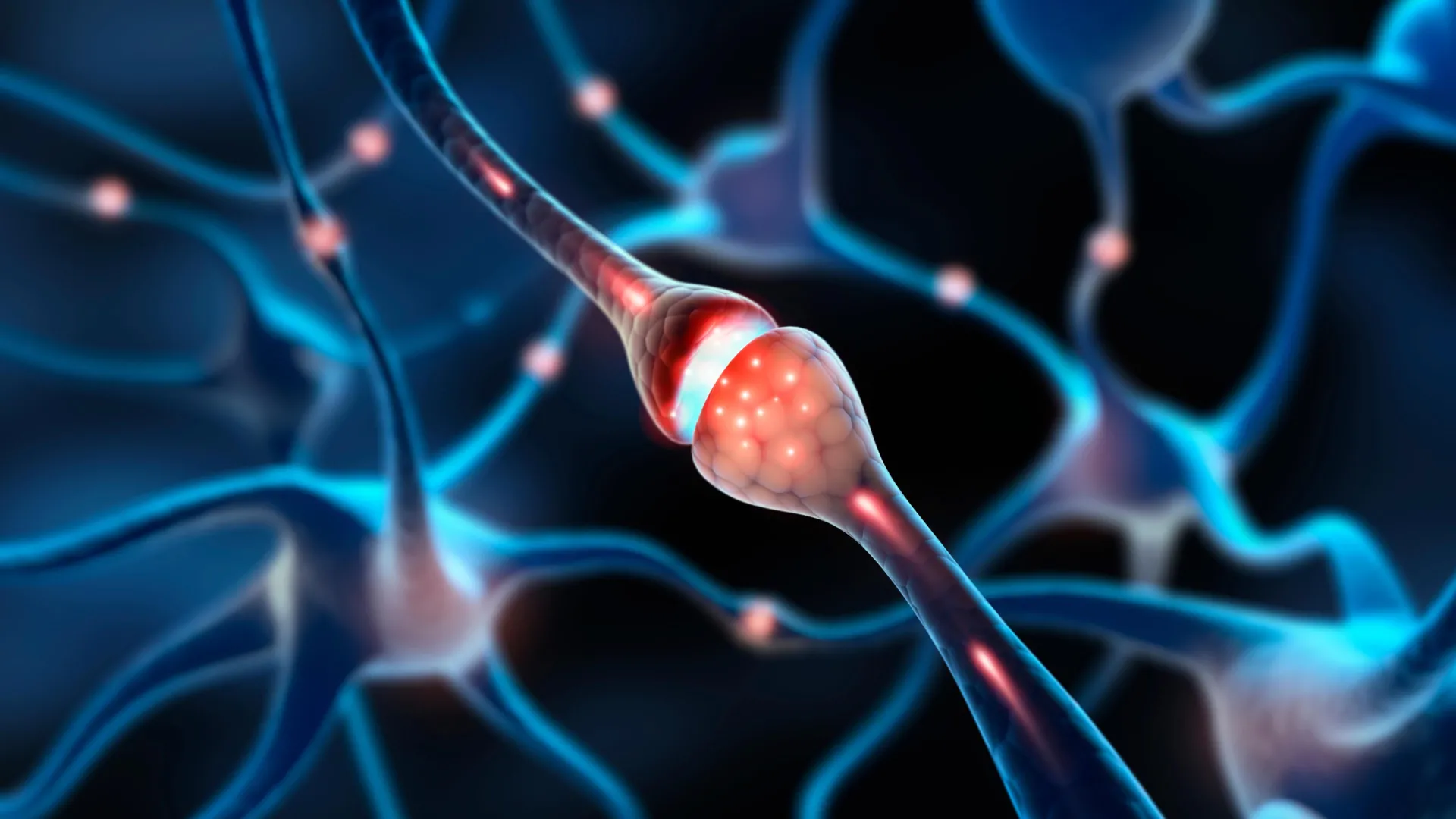
MIT neuroscientists have uncovered a surprising feature of the adult brain. It contains millions of “silent synapses,” which are immature connections between neurons that remain inactive until they are needed to help form new memories.
For many years, scientists believed these silent synapses existed only during early development, when the brain is rapidly learning about the world. But the MIT team found that in adult mice, roughly 30 percent of synapses in the brain’s cortex are still silent. This suggests the adult brain holds a large reserve of unused connections that can be activated when new information arrives.
Researchers say this hidden pool of synapses may explain how the brain continues to learn throughout life without disrupting existing memories.
“These silent synapses are looking for new connections, and when important new information is presented, connections between the relevant neurons are strengthened. This lets the brain create new memories without overwriting the important memories stored in mature synapses, which are harder to change,” says Dimitra Vardalaki, an MIT graduate student and the lead author of the study.
Mark Harnett, an associate professor of brain and cognitive sciences, is the senior author of the paper, published in Nature. Kwanghun Chung, an associate professor of chemical engineering at MIT, is also an author.
Rethinking How Memory Works in the Adult Brain
Silent synapses were first identified decades ago, mostly in young animals. During early development, they are thought to help the brain absorb large amounts of new information about the environment. In mice, scientists believed these synapses disappeared by about 12 days of age (equivalent to the first months of human life).
However, some researchers suspected they might persist into adulthood. Clues came from studies of addiction, which is often considered a form of maladaptive learning. These studies hinted that silent synapses could reappear or remain in the adult brain.
Theoretical work by neuroscientists Stefano Fusi and Larry Abbott also suggested the brain needs a mix of flexible and stable synapses. Some connections must be easy to change to support new learning, while others must remain steady to preserve long-term memories.
A Chance Discovery Using Advanced Imaging
The MIT team was not initially searching for silent synapses. They were following up on earlier work showing that dendrites, the branch-like extensions of neurons, process signals differently depending on their location.
To explore this further, the researchers measured neurotransmitter receptors along dendrites using a technique called eMAP (epitope-preserving Magnified Analysis of the Proteome). This method physically expands brain tissue, allowing scientists to label proteins and view them in extremely high detail.
During this imaging, the researchers noticed something unexpected.
“The first thing we saw, which was super bizarre and we didn’t expect, was that there were filopodia everywhere,” Harnett says.
Filopodia are tiny protrusions that extend from dendrites. Although they had been observed before, their function was unclear because they are so small and difficult to study with traditional tools.
Filopodia and the Signature of Silent Synapses
Using the eMAP technique, the team found filopodia across multiple regions of the adult mouse brain, including the visual cortex, at levels far higher than previously reported. These structures contained NMDA receptors but lacked AMPA receptors.
This detail is crucial. Active synapses typically have both receptor types, which work together to transmit signals using the neurotransmitter glutamate. NMDA receptors alone cannot pass electrical signals under normal conditions because they are blocked by magnesium ions. Without AMPA receptors, these connections remain electrically inactive, which is why they are called “silent.”
Turning Silent Synapses On
To test whether these filopodia function as silent synapses, the researchers used a modified patch clamping technique. This allowed them to measure electrical activity at individual filopodia while simulating the release of glutamate.
They found that glutamate alone did not produce a signal unless the NMDA receptors were experimentally unblocked. This provided strong evidence that these structures behave as silent synapses.
The team then showed it is possible to activate, or “unsilence,” these connections. By pairing glutamate release with an electrical signal from the neuron, AMPA receptors accumulated at the synapse. This transformed the silent connection into a fully functional one capable of transmitting signals.
Importantly, this process was much easier than modifying already active synapses.
“If you start with an already functional synapse, that plasticity protocol doesn’t work,” Harnett says. “The synapses in the adult brain have a much higher threshold, presumably because you want those memories to be pretty resilient. You don’t want them constantly being overwritten. Filopodia, on the other hand, can be captured to form new memories.”
A Brain That Is Both Flexible and Stable
These findings support the idea that the brain balances flexibility and stability by maintaining a reserve of highly adaptable synapses.
“This paper is, as far as I know, the first real evidence that this is how it actually works in a mammalian brain,” Harnett says. “Filopodia allow a memory system to be both flexible and robust. You need flexibility to acquire new information, but you also need stability to retain the important information.”
What This Means for Aging and Brain Health
The researchers are now investigating whether similar silent synapses exist in human brains. They also want to understand how these connections change with age or in neurological conditions.
“It’s entirely possible that by changing the amount of flexibility you’ve got in a memory system, it could become much harder to change your behaviors and habits or incorporate new information,” Harnett says. “You could also imagine finding some of the molecular players that are involved in filopodia and trying to manipulate some of those things to try to restore flexible memory as we age.”
More recent neuroscience research has continued to explore how synaptic plasticity supports lifelong learning. Studies on aging brains suggest that reduced synaptic flexibility may contribute to memory decline, while work in neurodegenerative diseases like Alzheimer’s points to disruptions in synapse formation and function. There is also growing interest in targeting synaptic mechanisms to improve cognitive resilience and learning capacity later in life.
Together, these findings paint a picture of the brain as far more dynamic than once believed. Rather than being fixed, it appears to maintain a hidden запас of connections, ready to be activated when new experiences demand it.
The research was funded by the Boehringer Ingelheim Fonds, the National Institutes of Health, the James W. and Patricia T. Poitras Fund at MIT, a Klingenstein-Simons Fellowship, and Vallee Foundation Scholarship, and a McKnight Scholarship.