
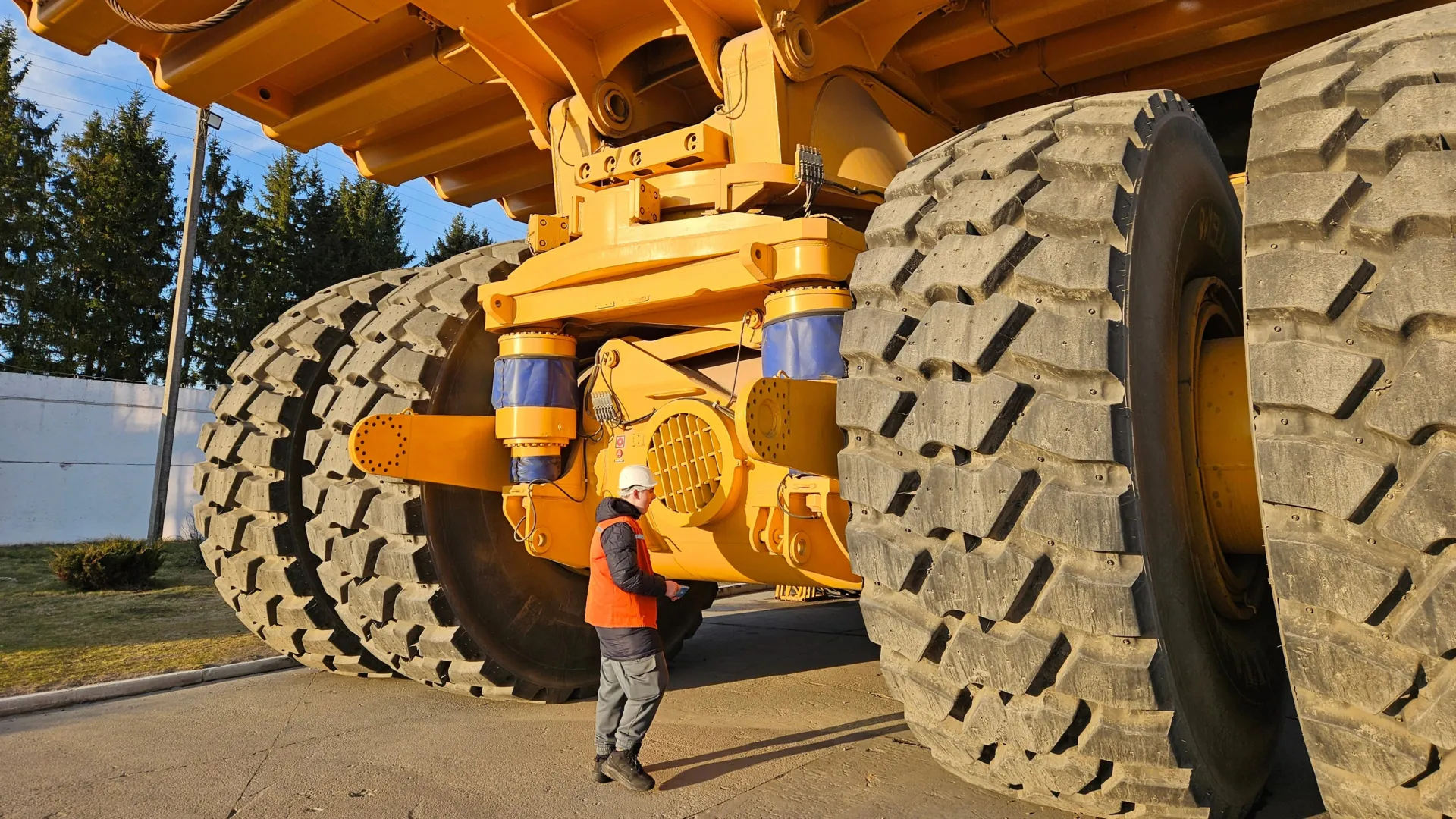
Reinforced rubber is one of the most important materials in modern life. It helps car and airplane tires withstand enormous stress, keeps industrial machinery running, and appears in everything from medical devices to garden hoses. Despite being used for nearly a century and supporting a global tire industry worth about $260 billion, scientists have never fully understood why it becomes so strong when mixed with carbon black particles.
Now, researchers at the University of South Florida say they have finally solved the mystery.
Led by engineering Professor David Simmons, the team uncovered how tiny carbon black particles transform soft rubber into a material capable of supporting massive loads, including fully loaded aircraft. Their findings were published in the journal Proceedings of the National Academy of Sciences.
“How is it that we’ve been using this for 80, 90, 100 years and haven’t really known how it works?” Simmons said. “It’s been through enormous trial and error. The tire companies can purchase many different grades of carbon black — basically fancy soot — and they just have to use trial and error to figure out what’s worth paying more for and what isn’t.”
After carrying out 1,500 molecular dynamics simulations that added up to roughly 15 years of computing time, the researchers identified the key mechanism behind reinforced rubber. Their work also helped reconcile several long-competing scientific theories.
Why Carbon Black Makes Rubber Stronger
The formula for reinforced rubber has remained largely unchanged for decades. Manufacturers mix microscopic particles, usually carbon black, into rubber to make it tougher, longer-lasting, and more resistant to wear. This is also why most tires are black.
Even though the method has been widely used, scientists struggled for years to explain exactly why it worked so effectively.
Some researchers believed the particles formed chain-like structures throughout the rubber. Others argued the particles stiffened the surrounding material like glue. Another theory suggested the particles mainly occupied space, forcing the rubber to stretch differently.
None of those explanations completely accounted for the material’s behavior.
Because the particles and interactions occur at the nanoscale, directly observing them is extremely difficult. Instead, Simmons and his team recreated the processes using advanced computer simulations.
Working alongside USF postdoctoral scholar Pierre Kawak and doctoral student Harshad Bhapkar, Simmons modeled how hundreds of thousands of atoms behave inside reinforced rubber.
The researchers improved earlier simulation models so they more accurately represented the shape and distribution of carbon black particles within the material.
“It’s not that we literally had a simulation running for 15 years,” Simmons said. “What it means is if you ran a calculation using your laptop for one hour and it used up the whole laptop with six cores, it would be six computing hours. We used USF’s large computing cluster with many, many cores for many months.”
The Hidden Physics Inside Reinforced Rubber
The breakthrough centered on a property called Poisson’s ratio, which describes how materials change shape when stretched.
Simmons compares the effect to pulling back the plunger on a sealed syringe filled with water. Because water resists compression, pulling the plunger creates increasing resistance.
Rubber behaves in a similar way. When an ordinary rubber band is stretched, it becomes thinner while largely maintaining the same overall volume.
Adding carbon black changes that behavior dramatically.
The particles act like tiny structural supports inside the rubber, preventing it from thinning as much as it normally would during stretching. As a result, the rubber is forced to expand in volume, something it naturally resists very strongly.
According to the researchers, the rubber effectively “fights against itself,” creating a major increase in stiffness and strength.
Solving a Longstanding Scientific Debate
The new findings do not reject previous theories about reinforced rubber. Instead, they combine them into a broader explanation.
The team found that particle networks, adhesive interactions, and space-filling effects all contribute to the material’s resistance to volume changes. Rather than competing ideas, the mechanisms work together as parts of the same overall process.
By bringing those concepts together into a unified framework, the researchers developed what they describe as the first complete explanation for rubber reinforcement.
The breakthrough did not happen immediately. Early versions of the simulations failed to match real-world experimental results. To improve accuracy, the researchers incorporated insights from earlier scientific studies until the model successfully reproduced observed behavior.
Better Tires and Safer Infrastructure
The findings could have major implications for tire manufacturing.
Tire engineers often struggle with what is known as the “Magic Triangle” of tire design. The challenge is balancing fuel efficiency, traction, and durability. Improving one or two of those qualities often reduces the third.
Until now, manufacturers have relied heavily on costly trial-and-error testing to search for better combinations.
With a clearer understanding of the underlying physics, engineers may be able to design rubber materials more precisely. That could eventually lead to tires that last longer, grip roads more effectively in wet conditions, and improve fuel economy at the same time.
“The struggle always is to get more than two of the three to be good, and this is where trial and error only gets you so far,” Simmons said. “With these findings, we’re laying a new foundation for rationally designing tires.”
The implications go far beyond tires. Reinforced rubber is widely used in power plants, aerospace systems, and other critical infrastructure where material failure can have serious consequences.
Simmons pointed to the 1986 Space Shuttle Challenger disaster, which was linked to the failure of a rubber gasket in cold temperatures.
“If you remember, the reason the Challenger failed was a rubber gasket that got too cold,” Simmons said. “A lot of energy systems, power plants have rubber parts. Everybody’s had a garden hose that started leaking because a rubber gasket failed. Now imagine that happening in a power plant or a chemical plant.”
The research was supported by the U.S. Department of Energy Office of Science.