
Since their discovery in the 1950s, metallocenes have played a major role in organometallic chemistry. These compounds feature a metal atom positioned between two carbon rings, giving them a distinctive “sandwich” structure. Over the decades, scientists have explored their use in catalysts, advanced materials, energy technologies, sensors, and drug delivery systems. Even so, researchers have struggled to fully understand how these molecules form because many of the key intermediate stages are highly unstable and disappear almost instantly.
Now, scientists at the Okinawa Institute of Science and Technology (OIST) have captured and fully characterized a rare intermediate structure involved in metallocene formation. Their findings, published in the Journal of the American Chemical Society (JACS), provide the first complete structural evidence of a doubly ring-slipped intermediate. The discovery offers new insight into how metallocenes assemble, transform, and break apart, while also pointing toward new ways to design responsive materials based on these molecules.
Rare Ring-Slipped Structure Finally Observed
One of the best known metallocenes is ferrocene, which helped earn its discoverers the 1973 Nobel Prize in Chemistry. Ferrocene consists of an iron atom sandwiched between two five carbon rings. It also became a classic example of a long-standing chemistry principle stating that stable transition metal complexes typically contain 18 electrons in their outer shell according to formal electron counting methods.
At OIST, the Organometallic Chemistry Group led by Dr. Satoshi Takebayashi has been studying ways to push beyond that traditional 18 electron limit. Last year, the group reported creating unusual 20 electron ferrocene derivatives. During similar experiments involving ruthenium, however, the researchers found that the reactions unexpectedly produced standard 18 electron products instead. That surprising result led directly to the new study.
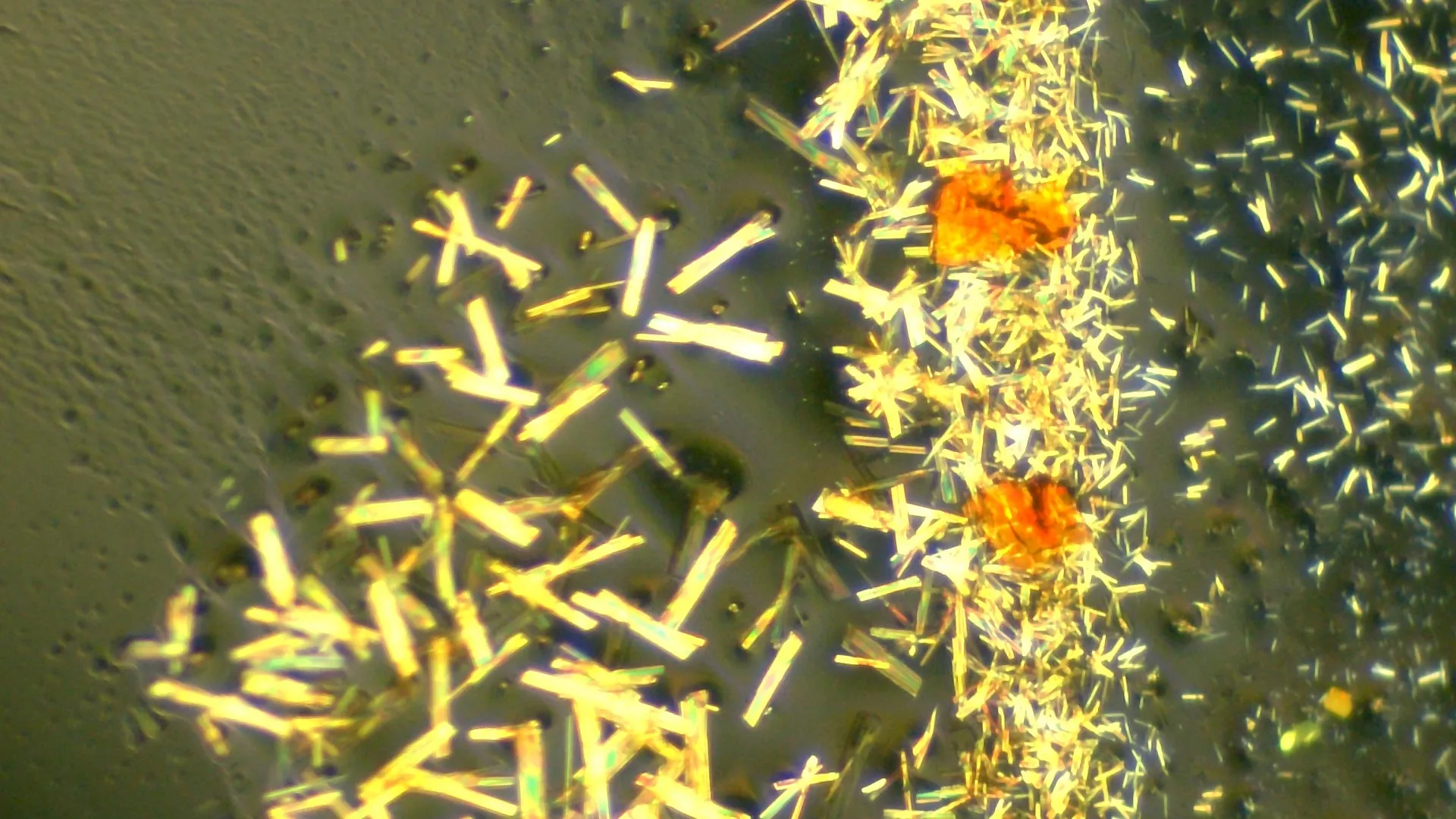
“We were able to isolate an intermediate structure from our ruthenium complex formation reaction and characterize this with single-crystal X-ray diffraction. Surprisingly, we found the structure to be doubly ring-slipped,” says Takebayashi.
Ring-slippage happens when the number of atoms in a molecular ring that bond to the metal changes. In this case, each carbon ring shifted from bonding through all five carbon atoms to bonding through only one carbon atom. According to the researchers, this is the first time a double ring-slipped sandwich intermediate has been fully characterized at the molecular level.
New Clues About Metallocene Formation
To better understand the unusual ruthenocene derivative, the team combined several analytical techniques, including NMR spectroscopy and mass spectrometry. They also used both computational modeling and laboratory experiments to map the reaction pathway in detail.
Their analysis revealed another unstable stage in the process, a single ring-slipped intermediate that forms from the doubly ring-slipped structure. Together, the findings provide a clearer picture of how these important sandwich compounds form and rearrange during chemical reactions.
Takebayashi adds, “There is a recent renewed interest in incorporating metallocenes into materials to access different properties. By understanding how they can react and deform, we can design tunable structures for use in drug delivery systems, catalysts, sensors and other settings.”
The work could help scientists create metallocene-based materials with adjustable or stimuli responsive properties, potentially leading to new advances in chemistry, materials science, and medicine.