
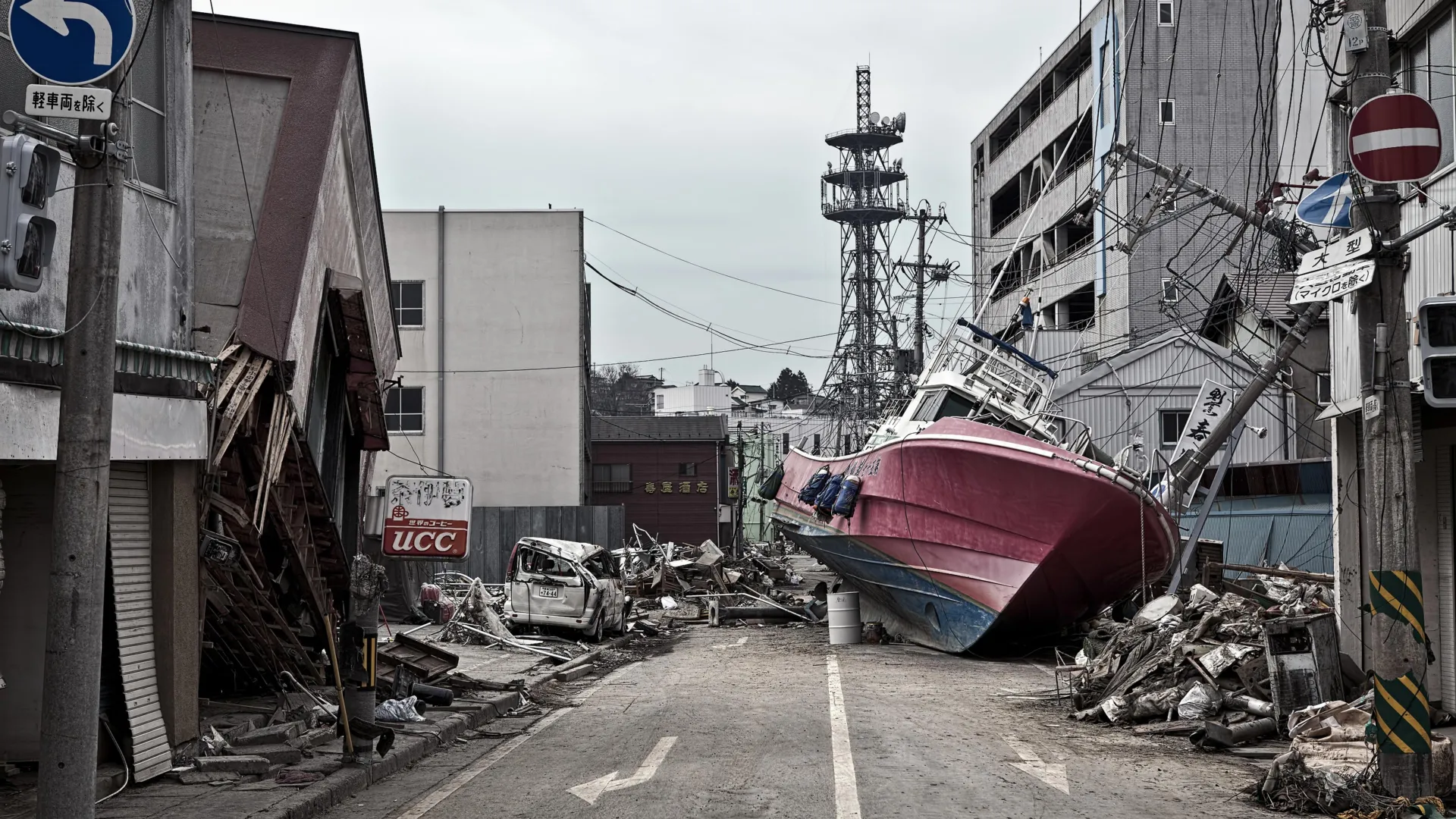
Researchers have uncovered a hidden feature beneath the Pacific Ocean that helps explain why Japan’s devastating 2011 earthquake and tsunami became so destructive. The discovery also offers new clues that could improve forecasts of future megaquakes and tsunamis.
A new study found that a thin layer of soft, clay-rich sediment beneath the Japan Trench played a critical role in the disaster. Located just below the seafloor, this unusually weak layer allowed the fault to rupture all the way to the trench during the 2011 “megathrust” earthquake. As a result, the seafloor shifted by an extraordinary 130 to 200 feet, helping generate the massive tsunami.
“That’s equivalent to the entire area between Los Angeles and San Francisco moving 130 to 200 feet in just six minutes,” said Christine Regalla, an associate professor in Northern Arizona University’s School of Earth and Sustainability and a co-author of the study. “We’ve never seen anything like that in the time we’ve been observing earthquakes. Based on what we understood, we didn’t think that could happen.”
The research, led by Regalla and more than a dozen scientists from around the world, was published in Science.
Hidden Clay Layer Beneath the Japan Trench
Most large earthquakes begin much deeper below Earth’s surface. Regalla explained that when tectonic plates shift, the rupture that produces an earthquake usually occurs far underground. For example, the rupture that caused the 6.8 magnitude Nisqually earthquake in the Pacific Northwest in 2001 started about 32 miles beneath the seafloor.
The 2011 Japan earthquake was very different. The rupture reached only about 15 miles below the seafloor, allowing the fault to break much closer to the ocean bottom. The resulting magnitude 9.1 earthquake triggered one of the deadliest natural disasters in modern Japanese history, killing nearly 20,000 people and causing more than $200 billion in damage.
To understand why this happened, researchers traveled to the western Pacific aboard the research vessel Chikyu. They drilled about 26,000 feet into the ocean floor, recovered sediment samples, and analyzed the material. Guinness World Records recognized the expedition as the deepest scientific ocean drilling project ever completed.
The samples revealed a 100 foot thick layer of pelagic clay, an extremely soft, slippery sediment formed over millions of years as microscopic particles slowly settled to the seafloor. Sandwiched between much stronger rock layers, the clay acted like a natural “tear line” that concentrated the rupture along a narrow path.
“At the Japan Trench, the geologic layering basically predetermines where the fault will form,” said study co-author Patrick Fulton, an associate professor in Cornell University’s Department of Earth and Atmospheric Sciences. “It becomes an extremely focused, extremely weak surface, which makes it easier for ruptures to propagate all the way to the seafloor.”
Why the Discovery Matters
Because this pelagic clay layer stretches for hundreds of miles along the Japan Trench, researchers believe the region may be more vulnerable to shallow slip earthquakes than previously thought. Regalla said understanding where these weak layers exist could improve scientists’ ability to identify areas capable of producing the largest earthquakes and tsunamis.
“An earthquake and tsunami in Japan doesn’t just impact people who live locally — it also impacts people at the ports and people who live across the ocean,” Regalla said. “Think about Hawaii: Their most devastating tsunamis come from Japan and Alaska. These are truly global events.”
Improving Earthquake and Tsunami Forecasts
The researchers hope the findings will help scientists better understand where powerful earthquakes and tsunamis are most likely to occur. That knowledge could help policymakers strengthen building codes, improve earthquake resistant infrastructure, update evacuation plans, and better prepare communities for future disasters.
“Japan is one of the world leaders in earthquake and tsunami preparation, but even they weren’t prepared for what happened in 2011,” Regalla said. “We all need to gain a better understanding of where these events might happen in the future. Only then can we make emergency plans that will keep everyone safe.”