
Machine learning is giving scientists a powerful new way to search for superconductors, materials that conduct electricity with zero resistance. An international team has demonstrated that AI can rapidly narrow an almost limitless number of possible material combinations to identify the most promising candidates. According to Aalto University Professor Päivi Törmä, who leads the SuperC consortium, the approach could dramatically speed the discovery of new superconductors.
Superconductors allow electric current to flow without losing energy, but only when cooled to extremely low temperatures where quantum effects emerge. These remarkable materials are already used in technologies ranging from quantum computers and medical neuroimaging systems to fusion reactors and maglev trains.
Despite their enormous potential, superconductors remain exceptionally difficult to discover. There are virtually endless combinations of chemical elements that could form new materials, yet only a tiny fraction turn out to be superconductors. Those that have already been identified generally require costly cooling systems that bring them close to absolute zero before they exhibit their unique properties.
Scientists around the world are searching for a practical superconductor that can operate at room temperature.
“Superconductive materials that can operate at room temperature would forever change the way we consume energy,” explains Törmä. “If such a material could replace regular conductors in applications like computers and data centers, global energy consumption could be slashed and the heat footprint of the ICT sector vastly reduced.”
AI and Quantum Physics Join Forces
The SuperC consortium was established in 2023 by Professor Törmä and an international group of leading physicists who share the goal of using quantum physics to help address climate change. It is the first coordinated global collaboration dedicated to discovering new superconductors, with the ambitious objective of finding a room temperature superconductor by 2033.
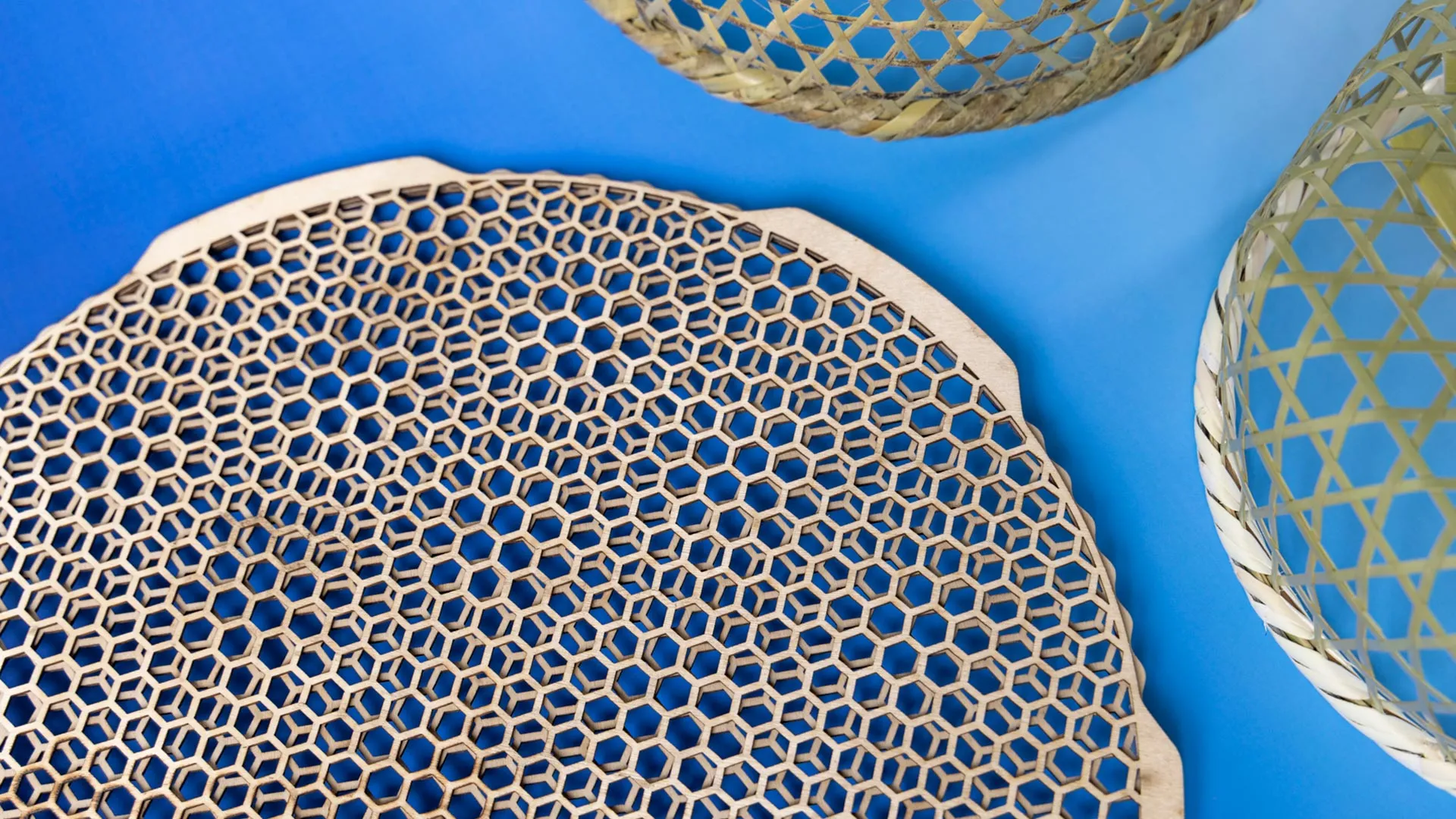
According to Törmä, combining quantum geometry with machine learning provides a powerful foundation for that search. In the team’s latest work, the newly identified superconductors, YRu3B2 and LuRu3B2, owe their properties to electrons forming flat bands within a kagome lattice, a geometric arrangement inspired by traditional Japanese basket weaving patterns.
To identify these materials, researchers first used machine learning to rapidly screen enormous numbers of possible elemental combinations. A specialized algorithm selected the most promising candidates, which were then analyzed using detailed quantum calculations to determine whether they could become superconductors.
Once the predictions were confirmed theoretically, collaborators at Rice University synthesized the materials by chemically combining their constituent elements into new compounds. Led by Professor Emilia Morosan, the Rice team then experimentally verified that both materials are indeed superconductors.
The proof of concept study was recently published in Physical Review Research.
A Faster Path to New Superconductors
Developing a complete quantum mechanical understanding of superconductivity is extraordinarily challenging, making the search for new superconducting materials slow and computationally demanding.
“Over the decades researchers have recognized over 7,000 superconductors, but mostly serendipitously,” explains Törmä. “The process of identifying possible materials is so computationally heavy that, in fact, researchers have only been able to theoretically predict the viability of about 20 of these.”
Even when a material appears promising on paper, it may still prove impractical because it is too difficult to synthesize or impossible to produce at scale, Törmä notes. Traditionally, evaluating huge numbers of potential materials has required enormous computing resources. The SuperC team’s AI driven approach changes that process by focusing detailed calculations only on the strongest candidates.
“Our method uses machine-learning-based pre-screening followed by targeted calculations on the promising candidates. This approach will greatly speed up superconductor discovery in the future. With machine learning, we may be able to push the number of materials we can process into the billions,” says Törmä. “This will take us a critical step closer to finding a room-temperature superconductor.”
Looking Ahead
SuperC’s research will be featured in Aalto University’s Designs for a Cooler Planet exhibition from September 1 to October 30, 2026, in Greater Helsinki, Finland.
The SuperC consortium receives funding from The Kavli Foundation, Klaus Tschira Stiftung, Kevin Wells, the Jane and Aatos Erkko Foundation, the Keele Foundation, the Magnus Ehrnrooth Foundation, and the Neste and Fortum Foundation.