
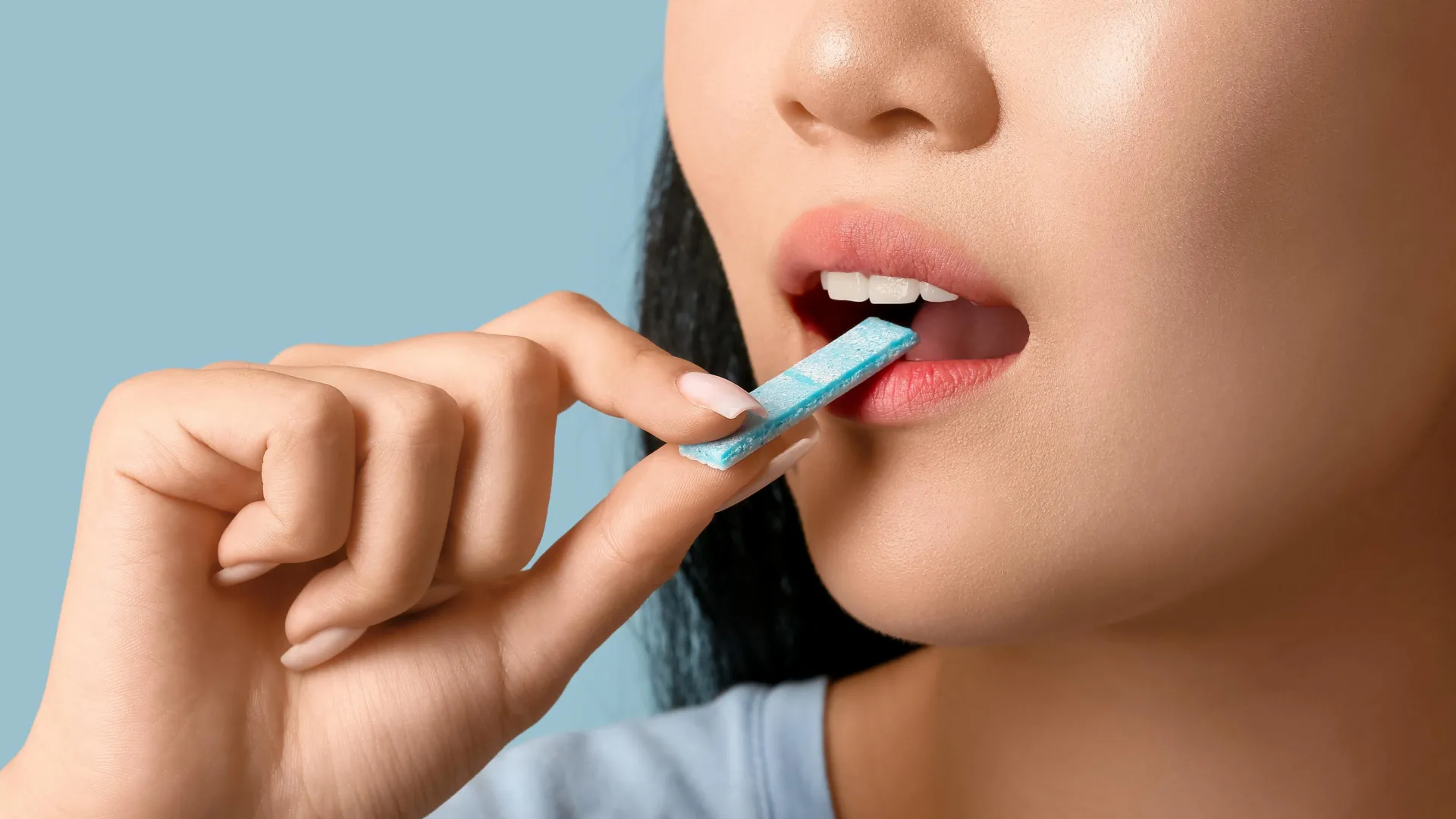
Researchers at King’s College London have uncovered an unexpected connection between chewing sugary gum after eating nitrate-rich vegetables and a temporary reduction in blood pressure. The findings suggest that, under specific conditions, sugary chewing gum can help the body make better use of dietary nitrate found in foods such as beetroot, spinach, and kale.
Nitrate naturally accumulates in vegetables from the soil, but it does not benefit the body until bacteria in the mouth convert it into nitrite. Nitrite helps relax and widen blood vessels, improving blood flow and contributing to lower blood pressure.
How Mouth Acidity Affects Nitrate Conversion
Scientists have long known that oral bacteria are essential for converting nitrate into nitrite. Because this process limits how much nitrate the body can use, researchers have been searching for ways to make the conversion more efficient.
One possibility is that increasing the acidity of saliva could speed up this chemical reaction. To investigate, the research team tested whether chewing sugar-containing gum, which lowers the pH inside the mouth, would increase nitrite production.
Dr. Andrew Webb, Clinical Senior Lecturer in the School of Cardiovascular & Metabolic Medicine & Sciences, King’s College London, said: “Whether and how the acidity of the saliva in the mouth impacts the conversion of the inactive nitrate, to the more active nitrite, is a fundamental question, as it impacts a range of important physiological functions including blood pressure. However, this process has not been studied much.
“While most research suggests that increasing acidity inhibits the conversion of nitrate, this has never been investigated in the whole body, over several hours.
“Incidentally, we previously found that combining grapefruit juice with beetroot juice decreased the acidity of the saliva and inhibited the conversion of nitrate to nitrite in the saliva. So, we wanted to formally test whether doing the opposite – increasing the acidity of the saliva – would enhance the conversion of nitrate to nitrite.”
Beetroot Juice and Chewing Gum Study
Healthy volunteers took part in a crossover study in which they drank a shot of beetroot juice before chewing either sugar-containing (Hubba Bubba® bubble) gum or sugar-free (Wrigley’s Extra®) gum for three to six hours. Throughout the experiment, researchers collected blood and saliva samples and monitored blood pressure. At least one week later, each participant returned to repeat the study using the other type of gum.
Compared with the sugar-free gum, chewing Hubba Bubba significantly increased saliva acidity, producing a 1.4 point drop in pH. Participants also showed a 45% increase in nitrite levels in the mouth and a 25% increase in nitrite circulating throughout the body.
The sugary gum group also experienced a measurable reduction in blood pressure. Systolic blood pressure (when the heart pushes blood out) fell by nearly 3 mmHg, while diastolic blood pressure (when the heart relaxes between beats) dropped by almost 2 mmHg compared with chewing sugar-free gum.
Not a Blood Pressure Treatment
The researchers emphasize that these findings should not be interpreted as a recommendation to chew sugary gum as a way to control blood pressure. The effects were temporary, and regular consumption of sugary products carries well known risks for dental and overall metabolic health.
However, the discovery could prove useful for athletes, many of whom already consume beetroot because dietary nitrate has been shown to support exercise performance.
Dr. Webb added: “The effects were only short-term, lasting several hours, and long-term use of sugar-containing products would not be recommended for dental health. Nonetheless, the classic culinary tradition of following a starter and a main course, especially if they contain nitrate-rich salad leaves and vegetables, with a sweet dessert – which could be fruit – may temporarily increase blood pressure-lowering and exercise enhancement.
“We also suggest that sugary chewing gum will have a greater effect compared to drinking sugary drinks, as it stays in the mouth for a longer period of time.”
Future Research Could Benefit Athletes
Co-author Dr. Charlotte Mills, University of Reading, explained that the findings point to new ways of improving how the body processes nitrate without relying on long-term sugar consumption.
“The bacteria that live in our mouths play a critical role in converting nitrate from foods such as beetroot into beneficial compounds that help relax blood vessels and lower blood pressure. Our findings suggest that the presence of sugar may create a more favorable environment for this process.
“We are certainly not suggesting that people should start chewing sugary gum regularly. Frequent sugar consumption is harmful for dental health and is also detrimental to cardiometabolic health when consumed in excess. Instead, our findings provide a proof of concept that we may be able to improve how the body processes dietary nitrate, and future research should focus on developing tooth-friendly, metabolically sound approaches that achieve the same effect.
“The challenge now is to identify alternative strategies that are both effective and appropriate for long-term use.
“Because dietary nitrate is already a recognized sports supplement, there is potential to optimize how athletes use it. If we can enhance nitrate conversion, we may be able to improve the physiological benefits that athletes obtain from nitrate-rich foods.
“We found that something as simple as the type of chewing gum used alongside beetroot juice can influence how effectively the body converts dietary nitrate into compounds that help lower blood pressure.”
The research team now plans to conduct a larger study involving athletes to further examine how sugary chewing gum affects nitrate metabolism, blood pressure, and exercise performance.
The findings were published in the British Journal of Clinical Pharmacology.