
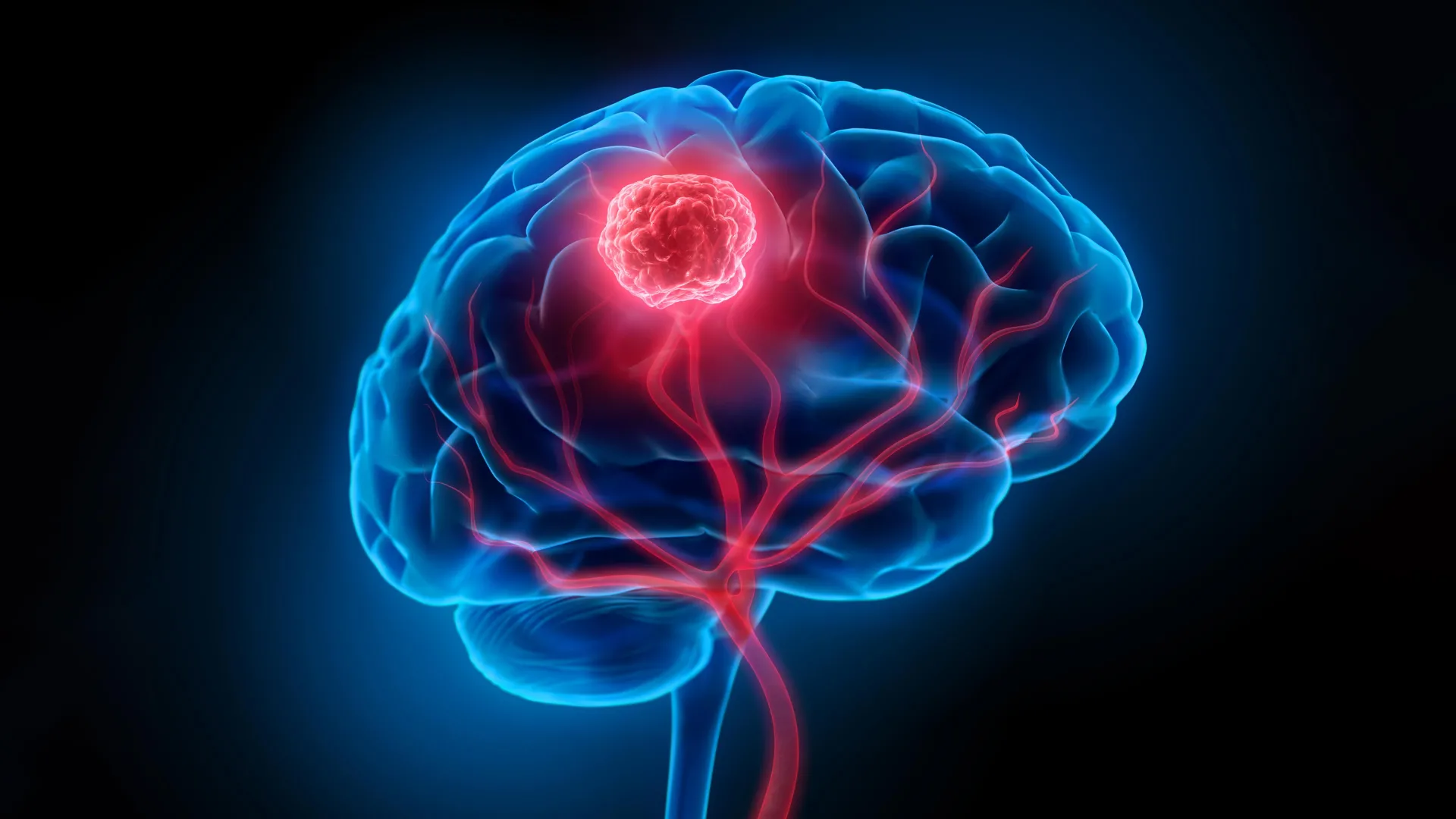
Most cancer treatments, including chemotherapy, radiotherapy and immunotherapy, are designed to attack and destroy cancer cells. A growing group of researchers is now asking whether this long-standing approach may be missing something important. What if the real path to a cure is not to damage cancer, but to coax it into healing instead?
That provocative idea is at the heart of work led by Professor Indraneel Mittra at the Advanced Centre for Treatment, Research and Education in Cancer in Mumbai, India.
The concept is not completely new. In 1986, an article in the New Journal of Medicine by Dr. Harold Dvorak suggested that cancer behaves very much like a wound that never heals. Cancer and chronic wounds share many biological features, and Professor Mittra argues that, rather than always trying to destroy tumors, medicine should explore ways to help them move toward a healed, less aggressive state.
In a recent study involving people with glioblastoma, one of the most feared brain cancers, his team reports that a simple combination of two low-cost nutraceuticals appears to support exactly this kind of healing process.
Testing a Gentle Strategy in Glioblastoma
Glioblastoma is a fast-growing, highly aggressive brain tumor. Even with modern treatments such as surgery, chemotherapy and radiotherapy, used alone or together, patients typically survive a median of only about 15 months.
In the new study, published in BJC Reports, Professor Mittra and colleagues enrolled ten patients with glioblastoma and asked them to take a tablet containing small amounts of two nutraceuticals, resveratrol and copper. They took this tablet four times a day for an average of 11.6 days before their scheduled brain surgery.
Another group of ten patients, whose tumors were similarly aggressive but who did not receive resveratrol and copper, served as the control group.
During surgery, the team collected brain tumor samples from both groups. These samples were then examined in detail using microscopy, immune-staining, immunofluorescence and transcriptome analysis to see how the tumors differed.
The analyses showed that the nutraceutical tablets had a striking effect on tumor biology.
Dramatic Changes Inside the Tumors
Several key cancer markers shifted in a favorable direction in patients who received the resveratrol and copper tablets:
- Average levels of the protein Ki-67, a widely used indicator of how quickly glioblastoma cells are dividing, were almost one third lower in treated tumors than in untreated ones. This suggests the cancer was growing less aggressively.
- Biomarkers associated with nine major “hallmarks of cancer” were present in 57% fewer cells in the treated samples.
- Levels of six immune checkpoints, proteins that normally prevent the immune system from attacking cancer cells, were on average 41% lower in the treated tumors.
- Three markers linked to stem cells, which may help tumors spread and resist treatment, were 56% lower in the treated group.
Crucially, the patients who took the nutraceutical tablets did not experience any side-effects.
“These results suggest that a simple, inexpensive and non-toxic nutraceutical tablet potentially has the power to heal glioblastoma,” said Professor Mittra.
Targeting Cell-Free Chromatin Particles (cfChPs)
So how might this apparent healing happen at the cellular level?
According to Professor Mittra, the key action involves resveratrol and copper acting on cell-free chromatin particles (cfChPs) (cfChPs) that circulate in the body. These are fragments of DNA released from dying cancer cells that can worsen the behavior of surviving cancer cells.
Earlier work from his group showed that when resveratrol and copper are combined, they generate oxygen radicals that deactivate or destroy cfChPs.
In the current study, the researchers found that cfChPs were abundant in tissue taken from untreated tumors, but were almost completely absent from tissue taken from tumors in patients who had received the nutraceutical tablets.
The findings suggest that dead cancer cells in the treated group were removed through apoptosis, a controlled cell death process, before they could release cfChPs into the surrounding environment.
Professor Mittra explains: “The cell-free chromatin particles, fragments of DNA released by dying cancer cells, inflame the surviving cancer cells. This makes the disease more aggressive.
“If you eliminate the cell-free chromatin, which is what the resveratrol-copper tablets do, the cancer is subdued.”
He adds that with longer-term use, this approach might possibly lead to complete healing of the cancer, effectively turning a malignant tumor into a benign one.
Immune Checkpoints and a Low Cost Alternative
One of the most notable findings from the study is that the resveratrol-copper tablets reduced the activity of several immune checkpoints. Immune checkpoint inhibition has been hailed as a breakthrough in cancer therapy, because blocking these proteins can unleash the immune system against tumors. However, current immune checkpoint inhibitor drugs are extremely expensive and can cause significant side-effects.
In contrast, the nutraceutical combination used in this study is simple, non-toxic and inexpensive, yet still appears to downregulate multiple immune checkpoints. This raises the possibility of a more accessible way to influence some of the same pathways targeted by costly cancer drugs.
A Potential Shift in Cancer Treatment
A new approach to treating cancer has begun to emerge from these observations.
“We have been trying to kill cancer cells for 2,500 years, since the time of the ancient Greeks, without success,” says Professor Mittra.
“Maybe it is time to look at cancer treatment differently and work towards healing tumors, rather than annihilating them.
“Of course, the number of patients in this study was rather small. However, the results were so striking that I’d fully expect them to be replicated in a larger sample of patients.
“I believe that we may be on the brink of transforming the way cancer is treated.”
Professor Indraneel Mittra is Dr. Ernest Borges Chair in Translational Research and Professor Emeritus in the Department of Surgical Oncology at the Advanced Centre for Treatment, Research and Education in Cancer (ACTREC), Tata Memorial Centre, Mumbai.
This study was supported by the Department of Atomic Energy, Government of India, through its grant CTCTMC to the Tata Memorial Centre awarded to Indraneel Mittra.