
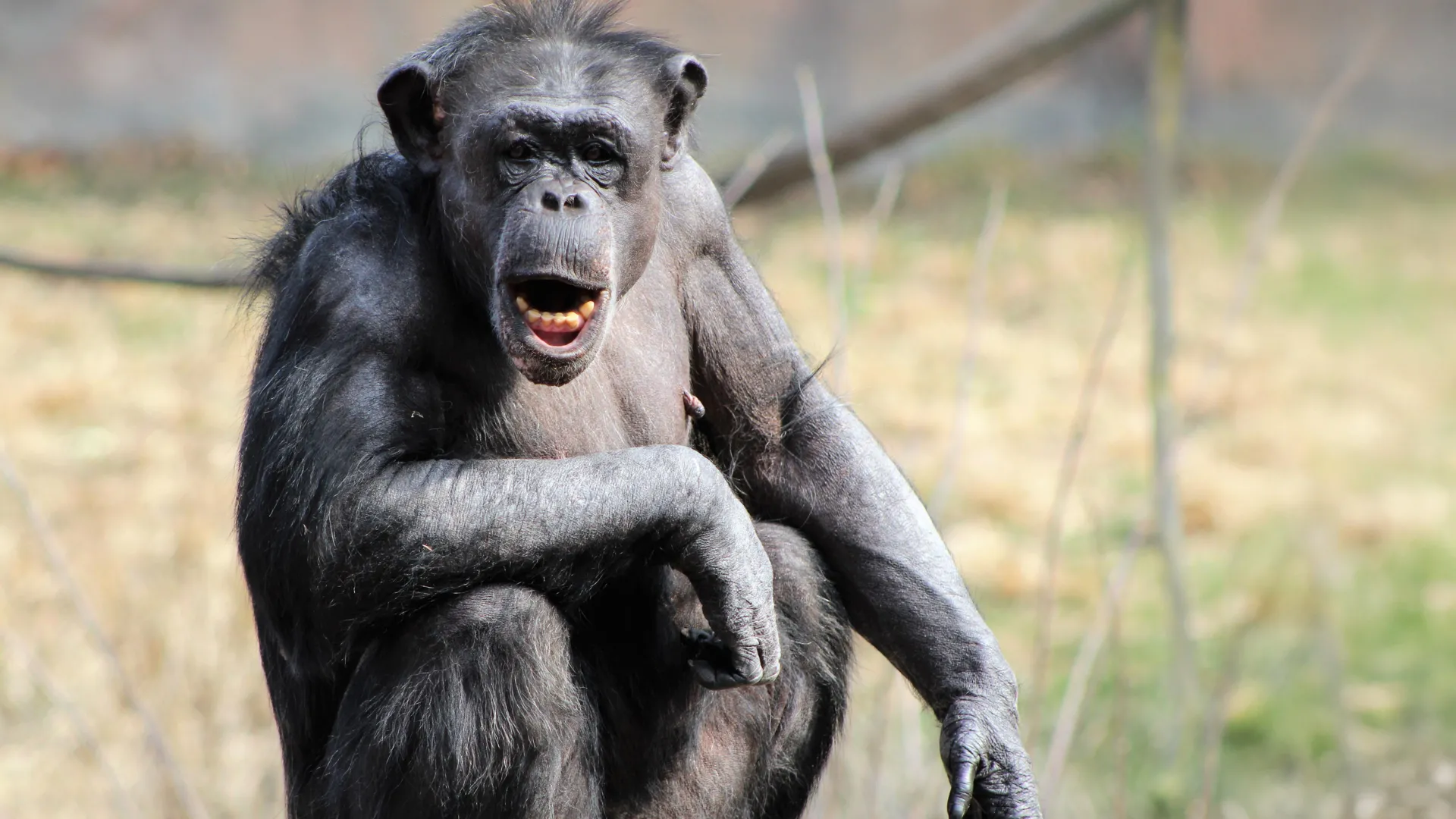
The human brain is not limited to recognizing our own voices. Research from the University of Geneva (UNIGE) has revealed that specific parts of the auditory cortex react strongly to chimpanzee vocalizations. Chimpanzees are our closest relatives both genetically and in the types of sounds they produce. The study, which appears in the journal eLife, indicates that certain subregions of the brain may be especially tuned to the calls of particular primate species. This insight offers a new way to explore how voice recognition emerged and how it may relate to the development of language.
Human voices play a central role in social communication, and a significant portion of the auditory cortex is devoted to interpreting them. Researchers wanted to know whether these abilities have deeper evolutionary origins. To investigate this question, scientists from UNIGE’s Faculty of Psychology and Educational Sciences used a comparative approach grounded in species evolution. By examining how the human brain processes the vocalizations of closely related species, such as chimpanzees, bonobos and macaques, they aimed to identify traits shared with other primates. This approach helps shed light on how the neural foundations of vocal communication began to emerge long before language existed.
Studying How the Brain Responds to Primate Calls
In the experiment, 23 human volunteers listened to vocal sounds from four species. Human voices served as the control group. Chimpanzee calls were included because these primates are closely related to us both genetically and acoustically. Bonobo vocalizations were also tested, even though they often sound more like birdsong. Macaque calls were added because these primates are more distantly related to humans both evolutionarily and acoustically. Researchers used functional magnetic resonance imaging (fMRI) to examine activity across the auditory cortex. “Our intention was to verify whether a subregion sensitive specifically to primate vocalizations existed,” explains Leonardo Ceravolo, research associate at UNIGE’s Faculty of Psychology and Educational Sciences and first author of the study.
A Distinct Neural Response to Chimpanzee Vocalizations
The results confirmed their expectations. A part of the auditory cortex known as the superior temporal gyrus, which plays a key role in processing sounds related to language, music and emotional cues, showed increased activation when participants heard certain primate calls. “When participants heard chimpanzee vocalizations, this response was clearly distinct from that triggered by bonobos or macaques.”
This pattern is particularly striking because bonobos are just as genetically close to humans as chimpanzees, yet their vocalizations differ greatly in acoustic structure. The findings suggest that both evolutionary closeness and similarity in sound features influence how the human brain reacts.
What the Findings Suggest About Language Evolution
This discovery offers new directions for understanding how the neural basis of communication evolved. It indicates that some parts of the human brain may have preserved a sensitivity to the calls of our closest primate relatives. “We already knew that certain areas of the animal brain reacted specifically to the voices of their fellow creatures. But here, we show that a region of the adult human brain, the anterior superior temporal gyrus, is also sensitive to non-human vocalizations,” notes Leonardo Ceravolo.
These results support the idea that humans and great apes share vocal processing abilities that existed before spoken language emerged. They may also help explain how voice recognition develops in early life. For instance, this line of research could clarify how babies begin recognizing familiar voices while still in utero.