
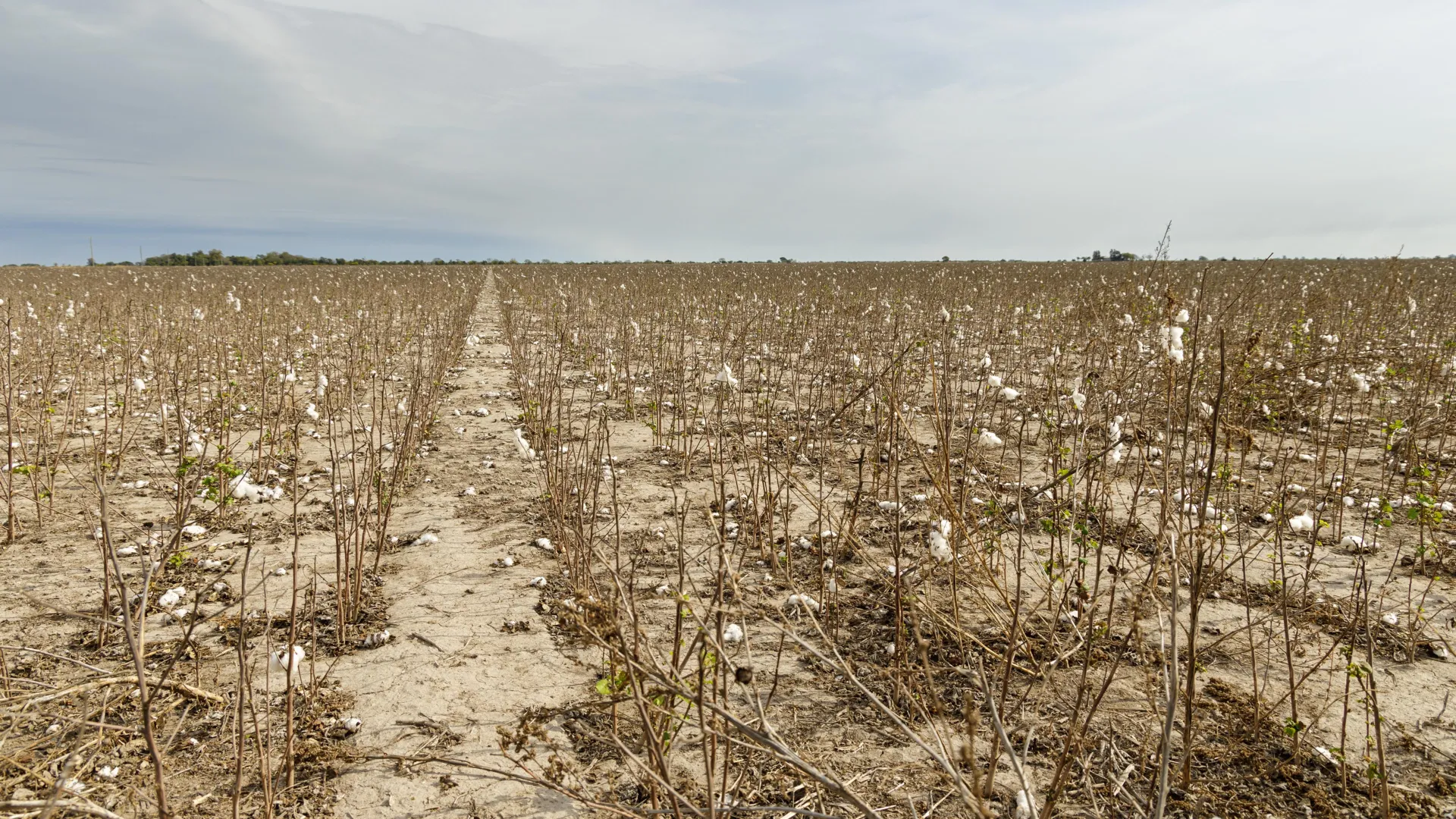
A virus that harms cotton crops across the southern United States has been present in American fields for nearly two decades without being recognized. New research shows that cotton leafroll dwarf virus (CLRDV), once thought to be a recent arrival, was already infecting cotton plants in multiple growing regions as far back as 2006.
The study, published in Plant Disease by scientists from the USDA Agricultural Research Service along with collaborators at Cornell University, overturns long-held beliefs about when the virus first appeared in US cotton. The work also highlights how modern data analysis can reveal overlooked dangers hidden in older samples collected years before the virus drew attention.
Evidence Found in Archived Samples
“CLRDV was officially detected in 2017, so the assumption was that it had only recently entered the U.S.,” said Alejandro Olmedo-Velarde, formerly a Cornell postdoctoral associate and now Assistant Professor in the Department of Plant Pathology, Entomology, and Microbiology at Iowa State. “Our study shows that this virus was actually present in the country’s Cotton Belt long before that. We found clear evidence of the virus in samples from 2006 in Mississippi, 2015 in Louisiana, and 2018 in California.”
To verify these results, the researchers carried out field surveys in 2023, gathering new cotton samples from Southern California. Laboratory analysis confirmed that CLRDV is currently present in the state — representing California’s first official detection of the virus.
How Data Mining Revealed a Hidden Threat
A major part of the research involved revisiting genetic information stored in public databases. By carefully reexamining these datasets, the team identified viral genetic material that closely matched known US strains of CLRDV. This approach helped map how the virus spread over time and across regions, reinforcing the value of open, well-maintained genetic databases for tracking plant diseases and improving early detection.
The researchers also uncovered evidence of the virus in an unusual place: a sample taken from the digestive tract of a cow involved in a California research study. The findings support the idea that the animal likely consumed plant-based feed contaminated with CLRDV. While this does not indicate that animals can be infected, it provides additional insight into how widespread the virus may have been before its official identification.
Possible Link to Long-Standing Crop Damage
The study brings renewed attention to a long-debated issue in cotton science known as bronze wilt. The researchers suggest that CLRDV may be connected to bronze wilt symptoms, a theory that has divided experts in the past. “Now, as more studies align with our findings, the idea is gaining traction,” said Olmedo-Velarde. “It could help explain long-standing crop losses and inform virus monitoring strategies moving forward.”
Why the Findings Matter for Growers
Agricultural Research Service Scientist Dr. Michelle Heck emphasized the importance of the results for farmers. “For growers, the findings offer both a caution and a call to action. CLRDV has been in U.S. fields far longer than anyone realized, and it may be more widespread than current reports suggest. Understanding how and why the virus remained under the radar for so long — and why it’s becoming more of a problem now — will be critical for developing effective management strategies.”
Overall, the research underscores the growing importance of bioinformatics, plant pathology, and collaboration across scientific fields. It also suggests that existing data may already hold early warning signs of emerging agricultural threats, if researchers know where and how to look.