
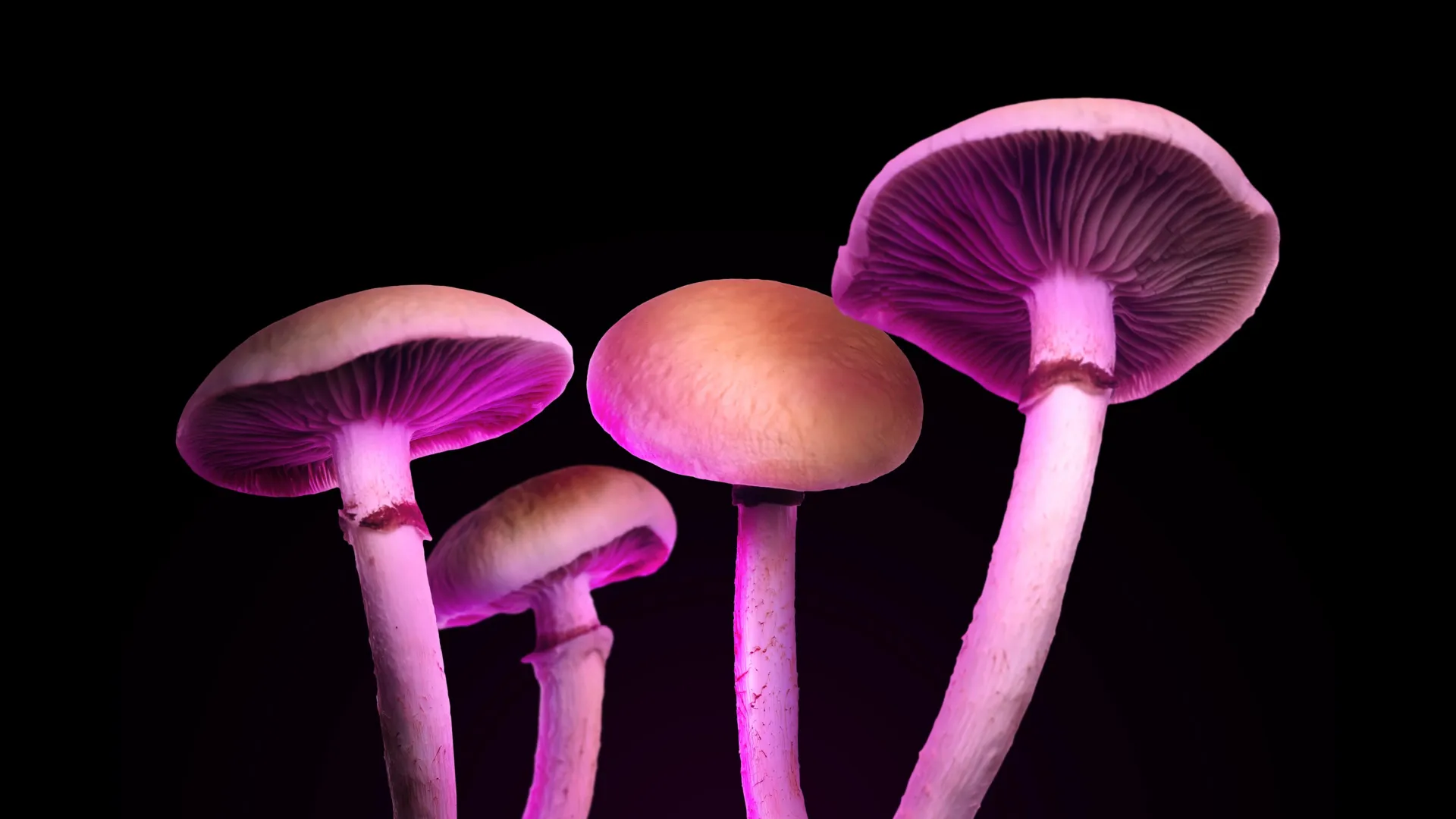
Psilocybin, the psychoactive compound found in “magic mushrooms,” has drawn growing interest from scientists studying treatments for conditions such as depression, anxiety, substance use disorders and some neurodegenerative diseases. Despite its therapeutic promise, the intense hallucinogenic effects associated with the compound may limit how widely it can be used in medicine. In research published in ACS’ Journal of Medicinal Chemistry, scientists created modified forms of psilocin, the active compound produced when psilocybin is processed in the body. In an early study involving mice, these new molecules maintained their biological activity while triggering fewer hallucinogenic-like effects than pharmaceutical grade psilocybin.
“Our findings are consistent with a growing scientific perspective suggesting that psychedelic effects and serotonergic activity may be dissociated,” says Andrea Mattarei, a corresponding author of the study. “This opens the possibility of designing new therapeutics that retain beneficial biological activity while reducing hallucinogenic responses, potentially enabling safer and more practical treatment strategies.”
Targeting Serotonin Pathways in Brain Disorders
Many mood disorders and neurodegenerative conditions, including Alzheimer’s disease, are linked to disruptions in serotonin, a neurotransmitter that plays a key role in regulating mood and other brain functions. Researchers have spent decades exploring psychedelics such as psilocybin because of their influence on serotonin signaling in the brain. However, the hallucinations often associated with these compounds can make some patients hesitant to consider them as treatments, even when there may be clear medical benefits.
To address this challenge, a research team led by Sara De Martin, Mattarei and Paolo Manfredi designed five chemical variants of psilocin. These compounds were engineered to release the active molecule into the brain more slowly and steadily, potentially reducing hallucinogenic effects while preserving therapeutic activity.
Testing New Psilocin Derivatives
The scientists first evaluated the five compounds in laboratory experiments using human plasma samples and conditions that simulate gastrointestinal absorption. These tests helped identify the most promising candidate, known as 4e. The compound demonstrated strong stability during absorption and produced a gradual release of psilocin, a property that could help reduce hallucinogenic responses. At the same time, 4e continued to activate key serotonin receptors at levels similar to psilocin.
Researchers then compared equivalent doses of 4e and pharmaceutical grade psilocybin in mice. The substances were given orally, and the team tracked how much psilocin reached the bloodstream and brain over a 48 hour period. In animals treated with 4e, the compound crossed the blood-brain barrier efficiently and produced a lower but longer lasting level of psilocin in the brain compared with psilocybin.
Behavioral observations revealed another important difference. Mice receiving 4e showed significantly fewer head twitches, which scientists use as a reliable indicator of psychedelic-like activity in rodents, than mice treated with psilocybin. This occurred even though 4e strongly interacted with serotonin receptors. The researchers believe the difference is mainly related to how much psilocin is released in the brain and how quickly that release occurs.
Toward Psychedelic Inspired Medicines Without Hallucinations
According to the researchers, these findings show that it may be possible to design stable psilocin based compounds that reach the brain and activate serotonin receptors while reducing the intense mind altering effects commonly linked to psychedelics. More research will be needed to understand exactly how these molecules work and to examine their full biological impact before scientists can evaluate their safety and therapeutic potential in people.
The authors acknowledge funding from MGGM Therapeutics, LLC, in collaboration with NeuroArbor Therapeutics Inc. Several authors declare they are inventors on patents related to psilocin.