
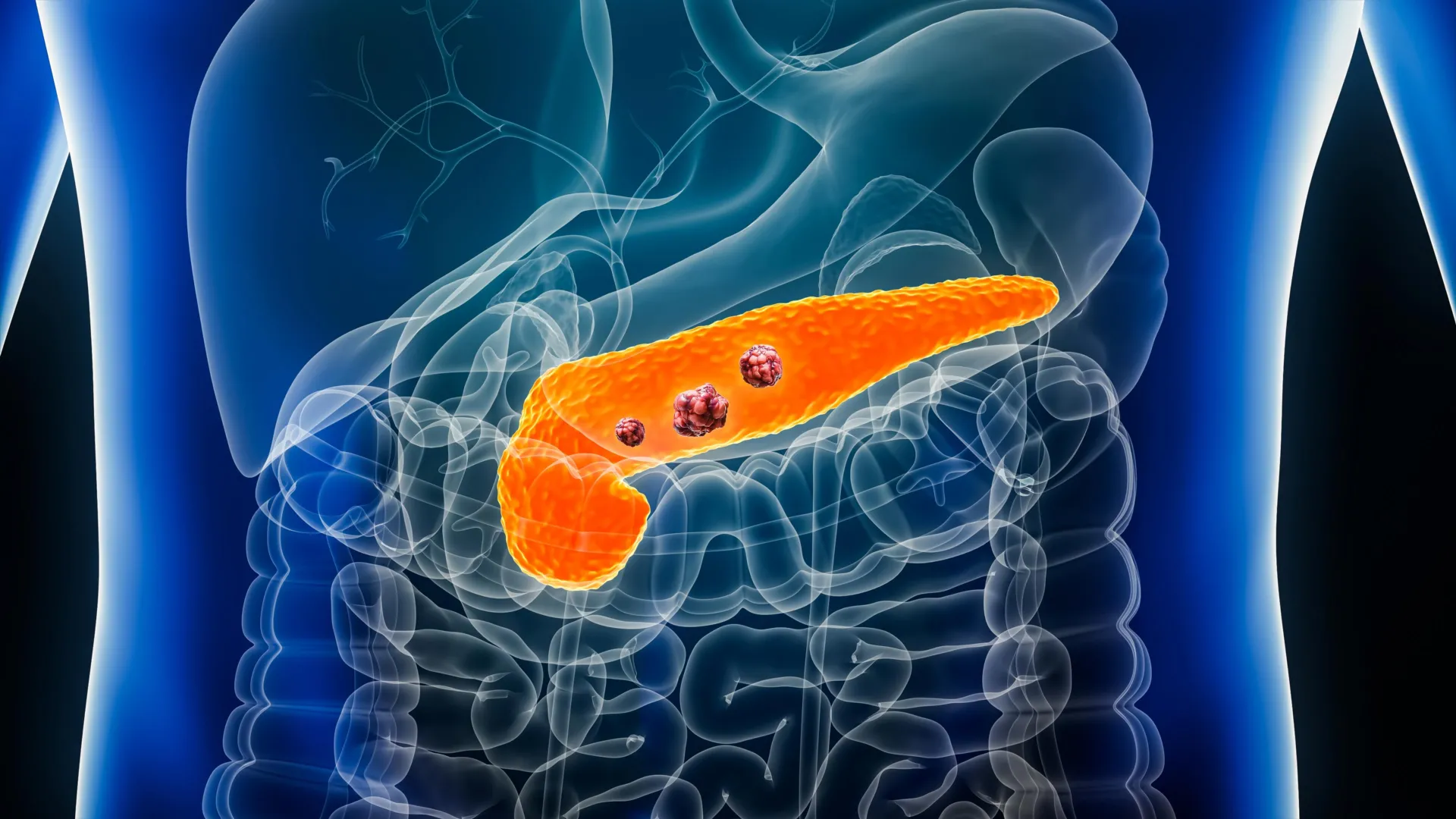
An artificial intelligence model called REDMOD can identify extremely subtle changes in pancreatic tissue that may signal cancer long before the disease becomes visible to doctors or conventional imaging technology. According to research published online in the journal Gut, the system can detect early signs of pancreatic ductal adenocarcinoma, the most common type of pancreatic cancer.
Researchers believe this technology could help transform pancreatic cancer detection by identifying the disease at a much earlier stage (stage 0), when treatment is more likely to succeed. Instead of receiving a diagnosis after the cancer has progressed to an advanced, potentially terminal stage, patients might have an opportunity to begin treatment while the disease is still treatable.
Although REDMOD outperformed experienced radiologists in the study, more research is necessary before it can be introduced into routine medical care. In particular, the scientists emphasize the need to test the system in patients at high risk, including those experiencing unexplained weight loss or recently diagnosed diabetes.
Why Pancreatic Cancer Is So Difficult to Detect Early
Pancreatic ductal adenocarcinoma has a low survival rate, largely because it is often discovered only after the disease has advanced. Early pancreatic cancer typically produces few noticeable symptoms, and the changes it causes in pancreatic tissue can be too subtle to detect through standard medical imaging. The cancer can also progress rapidly, making timely diagnosis especially important.
To address these challenges, researchers created an artificial intelligence framework known as Radiomics-based Early Detection MODel (REDMOD). The system analyzes extremely fine patterns in the texture of pancreatic tissue, known as radiomics (radiomics), that are not readily visible on conventional computed tomography (CT) scans.
REDMOD also automatically identifies and outlines the pancreas, separating it from nearby organs and tissues. This process eliminates the need for specialists to manually trace the organ’s boundaries, reducing the inconsistencies that can arise when different people perform the task.
AI Finds Hidden Cancer Signals Years Before Diagnosis
To evaluate the system, the researchers examined abdominal CT scans from 219 patients treated at multiple hospitals. At the time of their scans, experienced radiologists had found no evidence of pancreatic cancer. However, every patient in this group was subsequently diagnosed with the disease.
The scans had been taken at different intervals before diagnosis. For 87 patients (40%), the images were obtained 3 to 12 months earlier. Another 76 patients (35%) had been scanned 12 to 24 months before diagnosis, while 56 (25%) had undergone imaging more than 24 months earlier (up to around 3 years). In nearly two thirds (64%) of the patients, the cancer developed in the head of the pancreas.
The researchers compared these images with CT scans from 1243 people who remained free of pancreatic cancer for up to three years afterward. The comparison group was matched according to age, sex, and the dates of their scans.
Patients who eventually developed pancreatic cancer had an average age of 69, with ages ranging from 34 to 88. Those in the comparison group were 64 years old on average, with the same age range of 34 to 88.
REDMOD successfully identified subtle imaging signatures associated with pancreatic cancer an average of 475 days before patients received their clinical diagnoses. These early warning signs had previously gone undetected during routine radiological assessments.
“This temporal window holds profound significance, as attaining such early detection would substantially augment the probability of cure and improved survival,” highlight the researchers.
“In fact, modelling studies indicate that increasing the proportion of localized [pancreatic ductal carcinomas] from 10% to 50% would more than double survival rates, thereby underscoring that the timing of diagnosis is the single most critical determinant of survival outcomes,” they add.
AI Outperforms Experienced Radiologists
The results also showed that REDMOD was substantially better than experienced radiologists at recognizing early cancer signals.
The AI achieved a sensitivity of 73%, compared with 39% for radiologists. Sensitivity measures how effectively a diagnostic method identifies people who actually have the disease, rather than overlooking genuine cases.
The difference was even more pronounced when researchers examined scans taken more than two years before the patients were diagnosed. In these cases, REDMOD achieved a detection rate of 68%, nearly three times the 23% recorded by radiologists.
The researchers also assessed how well the system could recognize scans from people without pancreatic cancer. In an independent group of 539 patients from several hospitals, REDMOD correctly classified just over 81% of scans as cancer free. It performed even better on the publicly available US National Institutes of Health NIH-PCT dataset (80 patients), correctly identifying 87.5% as free of pancreatic cancer.
Additional testing suggested that the early warning signs detected by REDMOD were consistent over time. When the researchers analyzed scans taken from the same patients several months apart, the system produced matching results in 90 to 92% of cases. This consistency strengthened the evidence that the AI was identifying meaningful changes associated with the disease.
Could AI Transform Early Pancreatic Cancer Detection?
Despite the promising findings, the researchers caution that several questions remain unanswered. One limitation is that the study population did not include a sufficiently diverse range of ethnic backgrounds, which could affect how well the technology performs across different populations.
The system must also undergo prospective testing, particularly among people at increased risk of pancreatic cancer, before researchers can determine whether it will be effective in everyday clinical practice.
Even with these limitations, the findings suggest that AI could eventually help doctors identify pancreatic cancer while it is still at a much more treatable stage, potentially improving survival for patients who would otherwise receive a late diagnosis.
The researchers conclude: “This study validates REDMOD as a fully automated AI framework capable of identifying the imaging signatures of stage 0 [pancreatic ductal adenocarcinoma] in normal pancreas, achieving this with substantial lead times and performance superior to expert radiologists.”
They add: “While prospective validation is paramount to confirm clinical utility, the REDMOD framework represents a significant advance towards shifting the paradigm for sporadic [pancreatic ductal adenocarcinoma] from a late-stage symptomatic diagnosis to proactive pre-clinical interception, offering tangible hope for improving outcomes in this challenging disease.”