
Bees struggle to find flowers because of air pollution

A new study has found that air pollution is preventing pollinators finding flowers because it degrades the scent. A research team comprising the UK Centre for Ecology & Hydrology (UKCEH) and the Universities of Birmingham, Reading, Surrey and Southern Queensland, found that ozone substantially changes the size and scent of…

Valleytronics: Innovative way to store and process information up to room temperature

Researchers at the Center for Functional Nanomaterials (CFN), a U.S. Department of Energy (DOE) Office of Science User Facility at DOE’s Brookhaven National Laboratory, and Northrop Grumman, a multinational aerospace and defense technology company, have found a way to maintain valley polarization at room temperature using novel materials and techniques.…

Live updates: Russia’s war in Ukraine

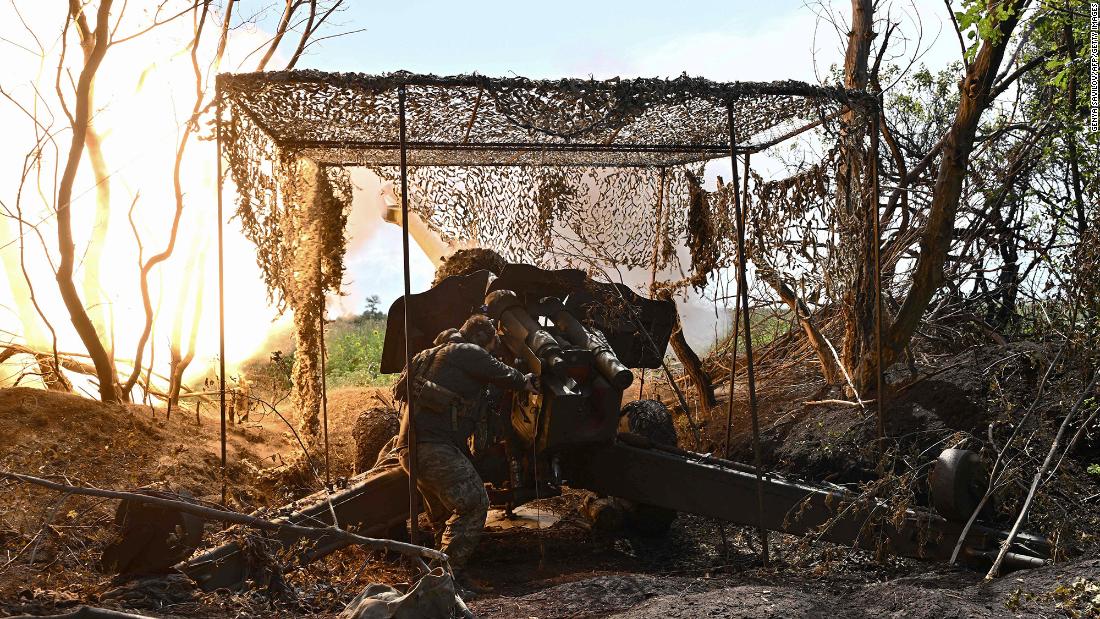
Accounts from the front lines in southern Ukraine suggest further incremental gains for Ukrainian forces amid constant artillery, mortar and rocket fire from both sides. Geolocated videos show a wasteland of shell holes, abandoned trenches and wrecked military hardware in the area between Robotyne, Verbove and Novoprokopivka — a triangle…

Study links epigenetic changes to historic trauma in Alaska Native communities

Researchers investigated the relationship between historical traumatic events experienced by Alaska Native communities and epigenetic markers on genes that previous studies have linked to trauma. The new study found a similar pattern among Alaska Native participants, with specific epigenetic differences observed in those who reported experiencing the most intense symptoms…

Artificial intelligence could help build pollen jigsaw of present and ancient flora

An emerging system which combines rapid imaging with artificial intelligence could help scientists build a comprehensive picture of present and historic environmental change — by swiftly and accurately analysing pollen. Pollen grains from different plant species are unique and identifiable based on their shape. Analysing which pollen grains are captured…

Beaver activity in the Arctic increases emission of methane greenhouse gas

The climate-driven advance of beavers into the Arctic tundra is causing the release of more methane — a greenhouse gas — into the atmosphere. Beavers, as everyone knows, like to make dams. Those dams cause flooding, which inundates vegetation and turns Arctic streams and creeks into a series of ponds.…

Invasive alien species play key role in 60% of global plant and animal extinctions

A new report by the Intergovernmental Platform on Biodiversity and Ecosystem Services (IPBES) presents major findings on the gravity of impacts from invasive alien species on our planet. Researchers found more than 37,000 alien species have been introduced by human activities over the centuries, and this conservative estimate is rising…

New at-home test for gingivitis protects oral health

Engineers at the University of Cincinnati have developed a new device that can warn consumers about early risks of tooth decay from diseases such as gingivitis and periodontitis. Gingivitis, the earliest form of gum disease, is caused by bacteria. But not just any bacteria. The problem for researchers was getting…

Polymer that can be adapted to high and low temperature extremes created

The modern world is filled with synthetic polymers, long-chained molecules designed by scientists to fill all manner of applications. Researchers at FAMU-FSU College of Engineering have developed two closely related polymers that respond differently to high and low temperature thresholds, despite their similar design. The polymer pair could be used…

French court upholds abaya ban in public schools | CNN

Paris CNN  —  France’s highest court on Thursday upheld the government’s ban on students in public schools from wearing the abaya, a long, robe-like garment often worn by Muslim women, in a decision that rights groups warn will lead to more discrimination. “As things stand, the judge considers that the…

Believing in personal gut feelings and falling for conspiracy theories

People who primarily use their own gut feeling to determine what is true and false are more likely to believe conspiracy theories. That is the conclusion of researchers at Linköping University, Sweden, who have investigated the relationship between susceptibility to misleading information and the conviction that the truth is relative.…

New bio-based glues form adhesive bonds that grow stronger in water

Patent-pending adhesive formulations developed at Purdue University from fully sustainable, bio-based components establish bonds that grow stronger when underwater or exposed to wet conditions. Gudrun Schmidt, an associate professor of practice in Purdue’s Department of Chemistry, and a team of researchers developed the formulations from zein, a protein found in…

How to prevent biofilms in space

After exposure in space aboard the International Space Station, a new kind of surface treatment significantly reduced the growth of biofilms, scientists report. Biofilms are mats of microbial or fungal growth that can clog hoses or filters in water processing systems, or potentially cause illness in people. In the experiment,…

Study suggests energy-efficient route to capturing and converting CO2

In the race to draw down greenhouse gas emissions around the world, scientists at MIT are looking to carbon-capture technologies to decarbonize the most stubborn industrial emitters. Steel, cement, and chemical manufacturing are especially difficult industries to decarbonize, as carbon and fossil fuels are inherent ingredients in their production. Technologies…

Lack of evidence hampers progress on corporate-led ecosystem restoration

A ‘near total’ lack of transparency is making it impossible to assess the quality of corporate-led ecosystem restoration projects, according to a Lancaster University-led study published today in Science. Efforts to rebuild degraded environments are vital for achieving global biodiversity targets. The United Nations has launched a Decade on Ecosystem…

First device to monitor transplanted organs detects early signs of rejection

Northwestern University researchers have developed the first electronic device for continuously monitoring the health of transplanted organs in real time. Sitting directly on a transplanted kidney, the ultrathin, soft implant can detect temperature irregularities associated with inflammation and other body responses that arise with transplant rejection. Then, it alerts the…

Fiber from crustaceans, insects, mushrooms promotes digestion

Who can forget the stomach-churning moments when “Survivor” contestants forced down crunchy insects, among other unappetizing edibles, for a chance to win $1 million? In daring culinary challenges, the TV show’s contestants exhibited gastronomic bravery as viewers watched in discomfort. Digesting a crunchy critter starts with the audible grinding of…

Specialized T cells in the brain slow progression of Alzheimer’s disease

As many as 5.8 million Americans are currently living with Alzheimer’s disease, a neurodegenerative condition associated with progressive cognitive decline, including loss of memory capabilities . Protein aggregates, composed of beta-amyloid or other proteins, form in the brains of individuals with Alzheimer’s. These beta-amyloid plaques appear to be a significant…