
Microplastics and nanoplastics are widely known for contaminating oceans, rivers, and farmland. New research now shows they are also accumulating in forests. Geoscientists at TU Darmstadt report this finding in a study published in Nature Communications Earth & Environment, highlighting a largely overlooked form of environmental pollution.
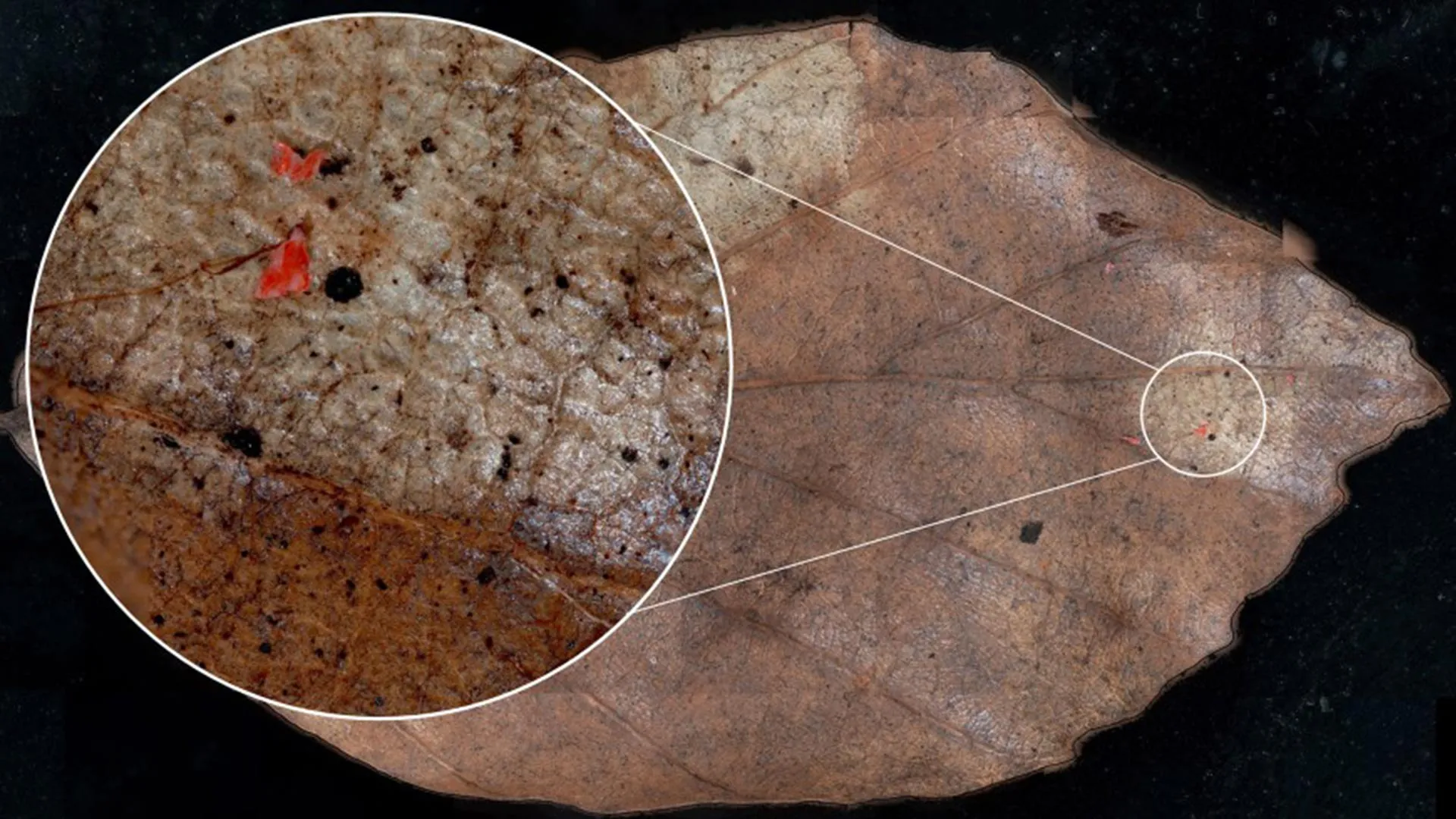
The study reveals that forests are not just affected by local pollution sources. Instead, most microplastics arrive through the air and gradually build up in forest soils. According to the researchers, these tiny plastic particles first land on the leaves in the upper canopy.
“The microplastics from the atmosphere initially settle on the leaves of the tree crowns, which scientists refer to as the ‘comb-out effect’,” explains lead author Dr. Collin J. Weber from the Institute of Applied Geosciences at TU Darmstadt. “Then, in deciduous forests, the particles are transported to the forest soil by rain or the autumn leaf fall, for example.”
How Plastic Particles Move Into the Soil
Once on the forest floor, natural processes take over. The breakdown of fallen leaves plays a key role in trapping and storing microplastics in the soil. The researchers found the highest concentrations in the top layer of leaf litter, where decomposition has just begun. However, significant amounts were also detected deeper underground.
This movement into lower soil layers is linked not only to the decomposition of organic material but also to biological activity, such as organisms that help break down leaves and redistribute particles.
Measuring Microplastics in Soil, Leaves, and Air
To better understand how microplastics accumulate, the research team collected samples from four forest sites east of Darmstadt in Germany. They analyzed soil, fallen leaves, and atmospheric deposition (the transport of substances from the Earth’s atmosphere to the Earth’s surface) using a newly developed method combined with spectroscopic techniques.
In addition, the scientists created a model to estimate how much microplastic has entered forests from the atmosphere since the 1950s. This helped them assess how much of the total pollution stored in forest soils can be traced back to airborne sources.
Forests as Indicators of Airborne Plastic Pollution
“Our results indicate that microplastics in forest soils originate primarily from atmospheric deposition and from leaves falling to the ground, known as litterfall. Other sources, on the other hand, have only a minor influence,” explains Weber. “We conclude that forests are good indicators of atmospheric microplastic pollution and that a high concentration of microplastics in forest soils indicates a high diffuse input — as opposed to direct input such as from fertilizers in agriculture — of particles from the air into these ecosystems.”
A New Environmental and Potential Health Concern
This research is the first to clearly show how forests become contaminated with microplastics and to directly connect that contamination to particles transported through the air. Until now, this pathway had not been thoroughly studied.
The findings provide an important foundation for evaluating the environmental risks of microplastics in both air and soil. “Forests are already threatened by climate change, and our findings suggest that microplastics could now pose an additional threat to forest ecosystems,” says Weber. The results may also have implications for human health, as they underscore how microplastics travel globally through the atmosphere and may be present in the air we breathe.