
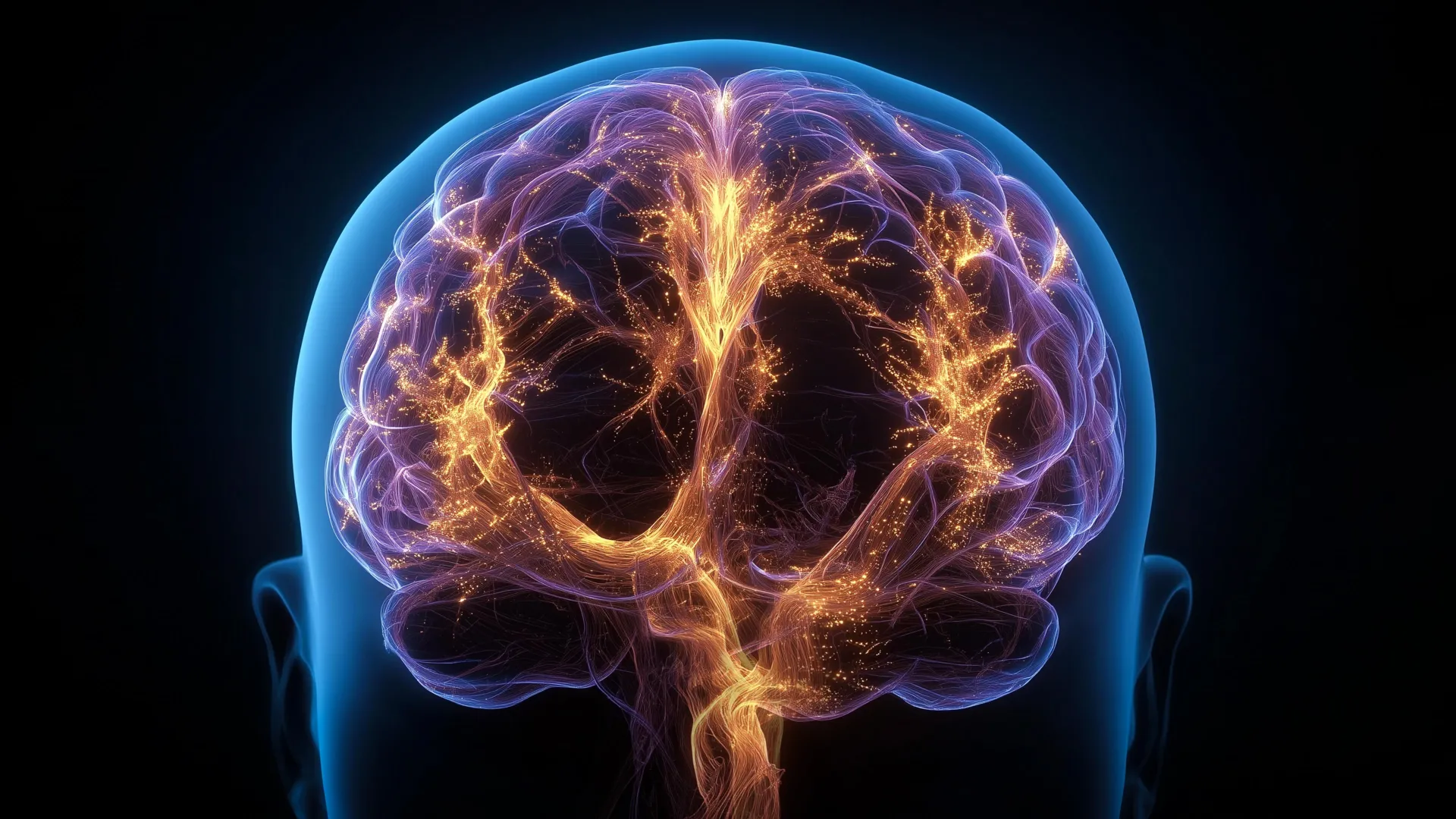
While we sleep, the brain carries out an essential maintenance process that helps wash away accumulated waste. But new research from MIT suggests that this natural cleaning system becomes less effective as we grow older, revealing another way aging can change the brain beyond simply disrupting sleep.
Researchers discovered that waves of cerebrospinal fluid (CSF), which help carry waste out of the brain, are significantly weaker in older adults. The decline appears to be connected to changes in the slow electrical waves that occur during deep sleep, as well as changes in how blood moves through the brain. Importantly, the reduced fluid movement cannot be explained simply by older people spending less time asleep.
The findings raise important questions about whether weakened brain cleansing could contribute to Alzheimer’s disease and other forms of dementia. The team now hopes to determine whether changes in these fluid waves could eventually help identify people at greater risk of cognitive decline.
“We know that people age really differently. Some people age very successfully with great cognitive outcomes, and other people develop cognitive decline. If we can figure out who has great trajectories of aging and what are the factors that are associated with that, we might be able to use that to predict future outcomes,” says Laura Lewis, the Athinoula A. Martinos Associate Professor of Electrical Engineering and Computer Science, a member of MIT’s Institute for Medical Engineering and Science and the Research Laboratory of Electronics, and an associate member of the Picower Institute for Learning and Memory.
Lewis and her colleagues also want to investigate whether treatments or other interventions could strengthen this waste-clearing process in older adults.
The study was published in Nature Aging, with Lewis serving as senior author. Its lead authors are Sydney Bailes, a postdoctoral researcher in MIT’s Laboratory for Information and Decision Systems, and Stephanie Williams, a former MIT visiting student who received her PhD from Boston University in 2026.
How Deep Sleep Helps the Brain Clear Waste
Deep sleep does much more than leave us feeling refreshed. During its deepest stages, known as non-REM sleep, the brain produces powerful, slow electrical waves that support physical recovery, strengthen memories, and help regulate other essential functions.
In 2019, Lewis and her colleagues discovered that these slow brain waves also help generate rhythmic movements of cerebrospinal fluid. The fluid moves through spaces around the brain and plays an important role in carrying away waste products.
That earlier discovery led to a new question. Because slow brain waves typically weaken with age, could the fluid movements responsible for clearing waste also become less effective?
Previous research had produced conflicting results. Some studies suggested that cerebrospinal fluid movement declined with age, while others reported increases. However, those investigations had not directly monitored the fluid during sleep, when the brain’s natural cleaning activity is especially important.
To investigate, the MIT team recruited two groups of volunteers. Younger participants were between 18 and 39 years old, while the older group ranged from 60 to 84.
Each volunteer completed a testing session lasting approximately two hours. The sessions began late at night, increasing the likelihood that participants would become sleepy during the measurements.
The researchers combined several techniques to observe what was happening inside the brain. Functional magnetic resonance imaging, or fMRI, allowed them to track changes in cerebral blood flow. A specialized MRI method developed by Lewis measured cerebrospinal fluid movement, while electroencephalography, or EEG, recorded the brain’s electrical activity.
Many participants fell asleep inside the scanner, providing an opportunity to compare their brain activity and fluid movements during wakefulness and sleep.
The results revealed a striking age difference. As younger adults entered non-REM sleep, their slow brain waves grew stronger and were accompanied by larger waves of cerebrospinal fluid. In older adults, however, the average fluid waves were substantially smaller.
The findings showed that aging was associated with a weakening of the fluid movements that normally accompany deep sleep.
Why the Aging Brain’s Cleaning Waves Weaken
The researchers next investigated what might be causing this decline. In a separate set of experiments conducted while participants were fully awake, they examined how the brain’s blood vessels responded to different demands.
One possible explanation involved neurovascular coupling, the process that connects brain activity with blood flow.
When a particular region of the brain becomes more active, its cells require additional oxygen and nutrients. Nearby blood vessels normally widen to deliver more blood, ensuring that the active cells receive the resources they need.
To measure this response, the researchers showed volunteers a flickering checkerboard pattern while monitoring blood flow with fMRI. The rapidly changing visual pattern stimulates activity in regions involved in processing vision, which should trigger an increase in local blood supply.
In many older participants, the brain’s electrical activity increased as expected, but the corresponding rise in blood flow was much smaller. This suggested that aging had weakened the ability of blood vessels to respond to the brain’s changing oxygen requirements.
The team then performed a second experiment to examine the brain’s broader vascular responsiveness.
Participants were instructed to hold their breath while researchers monitored changes in cerebral blood flow. Holding one’s breath causes carbon dioxide to accumulate in the bloodstream, which normally prompts blood vessels in the brain to widen and increase blood flow.
Once again, the older group showed a weaker response. On average, their cerebral blood flow increased less than it did in younger volunteers.
Together, these experiments indicated that changes in the brain’s vascular system could help explain why its waste-clearing fluid waves diminish with age.
Using a statistical model, the scientists found that weakened neurovascular coupling and reduced blood flow responses accounted for much of the decline in cerebrospinal fluid movement. However, the two mechanisms did not explain the entire difference, suggesting that additional biological changes associated with aging are also involved.
“Aging is so complex, and so many different things change, that it’s really hard to disentangle the individual factors,” Bailes says. “We try to account for some of the mechanisms, but there definitely are a lot of other factors related to vascular health and lifestyle. If you were able to measure all of them, you might be able to break it apart into different explanations for why an individual’s CSF flow might be more or less impaired.”
Could Weaker Brain Cleansing Increase Dementia Risk?
The discovery may have important implications for understanding neurological diseases associated with aging.
Earlier studies have linked disrupted sleep to a greater risk of Alzheimer’s disease and other forms of dementia. Because cerebrospinal fluid helps remove waste from the brain, researchers are particularly interested in whether age-related changes in its movement might contribute to neurodegeneration.
None of the volunteers in the MIT study had been diagnosed with a neurodegenerative disorder. However, brain scans revealed that some older participants showed signs of gray matter atrophy, meaning a loss of brain tissue in regions containing large numbers of nerve cells.
Those changes were associated with greater reductions in cerebrospinal fluid movement.
The relationship does not establish that weakened fluid flow causes brain tissue loss or dementia. Nevertheless, it provides a reason to investigate whether these changes might serve as early warning signs of neurological decline.
The researchers hope to follow some of the participants over time to determine whether reduced cerebrospinal fluid movement is associated with a greater likelihood of developing a neurodegenerative condition.
Can the Brain’s Nighttime Cleaning System Be Restored?
Beyond understanding why brain cleansing declines, the MIT team is exploring whether it might be possible to improve the process.
One promising possibility involves sound stimulation during sleep.
In a separate recent study, Lewis’ laboratory found that brief bursts of “pink noise” could increase cerebrospinal fluid movement in younger adults. Pink noise is a type of sound that contains a broad range of frequencies, with greater emphasis on lower frequencies than white noise.
Although the approach has shown potential in younger people, researchers have not yet tested whether it can produce similar effects in older adults.
Another intriguing finding could provide clues about how to preserve the brain’s natural cleaning abilities.
While older participants generally had weaker cerebrospinal fluid waves than younger adults, the decline was not universal. Some older volunteers retained fluid movements that were comparable to those measured in healthy younger people.
This raises the possibility that certain biological or lifestyle factors may help protect the brain’s waste-removal system against aging.
“It’s really intriguing that for some of these older adults, their CSF fell right in the range of the healthy young adults,” Lewis says. “We are really interested in what’s different in those people and how that might be related to future health outcomes.”
Understanding why some older brains maintain these youthful fluid movements could ultimately help researchers identify ways to support healthier brain aging and investigate whether preserving the brain’s nighttime cleaning system can reduce the risk of cognitive decline.
The research received funding from the National Institutes of Health, the Simons Collaboration on Plasticity in the Aging Brain, a McKnight Scholar Award, a Pew Biomedical Scholar Award, an MIT EECS Transformative Research Award, the Picower Institute Neurological Disorder Discovery Research Fund, a Sloan Fellowship, and the Department of Defense National Defense Science and Engineering Graduate Fellowship Program.