
Crans-Montana, identificate tutte le sei vittime italiane – Notizie – Ansa.it

E’ stato completato il riconoscimento delle sei vittime italiane della strage di Capodanno di Crans-Montana. Lo ha riferito l’ambasciatore italiano in Svizzera, Gian Lorenzo Cornado. Ai quattro precedentemente identificati, il sedicenne bolognese Giovanni Tamburi, il sedicenne milanese Achille Barosi, il quasi diciassettenne genovese Emanuele Galeppini e la sedicenne milanese Chiara…

Donna accoltellata dal marito nel Bresciano, è grave – Notizie – Ansa.it

Una donna di 45 anni è rimasta gravemente ferita questa mattina a Capriolo, nel Bresciano, dopo essere stata aggredita dal marito con un coltello al culmine di una lite in casa. L’allarme è scattato intorno alle 9.40, quando il 118 ha richiesto l’intervento di una pattuglia della Stazione dei Carabinieri.…

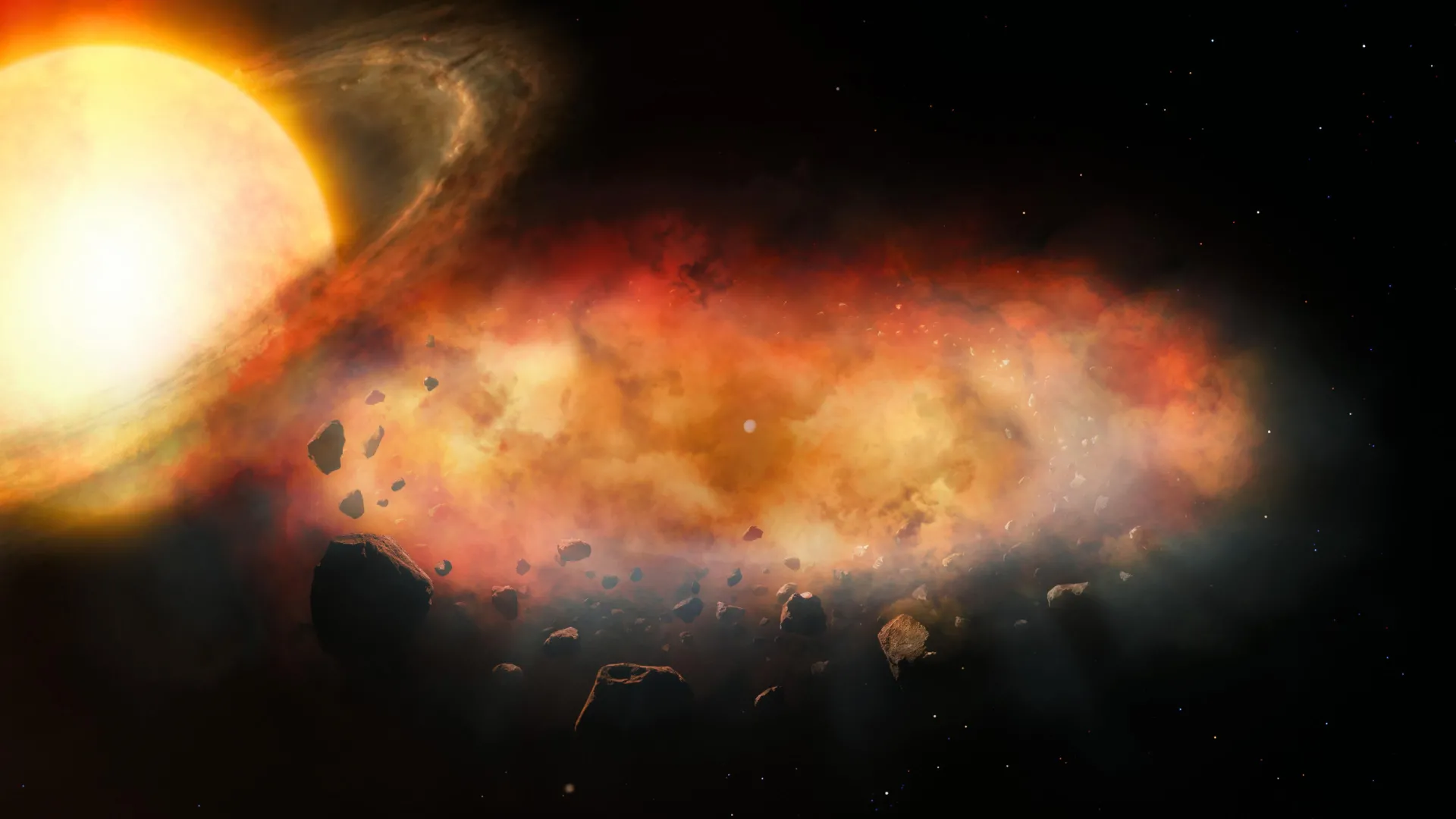
Astronomers measure the mass of a rogue planet drifting through the galaxy

A new study shows that astronomers have directly measured the mass and distance of a newly discovered free-floating planet by observing it at the same time from Earth and from space. This combined approach made it possible to capture details that are usually missing for these faint objects. The results…

A simple chemistry trick could end forever plastic

Yuwei Gu was walking through Bear Mountain State Park in New York when an unexpected sight caught his attention. Plastic bottles were scattered along the trail, with more drifting across a nearby lake. Seeing plastic waste in such a natural setting stopped the Rutgers chemist in his tracks and set…

The invisible microbes that help keep us healthy

Viruses and bacteria are often viewed as harmful, but researchers at Flinders University are drawing attention to a lesser-known side of the microbial world. Their work highlights the important ways microbes can support human health, challenging the idea that all microorganisms are threats. Flinders microbial ecologist Dr. Jake Robinson and…

A smarter way to screen for breast cancer is emerging

A large new study suggests that tailoring breast cancer screening to a woman’s individual risk may be safer and more effective than relying on routine annual mammograms for everyone. By matching screening frequency to personal risk levels, researchers found it was possible to reduce the likelihood of diagnosing more advanced…

Coral reefs could feed millions if we let them rebuild

The world is now home to about 8.3 billion people, and millions still do not have enough nutritious food. As concerns about food security grow, scientists are looking beyond land for solutions. New research suggests the ocean could play a much larger role than previously thought. A team led by…

Breakthrough obesity drugs are here but not for everyone

Access to obesity treatment in the UK may be heading toward a two-tier system, raising concerns that some of the most vulnerable patients could be left without help. Researchers warn that people who cannot afford private care may struggle to receive effective treatment through the National Health Service. Specialists from…

Type 2 diabetes physically changes the human heart, study finds

Researchers at the University of Sydney have uncovered new evidence showing that type 2 diabetes directly changes the heart’s structure and how it produces energy. These findings help explain why people living with diabetes face a much higher risk of developing heart failure. The study, published in EMBO Molecular Medicine,…

Scientists found a way to help aging guts heal themselves

Many people notice that certain foods become harder to tolerate with age. One possible reason is damage to the intestinal epithelium, a thin, single layer of cells that lines the intestine. This lining is essential for digestion and overall gut health. In healthy conditions, the intestinal epithelium renews itself every…

A weak body clock may be an early warning for dementia

A large new study suggests the body’s internal clock, known as circadian rhythm, may play an important role in dementia risk. More than 2,000 older adults wore small monitors for about 12 days, allowing researchers to closely track daily patterns of rest and activity. People whose body clocks were weaker…

This ancient fossil could rewrite the story of human origins

For decades, researchers have argued over whether a fossil that is about seven million years old could walk on two legs. If true, that ability would make it the earliest known human ancestor. A new study by anthropologists now presents strong evidence that Sahelanthropus tchadensis, a species first identified in…

The hidden timing system that shapes how you think

The human brain is always at work, handling information that arrives on very different timelines. Some signals demand instant reactions to changes in the environment, while others unfold more slowly as we interpret meaning, context, or intent. A new study from Rutgers Health, published in Nature Communications, explores how the…