
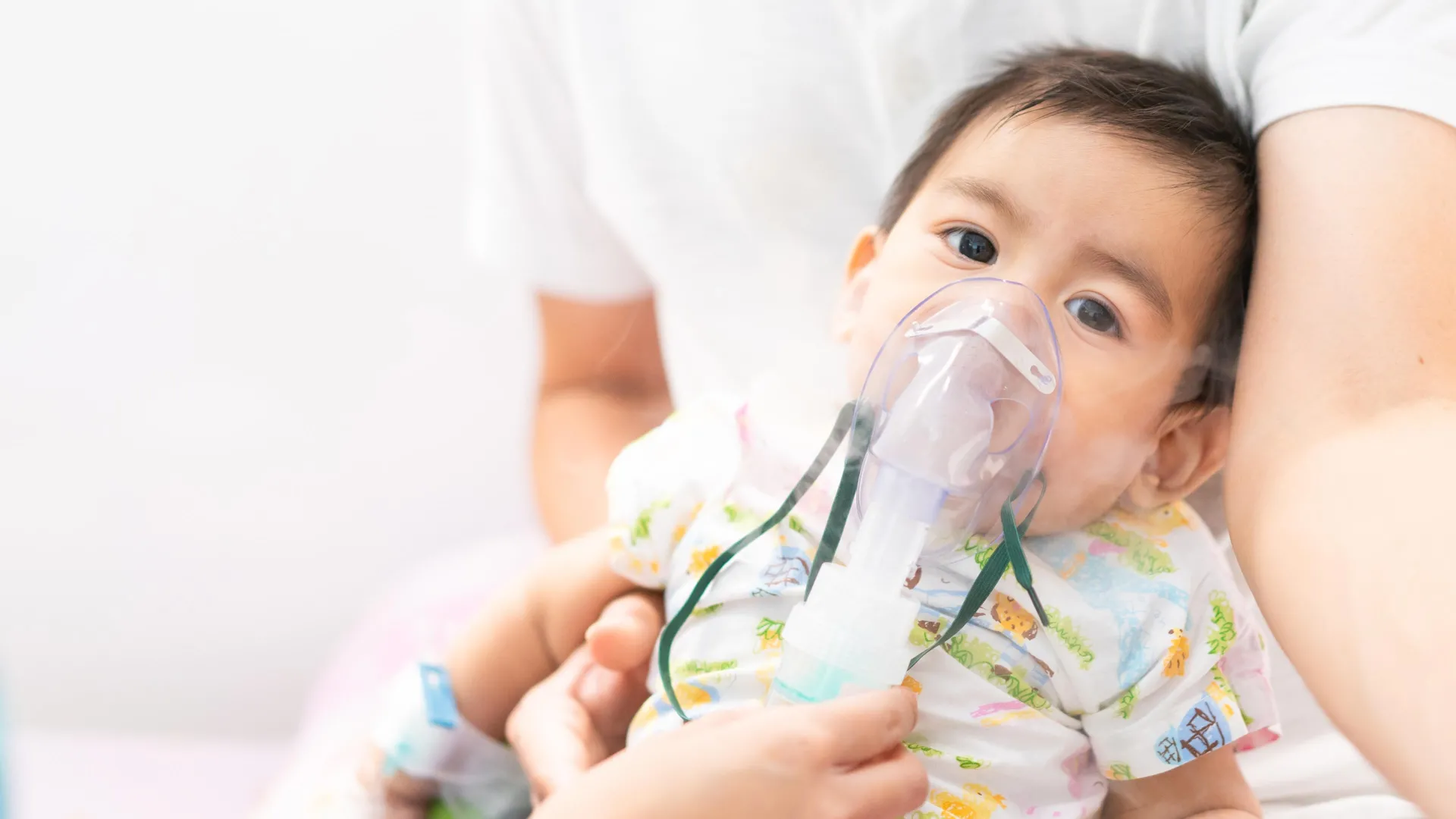
Belgian researchers from VIB and Ghent University (UGent), working with partners in Denmark, have found strong evidence that infection with respiratory syncytial virus (RSV) early in infancy sharply raises the likelihood of developing childhood asthma. The effect is especially pronounced in children who have a family history of allergies or asthma.
The findings, published on November 28 in Science Immunology, indicate that protecting newborns from RSV could meaningfully lower asthma rates later in life.
Understanding early asthma risks
Across Europe, 5-15% of children live with asthma, a long-term condition that can affect day-to-day well-being, place a heavy strain on families, and carry significant costs for society. Because of this, discovering effective ways to reduce asthma risk before symptoms begin has become a major health priority.
“Childhood asthma is a complex disease with many contributing factors,” explains Prof. Bart Lambrecht (VIB-UGent Center for Inflammation Research), senior author of the study. “We found that early-life RSV infection and genetic allergy risk interact in a very specific way that pushes the immune system toward asthma. The encouraging news is that this process can be prevented.”
How RSV and inherited allergy risk work together
To explore this relationship, the team combined nationwide health registry information from all Danish children and their parents with controlled laboratory studies. This approach revealed how an early viral infection can magnify the impact of inherited allergy risk.
The researchers found that infants who suffer severe RSV infections in their first months of life are more likely to develop immune responses that overreact to common allergens, including house dust mites. This tendency becomes even stronger when asthma or allergy runs in the family, since allergen-specific antibodies passed from parents to their newborns increase sensitivity further.
Evidence that prevention could change long-term outcomes
A key part of the work showed that protecting newborns from RSV in experimental models prevented these immune system shifts altogether. As a result, asthma did not develop.
“With RSV prevention now becoming widely accessible, we have an opportunity to improve long-term respiratory health, not just prevent RSV hospitalizations,” says Prof. Hamida Hammad (VIB-UGent), co-senior author. “This is not just a laboratory insight. It’s a message that should help parents choose RSV prevention with confidence.”
Maternal vaccination during the third trimester of pregnancy and passive immunization of newborns using long-acting antibodies are being rolled out in many countries. However, uptake has been uneven, even though these tools are highly effective at preventing RSV hospitalizations.
“This is a moment where policy, science, and pediatricians can come together,” Lambrecht adds. “If preventing RSV infection also reduces asthma risk, the benefits for families and health systems could be enormous.”
This work was supported by the European Research Council, the University of Ghent, and Research Foundation — Flanders (FWO).