
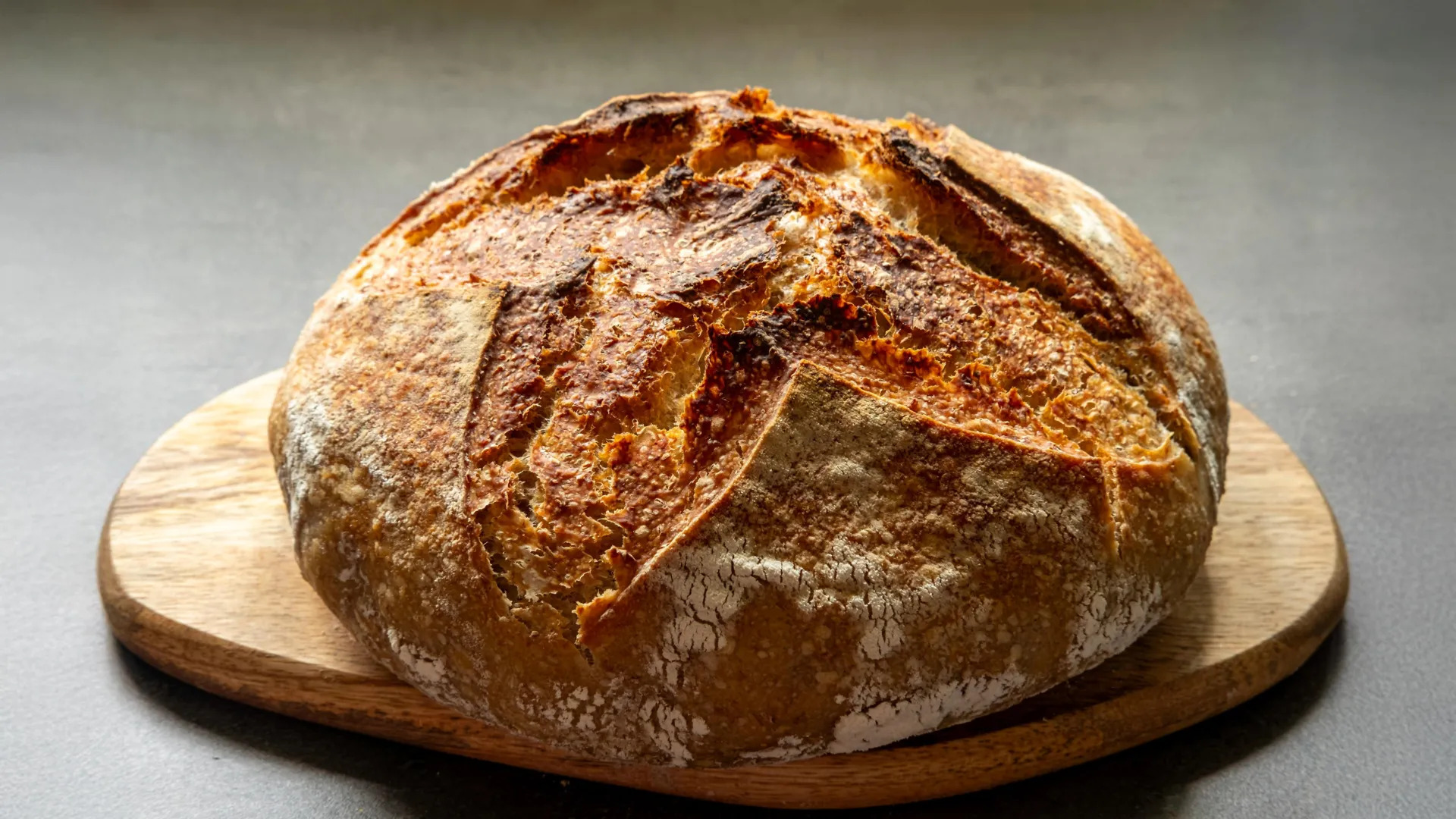
Bread has been a dietary staple for thousands of years, and sourdough is experiencing a renewed surge in popularity. Many people value it for its natural ingredients, nutritional benefits, and distinctive flavor. Yet the biological processes behind sourdough fermentation remain surprisingly complex. What exactly occurs during this fermentation, and how do wheat fibers influence the final quality of bread? These questions guided the doctoral research of Víctor González Alonso at the Vrije Universiteit Brussel (VUB), who investigated how specific wheat dietary fibers called arabinoxylans behave during sourdough fermentation.
“Wheat provides a large share of the calories and fiber consumed in Europe,” González Alonso explains, “and arabinoxylans play an important part in this. They help determine the structure and quality of bread.”
Wheat Fibers and Sourdough Fermentation
Arabinoxylans (AX) exist in two main forms. Water-extractable (WE-AX) typically have either beneficial or neutral effects on dough, while water-unextractable (WU-AX) can negatively influence bread quality. Until recently, scientists had limited understanding of how the microorganisms in sourdough interact with these fibers.
To explore this question, González Alonso examined fermentation in several flour types, including some enriched with additional AX. He tracked changes in the microbial populations using advanced DNA analysis and metabolite profiling to better understand how fermentation unfolds.
“We observed that sourdoughs develop into stable microbial ecosystems, with lactic acid bacteria and yeasts in a complex balance,” he says. “A higher fiber content barely altered this process, although we clearly demonstrated that sourdough fermentation converts part of the WE-AX into WU-AX.”
Enzymes and Microbes Shape Bread Flavor
One unexpected finding involved the source of this fiber transformation. The change was driven less by the bacteria themselves and more by enzymes already present in the wheat. These enzymes become active as the dough grows more acidic during fermentation.
When this happens, large fiber molecules break down into smaller fragments, which may influence both the digestibility and the texture of the bread. The researchers also identified bacteria that contribute to flavor development. Lactococcus lactis was associated with buttery aromas, while Limosilactobacillus fermentum produced sugar alcohols that can add a mild sweetness.
Testing the Findings in Real Bread
The team extended their work beyond laboratory experiments. In a pilot scale baking trial, bread was made using wheat flour enriched with high levels of AX. The resulting sourdough loaves were not only higher in nutritional value but also showed a broader range of flavors.
“Sourdough remains a fascinating interplay of biology and craftsmanship,” González Alonso concludes. “And our research shows that sourdough fermentation influences wheat fibers to a greater extent than previously thought.”