
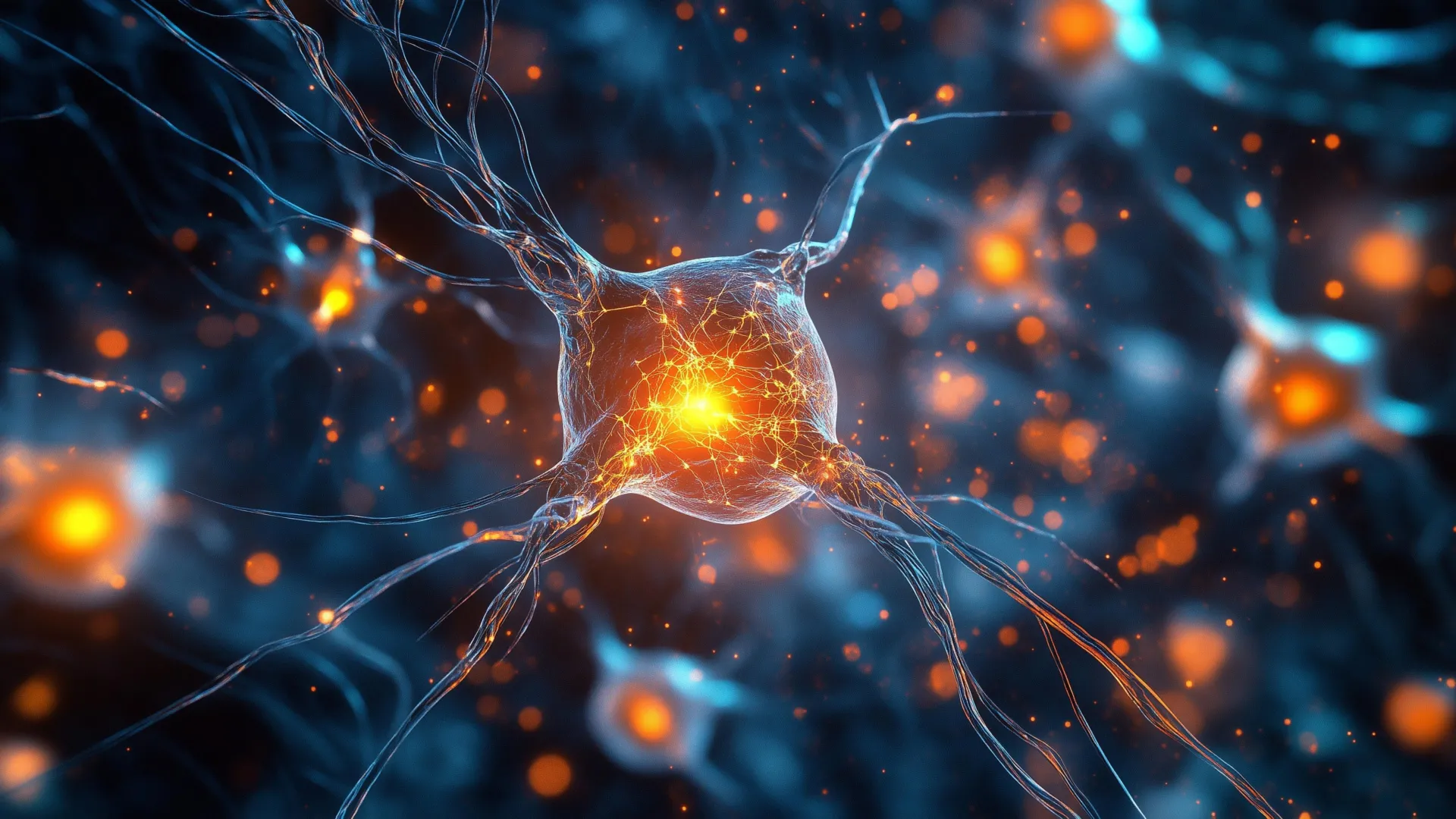
Most cells in the human body can replace themselves after damage. Neurons, the cells that power the nervous system, usually cannot. Once injured, they rarely generate healthy replacements.
Following events such as strokes, concussions, or neurodegenerative diseases, neurons and their axons are much more likely to deteriorate than to repair themselves. Axons are the long, fiber-like extensions that carry electrical signals through the brain and nervous system, and their loss plays a major role in neurological decline.
A New Way to Think About Neurodegeneration
Researchers at the University of Michigan have uncovered findings that challenge long-standing assumptions about why neurons break down. Their work suggests new strategies that could one day help protect patients from progressive neurological damage.
Published in the journal Molecular Metabolism, the study may also help explain the rare cases in which the brain manages to recover after injury. The researchers say this new perspective could open doors to future treatments designed to support the brain’s own protective responses.
How Sugar Metabolism Shapes Neuron Resilience
Using a well-established fruit fly model, the research team discovered that a neuron’s resistance to degeneration is closely tied to how it processes sugar. In other words, metabolism plays a central role in determining whether neurons weaken or endure.
The research was supported by the National Institutes of Health, the U.S. National Science Foundation, the Rita Allen Foundation and the Klingenstein Fellowship in the Neurosciences.
“Metabolism is often changed in brain injury and diseases like Alzheimer’s, but we do not know whether this is a cause or consequence of the disease,” said senior author Monica Dus, U-M associate professor of molecular, cellular, and developmental biology.
“Here we found that dialing down sugar metabolism breaks down neural integrity, but if the neurons are already injured, the same manipulation can preemptively activate a protective program. Instead of breaking down, axons hold on longer.”
Proteins That Sense Damage and Control Degeneration
Lead author TJ Waller, a postdoctoral research fellow, identified two proteins that appear to influence how long axons remain healthy after injury. One of these proteins is dual leucine zipper kinase, or DLK, which acts as a sensor for neuronal damage and becomes active when metabolism is disrupted.
The second protein, SARM1 — short for Sterile Alpha and TIR Motif-containing 1 — has long been linked to axon degeneration. The study shows that SARM1 activity is closely connected to the DLK response.
“What surprised us is that the neuroprotective response changes depending on the cell’s internal conditions,” Dus said. “Metabolic signals shape whether neurons hold the line or begin to break down.”
When Protection Turns Into Damage
In situations where neurons and axons remain intact, DLK activity increases while SARM1 movement is restrained. This combination appears to support short-term protection. However, the researchers found that this balance does not last indefinitely.
When DLK remains active for extended periods, its role shifts. Prolonged activation leads to progressive neurodegeneration, reversing the earlier protective effects and accelerating damage over time.
The Challenge of Targeting DLK in Disease
Because of its central role, DLK has become an important focus for studying and treating neurodegenerative diseases. Yet its dual nature makes it difficult to target safely, Waller explained.
“If we want to delay the progression of a disease, we want to inhibit its negative aspect,” Waller said. “We want to make sure that we’re not at all inhibiting the more positive aspect that might actually be helping to slow the disease down naturally.”
Finding ways to manage DLK’s opposing effects remains an unsolved challenge. Understanding how molecules like DLK switch between protective and harmful states could have major implications for treating brain injuries and neurodegenerative conditions.
Dus and Waller said that understanding this mechanism “provides a new perspective on injury and disease, one that goes beyond simply blocking damage to focusing on what the system is already doing to reinforce it.”