
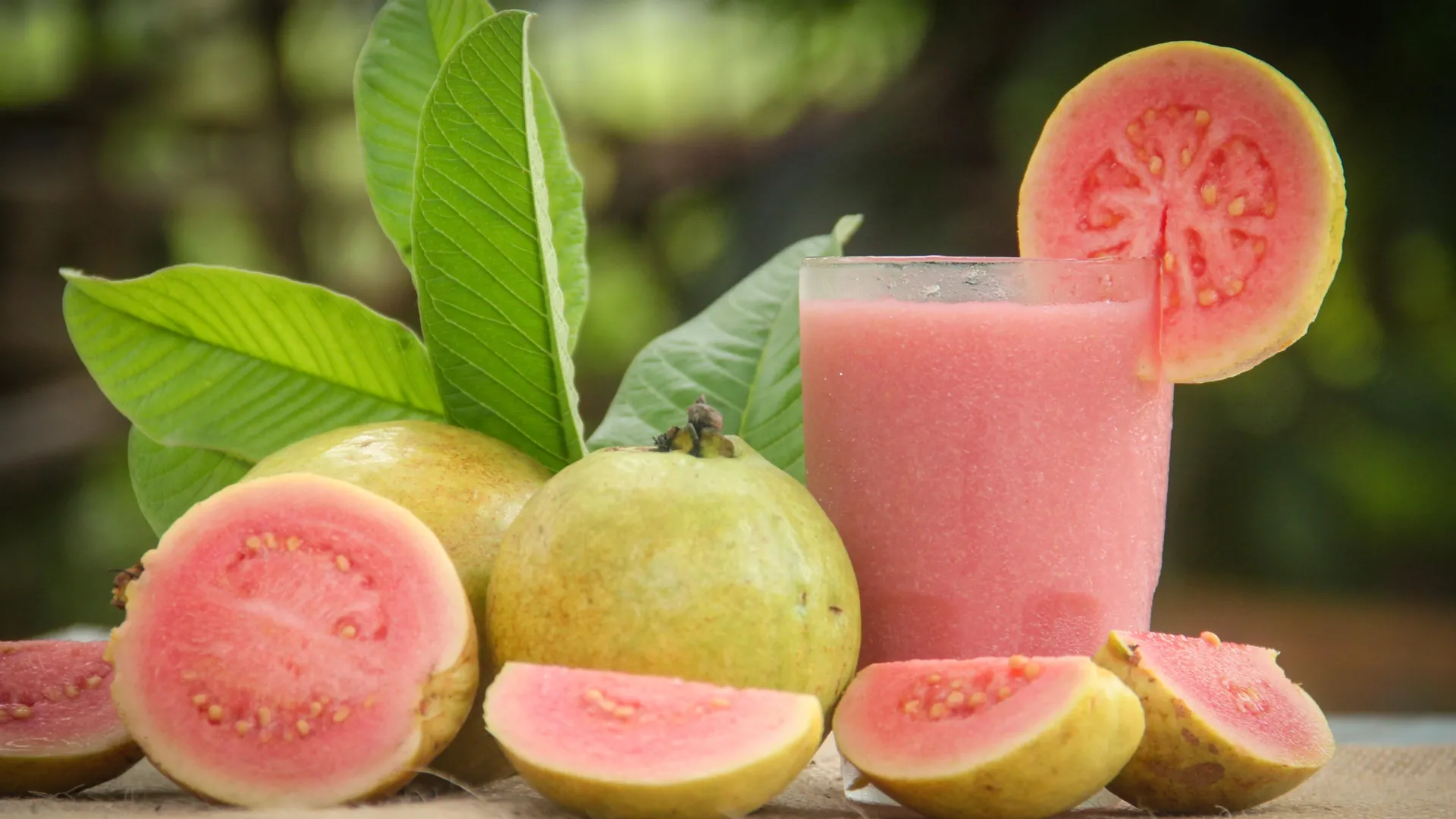
Regularly drinking guava juice could offer a simple and affordable way to help reduce anemia risk among women and teenage girls in low and middle income countries, according to a new review published in the open access journal BMJ Nutrition Prevention & Health.
Researchers found that combining guava juice with iron supplements appeared to improve hemoglobin levels more effectively than taking iron supplements alone. The findings suggest the tropical fruit juice could become a useful addition to nutrition programs aimed at preventing iron deficiency anemia in regions where the condition is widespread.
Iron deficiency anemia is especially common among pregnant women and adolescent girls in many developing countries. The condition can lead to fatigue, weakness, poor concentration, pregnancy complications, and increased risk of serious illness or death.
Why Guava Juice May Help
Guava is naturally rich in vitamin C, which helps the body absorb iron from plant based foods more efficiently. According to the researchers, guava contains up to four times more vitamin C per 100 grams than oranges.
In addition to vitamin C, guava also provides vitamin A, folate, dietary fiber, and small amounts of iron.
Several smaller studies conducted in Indonesia had already suggested that drinking guava juice might raise hemoglobin levels, but researchers said the overall evidence had not previously been reviewed together in a comprehensive analysis.
Review Examined 17 Studies
To better understand the potential benefits, researchers analyzed studies published in English since 2000. They identified 17 eligible studies, including 15 quasi experimental studies and two randomized controlled trials.
Six studies focused on teenage girls, while 11 involved pregnant women. Most of the studies examined guava juice alongside iron supplementation.
The researchers combined data from 12 studies involving 235 women and adolescent girls. Overall, participants experienced an average increase in hemoglobin levels of 1.71 g/dl after consuming guava juice.
When researchers looked at the groups separately, teenage girls showed an average increase of 1.52 g/dl, while pregnant women experienced an average increase of 1.84 g/dl.
Guava Juice Plus Iron Supplements Performed Better
Five of the studies directly compared women who took iron supplements alone with women who took iron supplements along with guava juice. Each group included 102 participants.
The results showed that the combination approach led to hemoglobin levels that were, on average, 1.29 g/dl higher than iron supplements alone.
“An increase of 1-2 g/dl may shift individuals from mild or moderate anemia to non-anemic categories, improving fatigue, cognitive function, and productivity outcomes,” suggest the researchers.
The team noted several important limitations. All of the studies were conducted in Indonesia, and there were major differences in study design, guava type, dosage, intervention length, and participant characteristics.
Researchers also cautioned that most of the evidence came from quasi experimental studies rather than stronger randomized clinical trials. In addition, the studies did not include long term follow up, making it unclear how long the benefits may last.
Could Guava Juice Become Part of Public Health Programs?
Despite the limitations, researchers believe guava juice could still become a practical and low cost nutritional strategy for reducing mild to moderate anemia.
“Integrating guava juice into school nutrition programs, antenatal care packages, or community health initiatives could represent a feasible approach to address mild-to-moderate anemia, aligning with the United Nations’ Decade of Action on Nutrition (2016-2025), which emphasizes dietary diversification and locally sourced nutrient-rich foods,” they point out.
They added that guava juice is already widely accepted culturally across many parts of Asia and is relatively inexpensive, making it a potentially sustainable public health tool.
“Given its nutritional richness, affordability, and cultural acceptance across Asia, guava juice offers a promising low-cost intervention. Strengthening local supply chains, standardizing formulations and embedding such dietary approaches within public health nutrition programs could collectively contribute to more sustainable anemia control,” they add.
Professor Sumantra Ray, chief scientist & executive director, NNEdPro Global Institute for Food, Nutrition and Health, which co-owns BMJ Nutrition Prevention & Health, said the findings support existing knowledge about vitamin C improving iron absorption.
“This study builds on the established role of dietary sources high in vitamin C to enhance iron absorption and improve the effectiveness of iron supplementation,” he comments.
However, he also emphasized that more rigorous research is still needed before guava juice could be recommended as a substitute for conventional anemia treatment.
“But quasi-experimental research, the wide variation in study design, small sample sizes, and limited length of follow-up mean that caution is required when interpreting the findings. Without further rigorous research, defining the best therapeutic dose and period of use, guava juice can’t be recommended as an alternative to conventional treatment in those at risk of iron deficiency anemia,” he adds.