
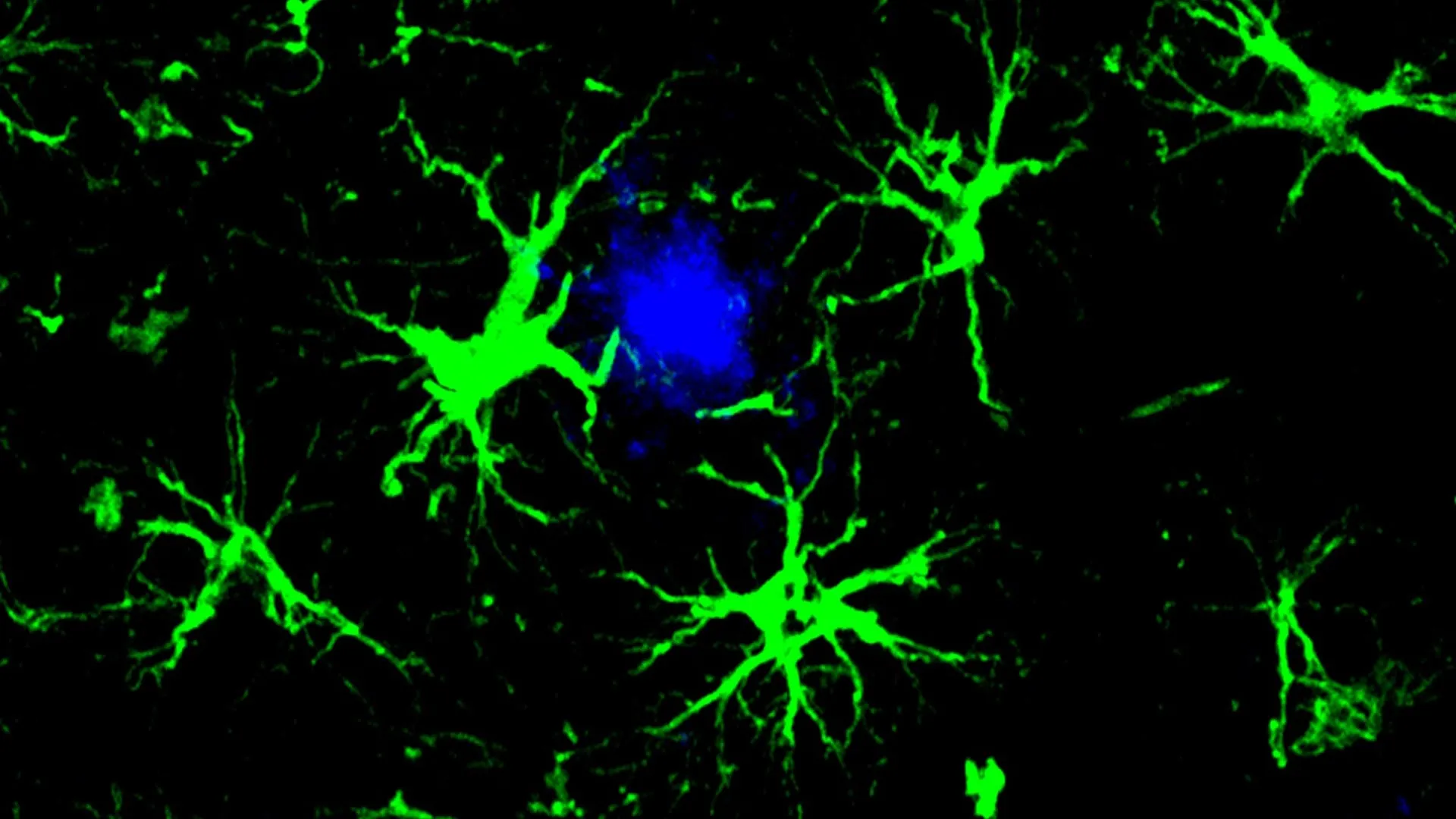
The newest class of Alzheimer’s disease medications is the first to show that it can slow the disease itself. These treatments typically allow patients to remain independent for about 10 additional months. Known as monoclonal antibodies, the drugs work by lowering levels of amyloid, a harmful protein that accumulates in the brain. However, patients must receive large doses through infusions once or twice each month.
Scientists are now exploring ways to make treatment less frequent and potentially more effective. Researchers at Washington University School of Medicine in St. Louis have created an experimental cellular immunotherapy that requires only a single injection. In mice, the therapy prevented amyloid plaques from forming when given before plaque buildup began. When the treatment was given to mice that already had plaques, it reduced the amount of amyloid in the brain by about half.
The findings were published March 5 in Science.
Turning Astrocytes Into Plaque Clearing Cells
The new strategy is inspired by CAR-T cell therapies used in cancer treatment. In those therapies, immune T cells are genetically engineered to identify and attack cancer cells. In this Alzheimer’s approach, scientists modified a different type of cell. They equipped astrocytes, a common type of brain cell, with a CAR homing device that allows the cells to latch onto specific targets and destroy them.
These engineered CAR-astrocytes act like powerful cleaning cells in the brain. Their design allows them to locate and remove harmful proteins that contribute to cognitive decline.
“This study marks the first successful attempt at engineering astrocytes to specifically target and remove amyloid beta plaques in the brains of mice with Alzheimer’s disease,” said the study’s senior author, Marco Colonna, MD, the Robert Rock Belliveau, MD, Professor of Pathology at WashU Medicine. “Although more work needs to be done to optimize the approach and address potential side effects, these results open up an exciting new opportunity to develop CAR-astrocytes into an immunotherapy for neurodegenerative diseases and even brain tumors.”
How Amyloid Plaques Damage the Brain
Alzheimer’s disease begins when a sticky protein called amyloid beta accumulates in the brain and forms plaques. These deposits trigger a series of damaging changes that eventually lead to brain shrinkage and declining cognitive function.
Normally, immune cells in the brain known as microglia help remove cellular waste. However, during neurodegenerative diseases such as Alzheimer’s, these cells can become overwhelmed and lose their ability to keep the brain clear of harmful material.
Reprogramming Brain Cells to Remove Amyloid
To reduce the burden on microglia, first author Yun Chen, PhD, then a graduate student working in the laboratories of Colonna and David M. Holtzman, MD, the Barbara Burton and Reuben M. Morriss III Distinguished Professor of Neurology at WashU Medicine, focused on astrocytes. Astrocytes are the most abundant cells in the brain and typically help maintain a healthy environment for neurons.
Chen redesigned astrocytes to become specialized amyloid clearing cells. He introduced a gene that produces a chimeric antigen receptor (CAR) into astrocytes using a harmless virus injected into mice. Once expressed on the surface of the astrocytes, the CAR allowed the cells to capture and swallow amyloid beta proteins. With this added ability, the astrocytes concentrated on removing amyloid beta plaques in mice that are prone to developing them. Astrocytes normally help maintain order in the brain.
Testing the Therapy in Alzheimer’s Prone Mice
Mice that carry genetic mutations associated with a higher risk of Alzheimer’s disease begin developing amyloid beta plaques that fill the brain by about six months of age. Chen, who is now a postdoctoral researcher in the Holtzman lab, tested the therapy in two groups of these mice. One group received the virus carrying the CAR gene before plaques appeared, while the second group received the treatment after their brains were already filled with plaques. The researchers then waited three months to evaluate the results.
In the younger mice, the engineered CAR-astrocytes stopped plaques from forming. By nearly six months of age, when untreated mice typically have brains packed with amyloid plaques, the treated mice had no detectable plaques.
In older mice that already had plaque filled brains at the start of treatment, the therapy reduced amyloid plaque levels by about 50 percent compared with mice that received a virus that did not contain the CAR gene.
A Potential Single Injection Therapy
The researchers have filed a patent related to their CAR-astrocyte engineering method with assistance from the Office of Technology Management at WashU.
“Consistent with the antibody drug treatments, this new CAR-astrocyte immunotherapy is more effective when given in the earlier stages of the disease,” said Holtzman, who is a co-author on the paper. “But where it differs, and where it could make a difference in clinical care, is in the single injection that successfully reduced the amount of harmful brain proteins in mice.”
Future Potential for Alzheimer’s and Brain Tumors
The research team plans to continue refining the CAR-astrocyte therapy. Future work will focus on improving how precisely the cells target harmful proteins while ensuring that normal brain cell activity is not disrupted.
Researchers also believe the technology could be adapted for other diseases. By modifying the CAR homing device to recognize markers found on brain tumors, astrocytes could potentially be redirected from clearing debris to directly destroying tumor cells. This strategy could eventually lead to new treatments for brain tumors and other disorders affecting the central nervous system.