
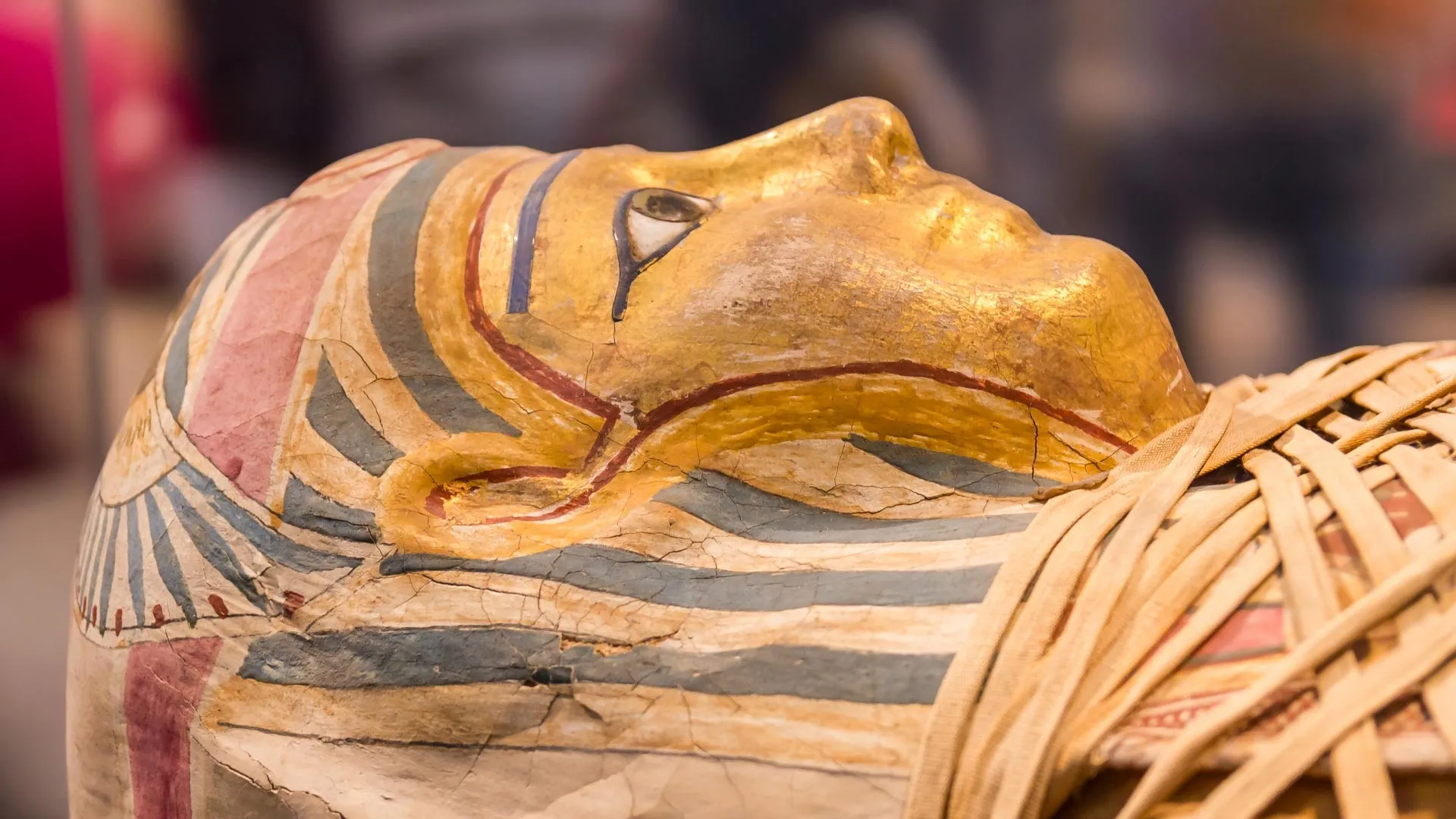
Mummification has fascinated historians and scientists for centuries, yet many details about how ancient Egyptians preserved the dead have remained unclear. New research now shows that the distinctive musty scent of mummified remains holds valuable clues about how these elaborate burial rituals were carried out.
A study led by chemists at the University of Bristol found that the smell associated with mummies is not simply the result of aging or decay. Instead, it reflects a complex blend of substances used during embalming, along with preserved fabrics and materials wrapped around the body. Together, these lingering chemical traces reveal how mummification methods changed and became more sophisticated over hundreds of years.
Lead author Dr. Wanyue Zhao, Research Associate in Organic Geochemistry at the University of Bristol, said: “The findings mark a significant step forward in improving our understanding of Egyptian history and the fascinating ritual of mummification. Our analysis of the associated scents has uncovered new insights into how the practice developed through the ages and became increasingly sophisticated.”
Analyzing the Air Around Ancient Remains
To investigate the source of mummy scents, researchers examined the air surrounding extremely small mummy fragments about the size of a peppercorn. This approach differs from traditional techniques, which often require dissolving samples in solvents and can damage delicate artifacts.
The team used a combination of advanced analytical tools including solid phase microextraction, gas chromatography, and high resolution mass spectrometry. These methods allowed them to capture gases inside small sealed containers and separate the different scent components known as Volatile Organic Compounds (VOCs) so they could be studied in detail.
The research, published in the Journal of Archaeological Science, analyzed 35 samples of balms and bandages from 19 mummies. These remains spanned more than 2,000 years of Egyptian history between 3200 BC and 395 AD. Across all samples, scientists identified 81 distinct VOCs that offer clues about the materials used during the embalming process and the time periods in which the mummies were prepared.
Chemical Clues Reveal Embalming Ingredients
Even when present in extremely small quantities, these chemical compounds helped researchers identify the substances used in preservation. They grouped the compounds into four main categories connected to specific embalming ingredients.
Fats and oils generated aromatic compounds and short chain fatty acids. Beeswax produced mono-carboxylic fatty acids and cinnamic compounds. Plant resins released aromatic compounds and sesquiterpenoids, while bitumen produced naphthenic compounds.
Dr. Zhao said: “Our findings showed the chemical patterns varied across historical periods. Earlier mummies had simpler profiles dominated by fats and oils, while later mummies displayed more complex mixtures incorporating imported resins and bitumen. Such materials were more costly and required more specialized preparation, as the practice became more advanced.”
Different Body Parts Used Different Embalming Recipes
The chemical signatures also varied depending on which part of the body was sampled.
“For instance, samples from heads often contained different patterns than those from torsos, suggesting embalmers applied distinct recipes to separate parts of the body to possibly aid preservation. This is an area which needs further analysis and research to better understand what techniques were used and why,” Dr. Zhao added.
The findings provide a more detailed understanding of known embalming mixtures and offer deeper insight into how these preservation techniques developed over time.
A New Way to Study Mummies Without Damaging Them
Study co-author Richard Evershed, Professor of Chemistry at the University of Bristol, said: “Our volatile analysis proved sensitive enough to detect residues at extremely low concentrations. For example, bitumen biomarkers were previously difficult to detect with earlier soluble residue methods.
“This approach expands the study of ancient Egyptian funerary practices, presenting a clearer, fuller picture of mummification recipes, material choices, and preservation strategies.”
The technique could also be valuable for museums and research collections. Sampling the air around mummies provides a fast, non destructive method for examining fragile remains while preserving their physical condition.
Study co-author Ian Bull, Professor of Analytical Chemistry at the University of Bristol, added: “Physical sampling still plays a role for detailed work, yet volatile analysis provides an effective and enlightening first step for studying embalmed remains across collections and time periods.”