
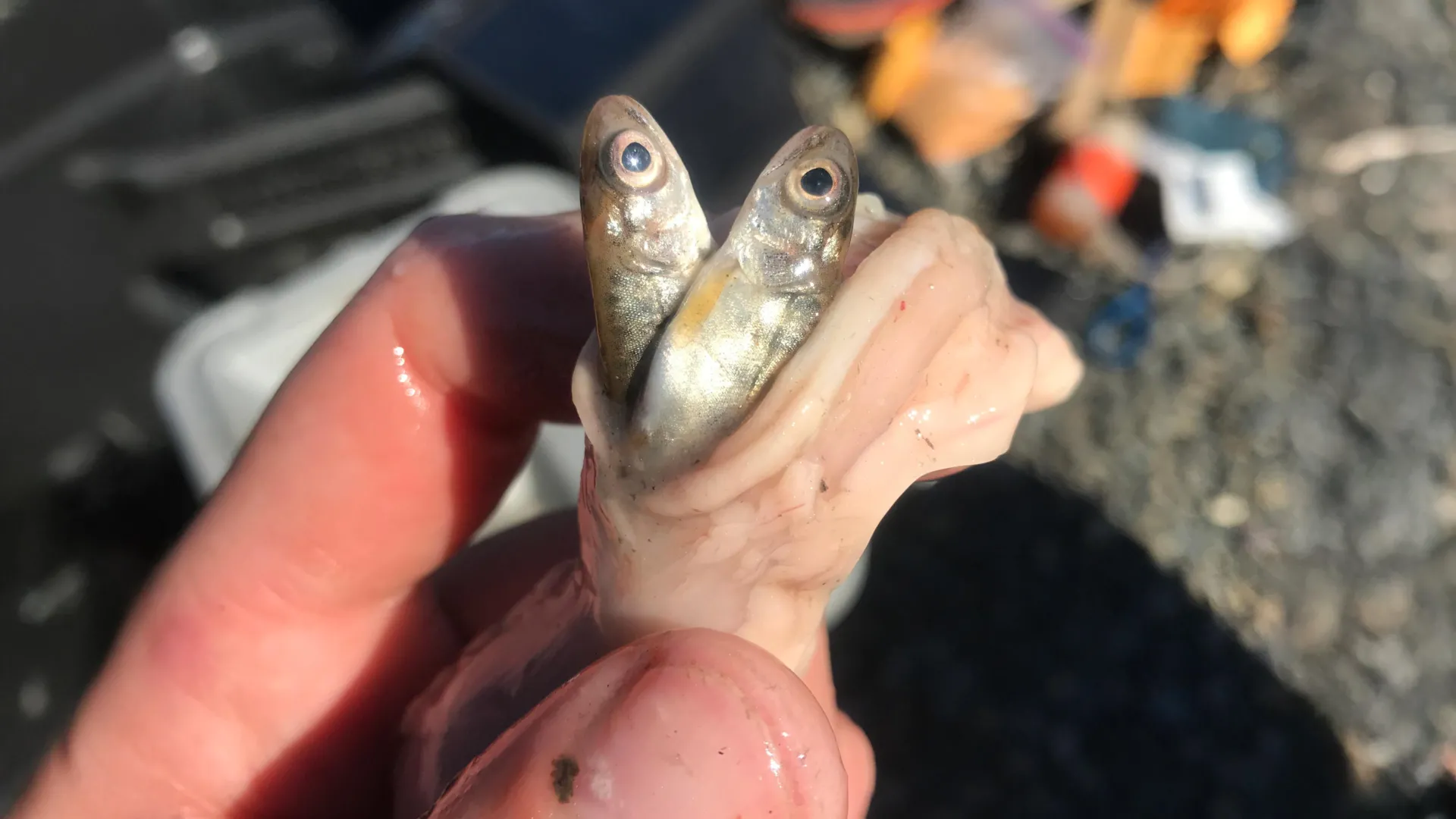
Rising temperatures in a Southcentral Alaska river are driving a noticeable change in the behavior of invasive northern pike. As the water warms, these predators are eating more, raising concerns about the future of native fish such as salmon.
Researchers led by the University of Alaska Fairbanks examined the stomach contents of northern pike collected by the U.S. Fish and Wildlife Service in the Deshka River during the summers of 2021 and 2022. They compared those findings with samples taken from pike in the same river about ten years earlier.
Their analysis showed that pike across all age groups increased their fish consumption as temperatures rose. The change was especially striking among younger fish, with year-old pike consuming 63 percent more fish than before.
The findings were published in the journal Biological Invasions.
“We expect there will be significant warming in the future, and the amount of fish that pike consume is going to increase with it,” said Benjamin Rich, who led the study while pursuing his graduate degree at the UAF College of Fisheries and Ocean Sciences.
Rising Temperatures in Air and Water
The study area has already experienced a steady warming trend. Average summer air temperatures have climbed by about 3 degrees Fahrenheit since 1919, including an increase of 0.8 degrees over the past decade. Water temperatures in the Deshka River, which flows into the Susitna River, have also remained above historical averages in recent years, Rich said.
Looking ahead, scientists expect this warming to continue throughout the 21st century. Models suggest that northern pike could increase their food intake by another 6%-12% by the year 2100.
Warmer Water Boosts Predator Appetite
The growing appetite of pike in the Deshka River reflects patterns seen in other freshwater systems. As water temperatures rise, predator metabolism speeds up, increasing their energy demands and pushing them to feed more aggressively.
This shift is particularly troubling in Southcentral Alaska, where northern pike were introduced illegally and now share habitat with Chinook and coho salmon populations that are already in decline.
Interestingly, the number of Chinook and coho salmon found in pike stomachs dropped over the past decade. Researchers suggest this likely reflects the shrinking salmon populations in the river rather than reduced predation.
Salmon Face Multiple Pressures
Salmon are already under strain from warming conditions, said UAF fisheries professor Peter Westley. More aggressive predation adds another layer of pressure in an already challenging environment.
“We know that invasive species and climate are individually associated with freshwater fish extinctions,” said Westley, a co-author of the study. “Those impacts may be working together into the future.”
Complex Ecosystem Changes
Erik Schoen, a researcher at UAF’s International Arctic Research Center, emphasized the importance of understanding these interconnected effects. Salmon are a key species, but they are only one part of a broader ecosystem influenced by rising temperatures.
“There’s been a lot of work done about how changes in temperature affect salmon directly. That’s really important, but salmon aren’t alone in these rivers,” said Schoen, who also contributed to the paper. “It’s also important to understand how these changes are affecting salmon indirectly through their predators, prey and pathogens.”
Other contributors to the research included Adam Sepulveda and Jeffrey Falke of the U.S. Geological Survey and Daniel Rinella of the U.S. Fish and Wildlife Service.