
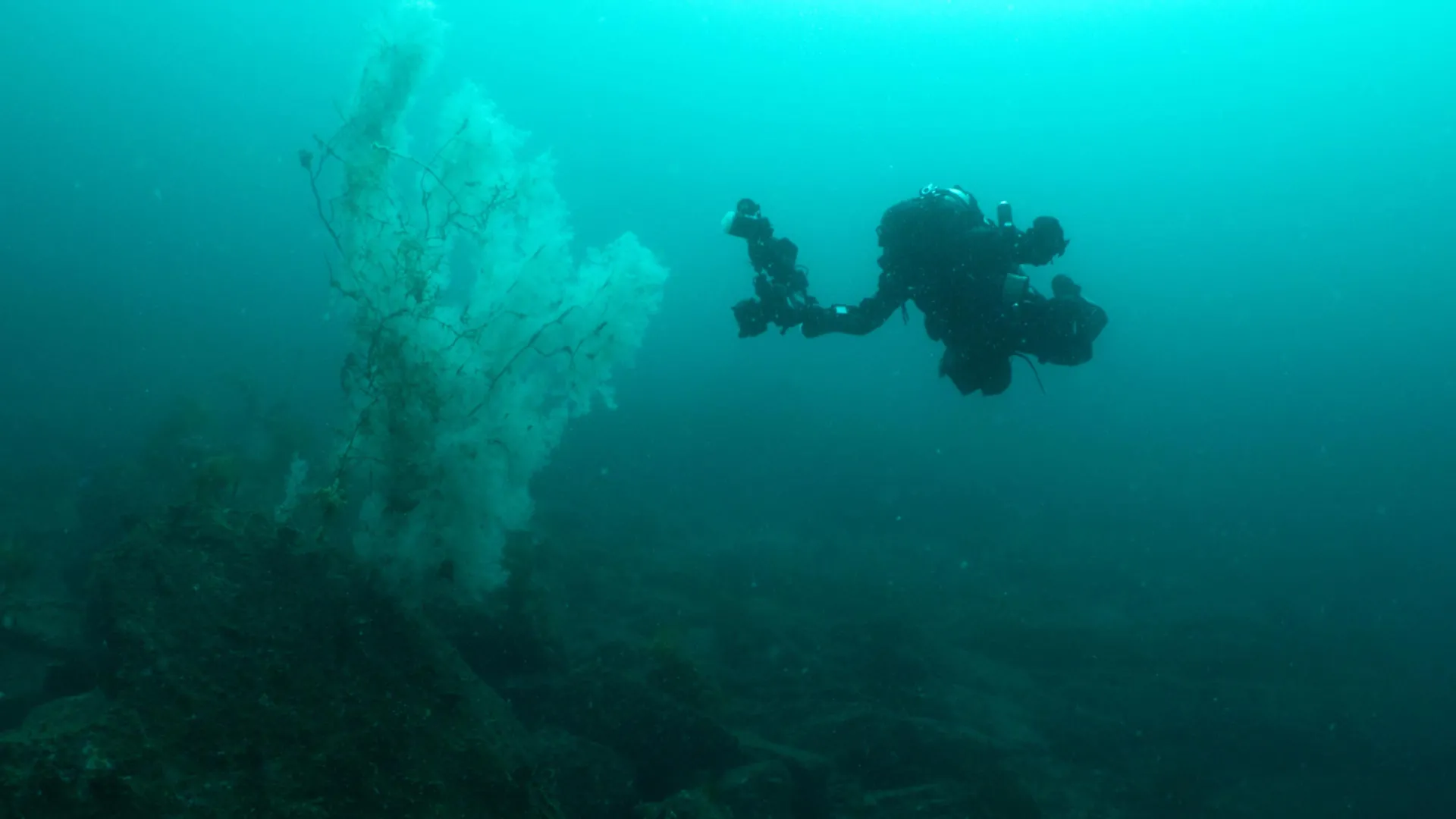
Researchers exploring the deep waters of Fiordland have discovered an enormous black coral measuring 4 meters (13 feet) tall and 4.5 meters (15 feet) wide.
The protected coral is estimated to be 300-400 years old and is believed to be among the largest black corals ever recorded in the waters of Aotearoa New Zealand.
Professor James Bell, a marine biologist at Te Herenga Waka — Victoria University of Wellington, described the find as “absolutely huge.”
“It’s by far the largest black coral I’ve seen in my 25 years as a marine biologist. Most black corals we come across when we’re diving are small, with the bigger ones usually less than two to three meters tall so finding this one was really cool,” he said.
Why Large Black Corals Matter
The discovery is particularly significant because black corals grow very slowly. Larger colonies play an important role in the species’ survival by providing valuable breeding stock.
“Pinpointing where large corals occur means we can better protect them by letting people know where not to anchor their boats or drop pots,” Professor Bell said.
Richard Kinsey, senior biodiversity ranger at the Department of Conservation, was part of the dive team that encountered the coral.
“To see such a large coral looming out of the darkness was pretty special. I’ve been a marine ranger in Fiordland for nearly 20 years and it’s rare to see a coral so big. It’s easily the largest one I can remember seeing,” he said.
Mapping Protected Coral Species
Researchers from Victoria University are working alongside the Department of Conservation and the Fiordland Marine Guardians to better understand where protected coral species occur throughout the fiords.
The team is studying and mapping coral distributions to help guide future conservation efforts.
“We’d love to receive reports from anyone who knows of particularly large black corals that are greater than 4 m so we can map their distribution and find out how common such large coral colonies are throughout Fiordland,” said Professor Bell.
A Protected Species
Despite its name, black coral does not appear black on the outside. The living coral is white in color, while only its internal skeleton is black.
Black coral is protected under the Wildlife Act, and it is illegal to intentionally collect or damage these corals.